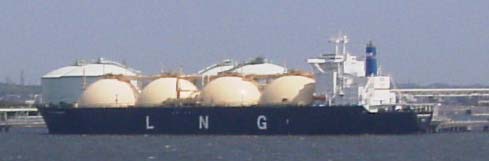
On 14 August, Ukraine struck facilities belonging to NOVATEK at the Russian port of Ust-Luga in the Leningrad region, according to Ukraine’s General Staff. A fire broke out at the site. Regional governor Alexander Drozdenko said damage from the drone attack was cleared the same day.
Ust-Luga is not an incidental target. It is one of Russia’s principal export hubs on the Baltic, handling crude, refined products and gas condensate, and NOVATEK’s complex there processes condensate into fuels for export.
Advertisement — ad space reserved
A campaign, not a raid
The Ust-Luga strike belongs to a sustained effort against Russian energy infrastructure that has been running through this year. Ukraine has hit the Black Sea oil terminal at Tuapse repeatedly, disrupting exports. An attack on Novorossiysk struck warships and halted operations at two major grain terminals, killing at least two people. Refineries have been hit often enough to force measurable reductions in Russian processing capacity.
The cumulative effect is visible in a statistic we covered earlier this week: Russia, one of the world’s largest oil producers, has begun importing petrol refined in India. Domestic refining has been running roughly a third below seasonal norms, and Moscow has banned exports of gasoline, jet fuel and diesel in turn.
Why export terminals specifically
There is a deliberate logic to the target set. Russia’s war is financed by hydrocarbon sales, and those sales depend on a small number of chokepoints: refineries that turn crude into saleable product, and terminals that load it onto ships.
Both are hard to disperse and slow to repair. A pipeline can be patched in days; a damaged fractionation unit or loading berth takes months and often needs Western-manufactured components that sanctions make difficult to obtain. Striking them converts drone attacks into lost revenue rather than symbolic damage.
It is also the mirror image of what Russia is doing to Ukraine. Both sides are attacking the other’s energy system — Russia to break civilian endurance through the winter, Ukraine to break the financing of the war.
Advertisement — ad space reserved
The wider squeeze
The strikes sit alongside two other pressures on the same revenue stream. European states have begun seizing shadow-fleet vessels, and a mechanism adopted in July allows confiscated cargo to be sold — the measure that prompted Putin’s threat to seize European ships in response. Separately, the US Senate has passed legislation authorising tariffs of up to 100 per cent on the largest buyers of Russian oil and gas, though that bill still faces the House.
Ukraine’s own strikes are the only element of that squeeze it controls directly, which is part of why the campaign has intensified rather than eased during months of stalled negotiations.
What is not clear
Damage assessments in these attacks are contested by design. Ukraine’s General Staff announces the strike; Russian regional officials describe the damage as minor and quickly cleared. Independent verification usually comes later, from satellite imagery or from export data showing a terminal’s throughput falling.
On Ust-Luga specifically, the fire is confirmed by both sides. Its effect on export capacity is not yet established, and early claims from either party should be treated as claims.
Sources
Ukraine’s General Staff via Militarnyi; Reuters reporting on Ust-Luga and Novorossiysk; Council on Foreign Relations conflict tracking; Bloomberg and Kpler data on Russian refinery throughput.
Advertisement — ad space reserved
Leave a Reply