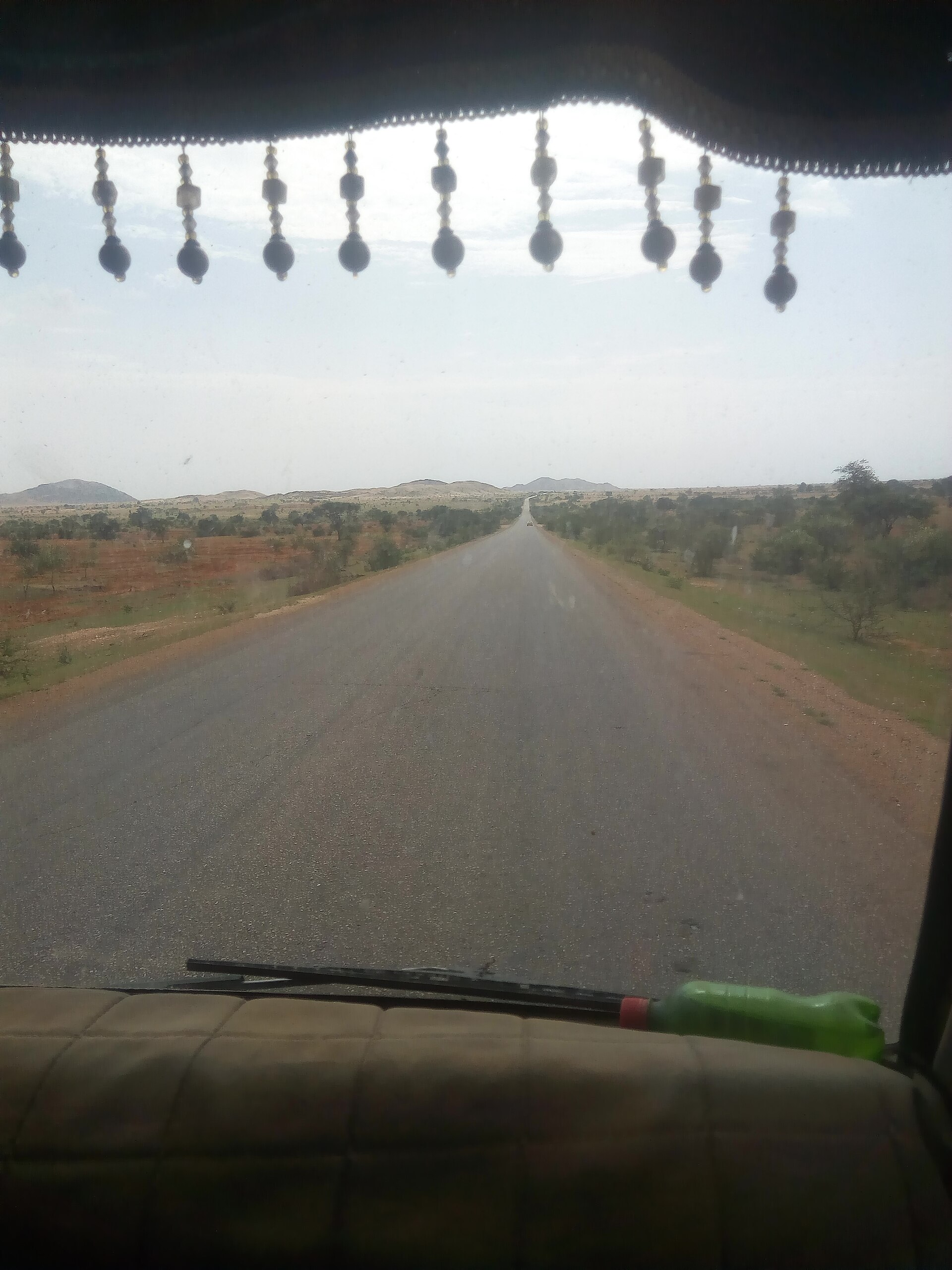
Sudan’s war has been running for more than three years, and its centre of gravity has moved. With the army holding the east and the Rapid Support Forces holding much of the west, the fighting has concentrated in Kordofan — the region between them.
Humanitarian reporting from the region describes escalating violence, drone strikes damaging civilian infrastructure, sieges trapping civilians, and famine risk. Explosive ordnance is contaminating areas people need to move through.
Advertisement — ad space reserved
Why Kordofan
Geography explains most of it. Kordofan sits between central Sudan and Darfur, and it carries the supply lines connecting them.
After the army recaptured Khartoum, its operations shifted southward and westward, to secure those routes and to press toward Darfur. The RSF, consolidating control in the west, wants Kordofan to anchor the administration it has established there. Both sides need the same ground for opposite reasons, which is a reliable formula for a long fight.
ACLED’s analysis has described this as a de facto partition, accompanied by two parallel governments: one re-established in Port Sudan under the army’s authority, another based in Nyala in South Darfur. Both describe themselves as civilian administrations; both are power-sharing arrangements among armed groups.
What a siege does
Encirclement is the tactic producing most of the humanitarian consequence, and its effects are worth being concrete about.
A besieged town cannot receive food, fuel or medicine. Markets empty and prices rise beyond what anyone can pay. Water systems fail when there is no fuel for pumps. Hospitals run out of what they need and then close. People who try to leave cross ground that may be mined or contested.
Famine in modern conflicts is very rarely caused by an absence of food in a country. It is caused by an inability to move food to people, and siege warfare is the most direct method of producing that. Deliberately starving civilians as a method of warfare is prohibited under international humanitarian law — a rule that is clear and, in Sudan, has not constrained either party.
Advertisement — ad space reserved
The drones
Drone warfare has intensified on both sides, and humanitarian reporting links recent strikes to damaged infrastructure, disrupted essential services and fresh displacement.
This is a significant change in a war that began largely as a fight between ground forces in a city. Long-range strike capability lets each side reach the other’s rear areas, which in practice means power stations, fuel depots, airports and water infrastructure — objects that are sometimes lawful military objectives and sometimes not, and on which civilian life depends either way.
Attribution of individual strikes is frequently disputed, and both parties have denied responsibility for attacks documented by monitors.
Two wars inside one
A further complication in South Kordofan is that the army-versus-RSF conflict overlays an older one. ACLED’s Sudan analyst has pointed to escalating conflict between factions of the SPLM-N, a movement with its own long history in the Nuba Mountains, and to the risk this poses of wider violence and worsening food insecurity.
That layering is why “who controls Kordofan” has no single answer, and why a settlement between the two principal parties would not by itself end the fighting there.
International mediation has involved the United States, the United Arab Emirates, Saudi Arabia and Egypt. ACLED assessed the prospects of an immediate end to the war as low, expecting both sides instead to consolidate and try to expand.
Sudan remains the largest displacement crisis in the world, and among the least covered relative to its scale. We reported this week on Chad, which is hosting a large share of the people who have fled it.
Advertisement — ad space reserved
Sources
- ACLED, Fighting moves to Kordofan as Sudan’s east–west divide solidifies
- ACLED expert comment by Sudan analyst Ali Mahmoud Ali on SPLM-N factional conflict in South Kordofan
- UN OCHA Sudan situation reports on North and South Kordofan, including sieges, drone strikes and explosive ordnance
- ReliefWeb, Displacement Rising as Crisis Escalates in Kordofan, Sudan
- Our report on displacement hosted by Chad, 9 September 2026
Leave a Reply