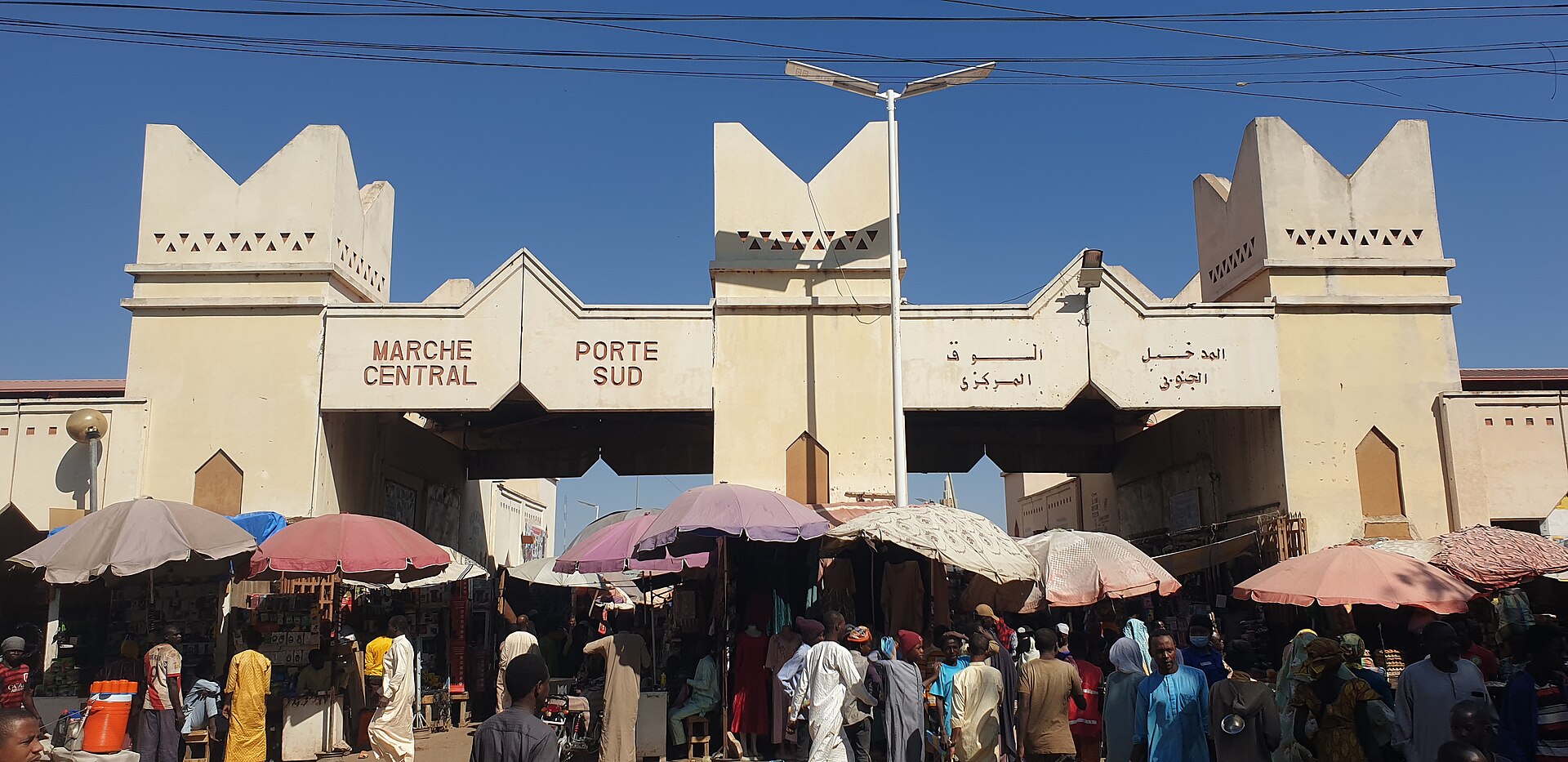
As of the end of July, Chad was hosting approximately 2.28 million forcibly displaced people, according to UNHCR. That includes around 1.56 million refugees and asylum seekers and nearly 219,600 internally displaced Chadians.
Chad is among the poorest countries in the world. It is hosting a displaced population larger than that of many European cities, and it does so with very little international attention.
Advertisement — ad space reserved
Where the people came from
Chad borders Sudan, Libya, Niger, Nigeria, Cameroon and the Central African Republic. It has received people from most of them.
The largest recent inflow followed the outbreak of Sudan’s civil war in 2023, which drove very large numbers across the eastern border into a region with limited water, limited arable land and almost no infrastructure. Chad also hosts long-standing refugee populations from the Central African Republic in the south, and people displaced by Boko Haram violence around Lake Chad in the west.
The internally displaced Chadians are a smaller number but a significant one, and they compete for the same scarce resources as the refugee population.
What the figures do and do not mean
UNHCR is unusually careful in how it presents this data, and its caveat is worth quoting in substance rather than skipping past.
The agency states that its figures are as reported by national authorities or by UNHCR itself, that they do not necessarily imply individual identification or registration of every person, and that they may include a degree of estimation depending on each government’s statistical methodology.
In other words, 2.28 million is a well-constructed estimate rather than a headcount. That is not a criticism. Counting people crossing a desert border during an active war is not the kind of exercise that produces exact numbers, and an agency that pretended otherwise would be less trustworthy, not more.
The contrast with the situation in Burkina Faso, which we report separately today, is instructive. There, the official national figure has not been updated since 2023. Here, an estimate is published with its limitations stated. The second is far more useful, even though it is less precise than it looks.
Advertisement — ad space reserved
The asymmetry nobody discusses
Debates about refugees in wealthy countries are conducted as though those countries carry the main burden. The distribution of the world’s displaced people does not support that.
The large majority of refugees are hosted by low- and middle-income countries, usually neighbouring the crisis they fled. Chad is a clear example: a country with limited fiscal capacity, its own food insecurity and its own internal displacement, hosting a refugee population that would be a national emergency in a far richer state.
There is a legitimate argument on the other side, and it should be stated. Proximity hosting is partly a function of geography rather than generosity, refugee-hosting states receive international funding that is itself a resource, and wealthy countries contribute substantially to those budgets even when they admit few people themselves.
Both things are true. The funding is real, and it is also true that UNHCR has been seeking flexible funding for the Sahel and Chad situation in amounts that are small relative to the need — a few million dollars to cover protection assistance through the end of the year.
Why this is not reported
Because nothing happens on any particular day. The population arrived over years, it remains, and its situation deteriorates gradually as rations are reduced and services thin out.
News is organised around events. A displacement crisis that is stable at a catastrophic level produces no events, which is why the countries hosting the most displaced people are consistently among the least covered — and consistently among the worst funded.
Advertisement — ad space reserved
Sources
- UNHCR Operational Data Portal, Sahel Crisis situation, figures for Chad as of end July 2026, published 10 August 2026
- UNHCR mapping of forcibly displaced and migrant populations in Chad by province, August 2026
- UNHCR appeals for flexible funding for the Sahel situation through 2026
- Our report on Burkina Faso’s displacement figures, 9 September 2026
Leave a Reply