Advertisement — ad space reserved
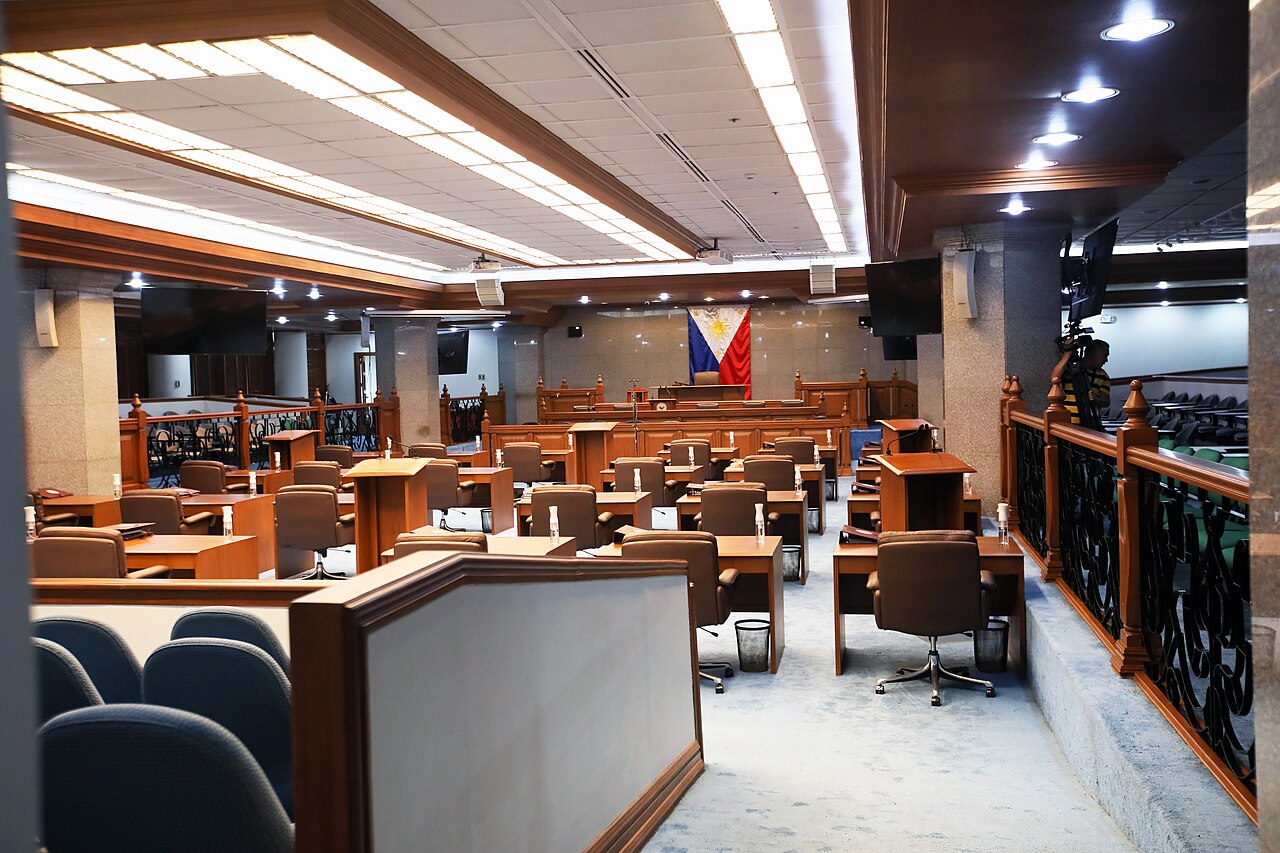
On the twenty-first day of Vice President Sara Duterte’s impeachment trial, the House prosecution panel called as its own witness a lawyer from her defence team. Within minutes of his taking the oath, the presiding officer declared him hostile.
Michael Wesley Poa is spokesperson for Duterte’s defence panel. He is also her former chief of staff and spokesperson at the Department of Education, from the period the prosecution is asking about. He temporarily stepped back from the defence role in order to testify.
What “hostile witness” actually means
The phrase sounds like an accusation. It is a procedural ruling.
Ordinarily a party questioning its own witness must use open questions and cannot lead them towards a desired answer. That rule exists because your own witness is presumed to be on your side. When a court declares a witness hostile, it lifts that restriction: the party who called them may cross-examine, ask leading questions and challenge the answers directly.
Here the ruling was made by presiding officer Senator Francis Escudero, and the prosecution’s counsel and spokesperson, Benjamin Tolosa Jr., conducted the direct examination. The declaration was uncontroversial in the sense that a member of the accused’s defence team is self-evidently not a friendly witness for the prosecution. It is unusual only because prosecutions do not normally call the other side’s lawyers at all.
The reason they did is that Poa was there. Before he was defence counsel, he was the departmental official who can speak to how the money moved.
Advertisement — ad space reserved
The money at issue
Article I of the impeachment case accuses Duterte of misuse, misappropriation and irregular liquidation of 612.5 million pesos in confidential funds: 500 million released to the Office of the Vice President between December 2022 and September 2023, and 112.5 million released to the Department of Education in 2023, while she was education secretary.
Poa’s testimony concerns the DepEd portion. Earlier evidence established that the 112.5 million was drawn as three Treasury cheques of 37.5 million each, encashed for the department by a special disbursing officer in February, April and July 2023.
Confidential funds are the mechanism at the centre of the case. They are public money that may be spent without the usual documentary trail, on the reasoning that intelligence work cannot be itemised publicly. The accounting rules that survive that exemption are therefore the only check there is — and a state auditor testified earlier in the trial that under the governing joint circular, failure to liquidate confidential funds properly creates a prima facie presumption that the accountable officer used the money for personal benefit.
The same auditor put on record that Duterte was the accountable officer for both offices in 2022 and 2023. The defence position, stated publicly by Poa himself before he took the stand, is that there was no misuse and that the full picture will emerge once the defence presents its evidence.
An article the prosecution may drop
Separately, and more consequentially for the shape of the trial, House prosecutors are considering skipping one of the four articles of impeachment entirely.
Manila Representative Joel Chua has indicated the bribery charge may take a back seat so the panel can move from confidential funds directly to the article on unexplained wealth, with the aim of finishing the prosecution case by October. He has said that dropping it should not be read as weakness, and that prosecutors remain intent on the unexplained wealth allegations.
Whether that is triage or retreat is a fair question, and one the Senate’s judgement will not answer. An impeachment court votes on the articles put before it. An article never presented is simply never tested, which means the underlying allegation is neither proved nor cleared.
Advertisement — ad space reserved
Why this is barely reported outside the Philippines
A sitting vice president is on trial before the upper house of a democracy of over a hundred million people, in proceedings running for weeks and broadcast live. Philippine outlets cover it in enormous detail. International coverage is close to absent.
Part of the reason is that the case is documentary. It turns on liquidation reports, audit circulars and cheque encashments rather than on anything visually dramatic. Part of it is that the trial has no single decisive moment to report; it has twenty-one days of them.
It is the same problem we noted in Taiwan’s six concurrent legislative corruption cases: substantial accountability proceedings in Asian democracies are undercovered precisely because they are working through institutions rather than collapsing.
What happens next
The prosecution expects three or four more witnesses on Article I, including an official from the Philippine Statistics Authority and a former education assistant secretary, before resting that part of its case — possibly within a week.
Nothing in the trial has been decided. Conviction in the Senate requires a two-thirds vote, and the senator-judges have given little away.
Sources
- GMA News live coverage of the impeachment trial, 2 September 2026
- Philippine Daily Inquirer and Philstar reporting, 1–2 September 2026
- Philippine News Agency on the prosecution’s witness list
- VERA Files analysis of the Commission on Audit testimony
Advertisement — ad space reserved
Leave a Reply