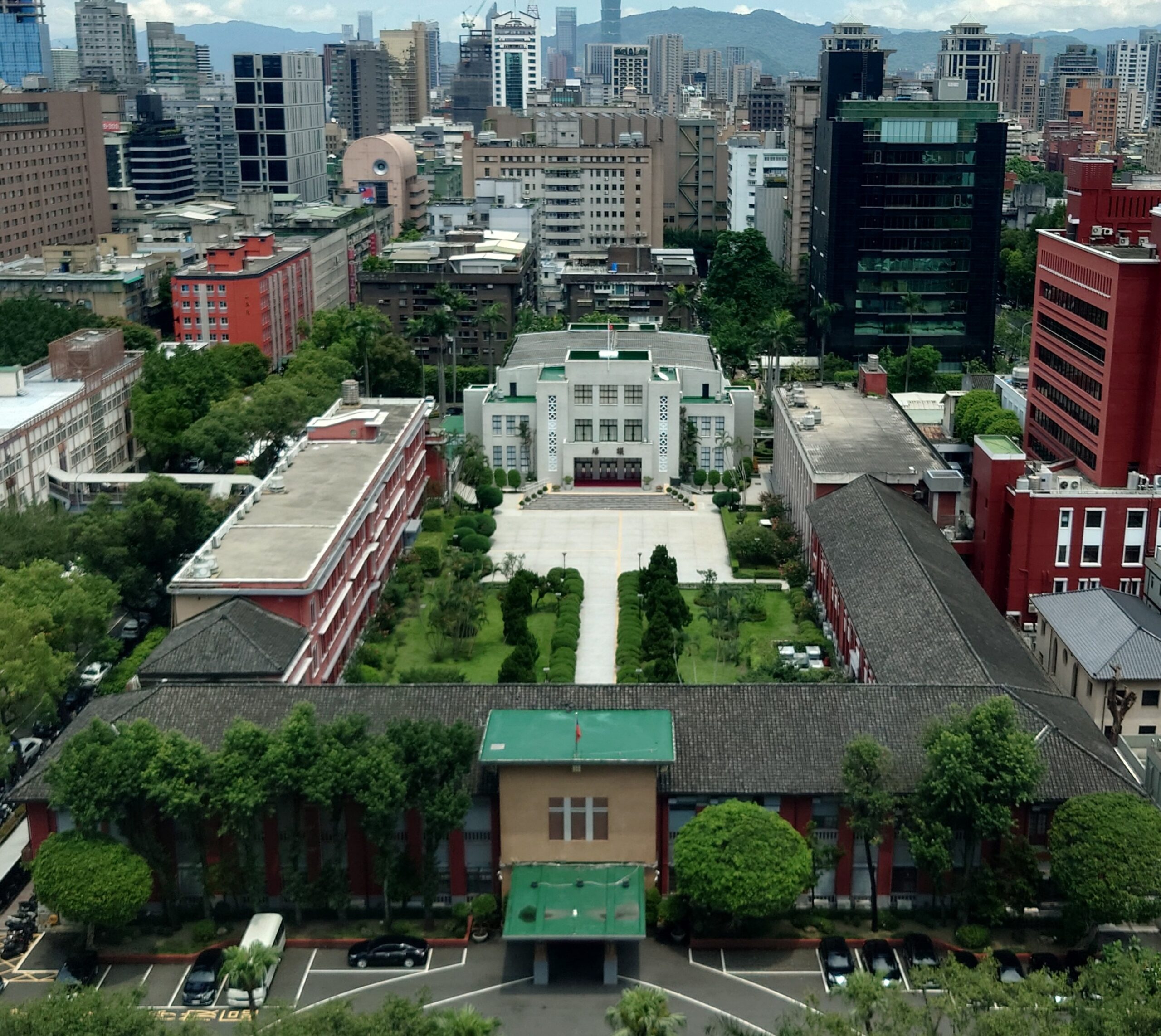
Six members of Taiwan’s Legislative Yuan are facing corruption proceedings during the current parliamentary term, according to a survey published by the Taipei Times last week. The cases run across both major parties and are at every stage of the process — indicted, convicted at first instance, convicted twice and then sent back for retrial.
Almost none of this has been reported outside Taiwan, in a country whose politics is otherwise covered intensively.
Advertisement — ad space reserved
The cases
Lin I-chin, of the governing Democratic Progressive Party, was indicted over allegations that she fraudulently claimed more than NT$14.12 million in aide expenses. The Tainan District Court sentenced her to seven years at first instance. The ruling is subject to appeal.
Sra Kacaw, of the opposition Kuomintang, was accused of accepting NT$7.11 million in bribes and receiving financial support from nine business owners. Taipei prosecutors indicted him on corruption and other charges and are seeking a sentence of more than ten years.
Chen Chao-ming, also KMT, was implicated in a case connected to the SOGO department store affair and accused of accepting NT$1 million in political donations. He was convicted at first and second instance and sentenced to eight years and four months — and then the Supreme Court overturned the corruption conviction and returned the case for retrial.
Three further legislators are at earlier stages of proceedings.
What these figures are, and are not
Every case above is an allegation until a court finally decides it, and Taiwan’s three-tier system means “convicted” frequently does not mean concluded. Chen’s case is the clearest illustration: two convictions, an eight-year sentence, and then the whole corruption finding set aside on appeal. Reporting a first-instance sentence as though it were a verdict would misdescribe what has happened.
That is also why a count of six is not straightforwardly a measure of six corrupt politicians. It is a measure of six prosecutions.
Advertisement — ad space reserved
Two readings, and they point opposite ways
The pessimistic reading is the obvious one: six sitting legislators under corruption proceedings in a single term, spread across the governing party and the opposition, suggests a problem in how political money moves — particularly around aide expenses and political donations, which are the mechanisms named in most of the cases.
The optimistic reading, made by people who study judicial independence in democratising states, is that prosecutions of sitting legislators from the governing party are evidence that prosecutors are operating without political direction. A system where only opposition figures are charged tells you something different, and worse. Here the DPP legislator received the heaviest first-instance sentence of the three detailed above.
Both readings can be true at once. The presence of corruption and the willingness to prosecute it are separate facts, and a rising count of cases does not distinguish between more wrongdoing and more enforcement.
Why nobody covers it
Taiwan receives a great deal of international attention, and almost all of it concerns one subject: the relationship with Beijing, the Strait, semiconductors and the possibility of conflict. Domestic politics reaches foreign readers mainly when it bears on that.
Corruption prosecutions of legislators do not obviously bear on it, so they stay inside the Chinese-language press and the local English-language papers. The effect is a picture of Taiwan as a geopolitical object rather than a functioning democracy with ordinary institutional problems and courts that occasionally sentence governing-party legislators to seven years.
Which is, arguably, the more informative thing to know about it.
Advertisement — ad space reserved
Sources
Case details and the count of six legislators from the Taipei Times, drawing on court and prosecutorial records.
Leave a Reply