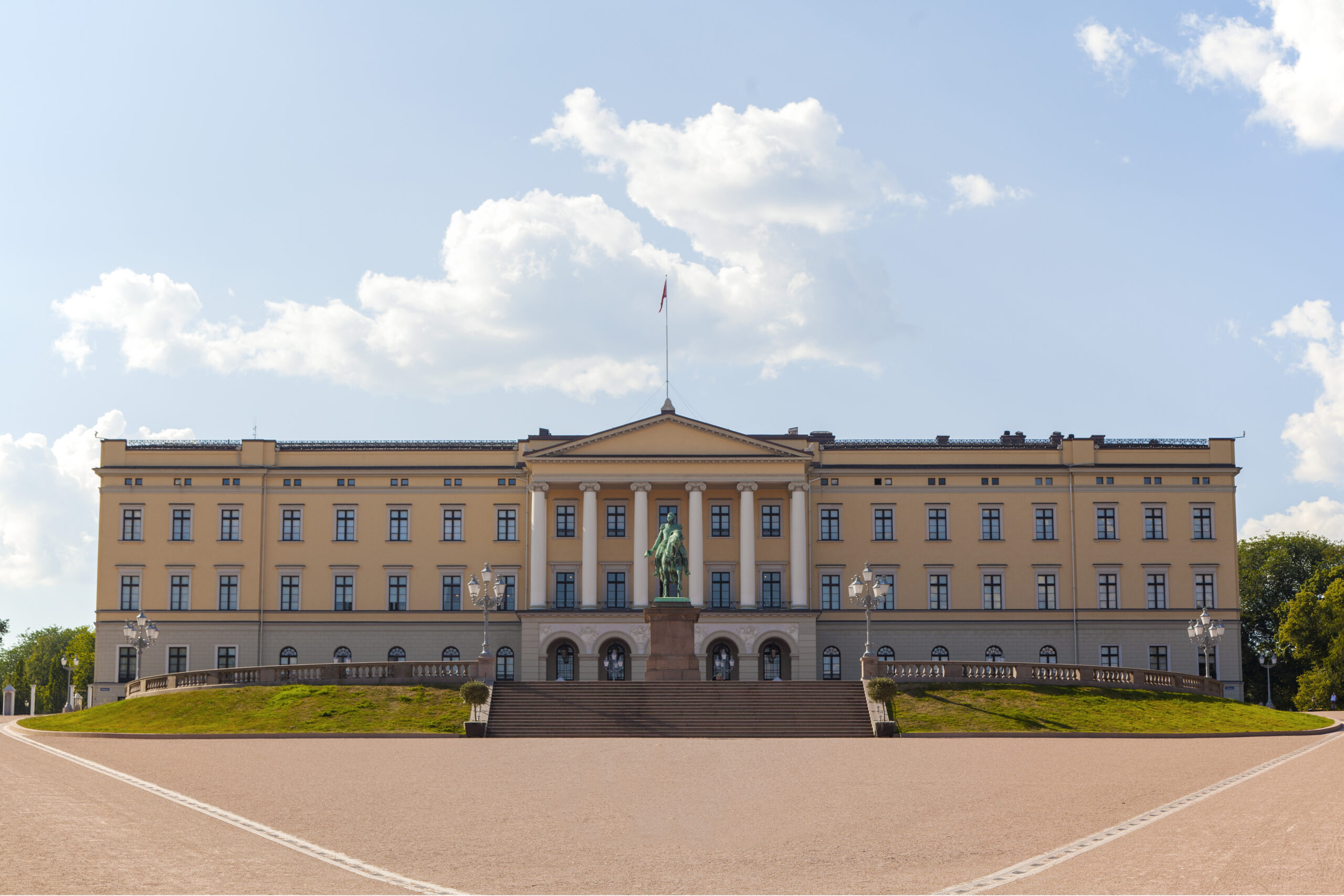
King Harald V of Norway died at Rikshospitalet in Oslo at 06:35 on Friday 28 August 2026. He was 89. The royal house announced the death on its website a little after 08:00, saying it was with deep sorrow that it reported that His Majesty had passed away peacefully.
Norway did not spend a single moment without a head of state. Under the Norwegian constitution the succession is automatic: Crown Prince Haakon became king in the same instant his father died. The royal standard on the roof of the palace in Oslo was lowered to half-mast, which is how the news is traditionally announced to the public before any statement is read.
Advertisement — ad space reserved
Eleven days in hospital
The king was admitted to Rikshospitalet on Monday 17 August after a medical examination. The palace said at the time that he had been treated in recent weeks with cortisone for haemolytic anaemia, a blood disorder, and that the treatment had caused a build-up of fluid in the body that needed hospital care. That announcement was the first time the public learned he had the condition at all.
His condition deteriorated over the following weekend. He developed a bacterial infection in the blood and was put on antibiotics. On Monday 24 August the palace described him as stable. He was signed off sick, and Crown Prince Haakon took over the constitutional functions as regent.
On Thursday morning the palace issued a much shorter and much graver update: the king’s health had worsened, and his condition was very serious. His closest family gathered at the hospital and stayed for most of the day. Queen Sonja was there for more than ten hours. Crown Prince Haakon and Crown Princess Mette-Marit came and went twice. Princess Ingrid Alexandra and Prince Sverre Magnus attended, as did the king’s elder sister Princess Astrid, who is 94. A further update just before 17:00 said the condition was unchanged.
Family returned to the hospital early on Friday morning, Queen Sonja arriving shortly after 07:30 and the younger royals around 08:10. By then the king had already died. Crown Prince Haakon is understood to have stayed with him overnight.
What haemolytic anaemia is
Haemolytic anaemia is a form of anaemia in which red blood cells are broken down faster than the body can replace them. Because red cells carry oxygen, a shortage of them forces the heart to work harder to move the same amount of oxygen around the body. In an 89-year-old, that additional strain is significant on its own. Adding a bacterial infection in the bloodstream, and the side effects of the drugs used to suppress the immune response, puts an elderly and already vulnerable body under considerable pressure.
Speaking to Norwegian media before the king’s death, the retired haematologist Sigbjørn Berentsen described the situation as serious but neither unusual nor untreatable, and said the king was responding to the antibiotics.
Advertisement — ad space reserved
Thirty-five years on the throne
Harald became king on 17 January 1991, when his father Olav V died. He and Queen Sonja were consecrated in Nidaros Cathedral in Trondheim on 23 June the same year. That ceremony, known in Norwegian as a signing, is not a coronation. The constitutional requirement to be crowned was removed by parliament in 1908 as undemocratic and outdated. Olav V revived the occasion in a different form, asking instead for a blessing on his work as king, and Harald repeated it.
He was the first monarch born in Norway in six hundred years, and he reigned for 35 years. In recent years he and Queen Sonja had set themselves the task of visiting every municipality in the country. That programme was still running: they were due in Rindal and Høylandet in Trøndelag on 1 and 2 September, and at Gjefsjøen mountain farm in Snåsa on 3 September, two days after his sick leave was scheduled to end.
A long record of illness
The king had a series of hospital stays and periods of sick leave over more than two decades. In December 2003 he had a successful cancer operation to remove a tumour from his bladder. In 2005 a heart valve was replaced. In 2020 he was admitted after dizziness and later that year received a new biological heart valve. In 2021 he had surgery on a knee injury.
In February 2024 he fell acutely ill with an infection while on holiday in Malaysia. The infection affected his heart, a temporary pacemaker was fitted, and he was flown home to Norway, where a permanent pacemaker was implanted at Rikshospitalet. On 24 February this year he spent three days in hospital on Tenerife during a winter holiday, treated for infection and dehydration.
Advertisement — ad space reserved
A country in mourning
The government set a national mourning period on Friday running from the day of death to the day of the funeral. Church bells rang across the country between 12:00 and 13:00. Flags are flying at half-mast until the funeral is over.
People had begun leaving flowers outside the palace on Thursday, before the death was announced, and gathered on Slottsplassen through the night and into Friday morning. Norwegian royal commentators described the scenes as an unusually quiet, collective vigil rather than a public event.
By tradition the king will be laid to rest in a sarcophagus in the crypt at Akershus Castle in Oslo, where Haakon VII and Queen Maud lie in a double sarcophagus and Olav V and Crown Princess Märtha in another.
What happens next
The new king will attend an extraordinary council of state, where he announces the name he will reign under and his motto, and he must swear the constitutional oath before parliament as soon as the chamber can be prepared. Mette-Marit becomes queen. Princess Ingrid Alexandra, who is 22, is expected to be given the title of crown princess. We set out the mechanics of the transition in a separate piece: Norway Already Has a New King. Here Is What Happens Next.
Sources
Announcement from the Norwegian royal house (kongehuset.no); NRK; VG; Aftenposten; NTB.
Leave a Reply