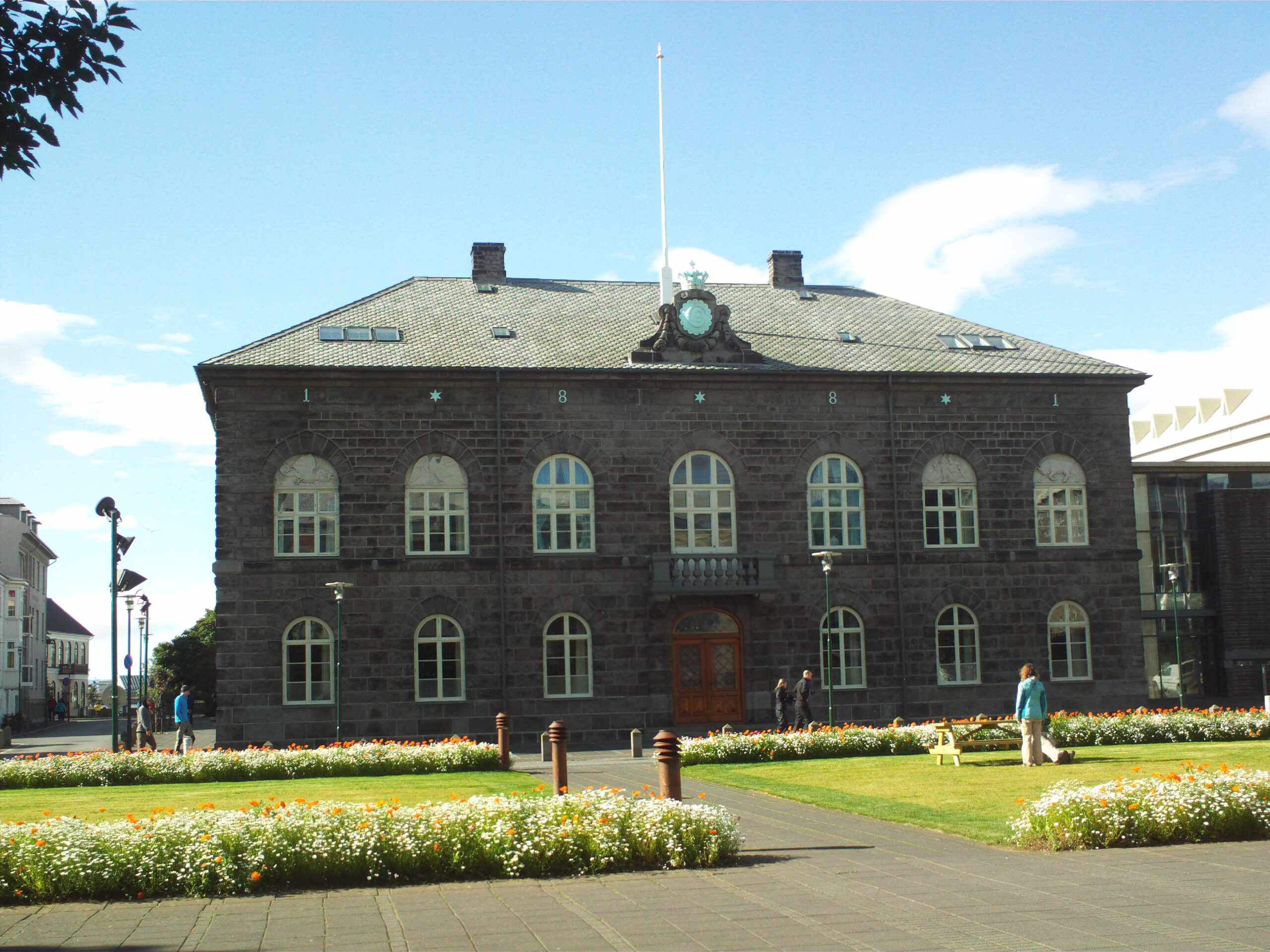
Iceland voted on Saturday against reopening accession negotiations with the European Union. The final count, confirmed on Sunday, put No on 52.8 per cent and Yes on 47.2 per cent — 118,040 votes against 105,399, out of 225,031 cast. Turnout was 82.5 per cent, exceptionally high for a referendum in a country of roughly 390,000 people.
Advertisement — ad space reserved
What was actually on the ballot
The question was narrow, and the narrowness matters. Voters were not asked whether Iceland should join the European Union. They were asked whether the government should restart the accession negotiations that Iceland opened in 2009 and shelved in 2013.
Had Yes won, the government would have gone back to Brussels to negotiate terms. Any agreement reached there would then have gone to a second, separate referendum before Iceland actually joined. Saturday’s vote was one step in a two-step process, and it was consultative rather than binding — though Prime Minister Kristrún Frostadóttir had said in advance that the government would respect the result either way.
She has since said the membership question will not return to the political agenda while her centre-left coalition holds office, a mandate that runs to 2028. Whether Iceland formally withdraws its dormant 2009 application is being left to parliament.
Two campaigns that were not arguing about the same thing
The government campaigned on security and economics. Iceland is a NATO member with no standing army of its own, and its defence rests entirely on allies. Ministers argued that membership would give a small Arctic state a seat at a table where decisions about its region are increasingly being taken without it, and a shield against trade wars. Supporters added a domestic argument: Iceland’s central bank rate stands at eight per cent against 2.25 per cent at the European Central Bank, and some saw the euro as a route to cheaper money and steadier prices.
The No campaign did not really contest those points. It argued about fish.
Marine products and farmed fish made up close to 47 per cent of Iceland’s exports in the year to July 2026. EU membership would bring Icelandic waters inside the Common Fisheries Policy, and opponents argued that no assurance offered during negotiations could be relied on permanently. Some Icelandic officials countered that in practice Iceland would keep control of its waters, since no EU country has fished there in decades. That is a claim about how quota allocation works rather than about what the treaties permit, and the No campaign treated the distinction as the whole point.
Advertisement — ad space reserved
The sector shrank. The politics did not
There is a puzzle in the result worth sitting with. Fishing is a smaller part of Iceland’s economy than it used to be. Agriculture, forestry and fishing together contributed 9.1 per cent of GDP in 1995 and 3.7 per cent by 2025, as manufacturing, tourism and services grew. Catch volumes halved from a 1997 peak of 2.2 million tonnes to about 1.1 million tonnes in 2024.
So a shrinking share of output carried a national vote. Political scientists studying referendums often note that the losing side of an economic argument can still win a sovereignty argument, because sovereignty questions travel further than the sector they started in: rural voters, who broke heavily for No, were not only voting about quota tonnage. Others would say the simpler reading is right — that fishing remains the industry that built the country’s independence and that voters weighed it accordingly. Both readings fit the numbers; the referendum cannot settle between them.
Why the vote came early
The coalition elected in 2024 had planned the referendum for next year and moved it forward. The reason usually given is the changed atmosphere around the Arctic, and specifically the pressure the United States has applied to Greenland, which sits on Iceland’s other side. Governments in the region have been recalculating what small-state security looks like when the largest guarantor is also the largest source of uncertainty.
That argument evidently persuaded a large minority — 47 per cent is not a rout — but it did not persuade the country. Polling in June had suggested a narrow Yes; a July survey found nearly a fifth of voters undecided. Late-deciding voters appear to have broken toward the status quo, which is the ordinary pattern in referendums where one option is “carry on as we are”.
What changes, and what doesn’t
Almost nothing changes tomorrow. Iceland remains in the European Economic Area and in Schengen, which give it access to the single market and free movement without membership. Those arrangements are untouched by the vote. Icelanders will keep trading with, travelling to and regulating in step with the EU on much of what matters commercially.
What Iceland does not get is a vote inside the institutions whose rules it largely follows — the standing trade-off of the EEA model, now confirmed for at least another parliamentary term.
In Brussels the result reads as a setback. Officials there had hoped a wealthy, stable Nordic applicant would lend momentum to enlargement at a moment when Arctic security is high on the agenda, and the EU had appeared willing to be flexible on the difficult chapters. An EU diplomat quoted by Reuters called it a clear setback and pointed to fishing and independence as decisive. The institutions’ public response was muted: the choice of the Icelandic people, respected in full.
Advertisement — ad space reserved
Related: Canada Replies to a Renaming With a Sign.
Sources
Official count and turnout reported by RÚV and carried by Euronews; campaign framing and government response via Al Jazeera and CNN; export and GDP figures from Statistics Iceland and World Bank data as reported by CNBC.
Leave a Reply