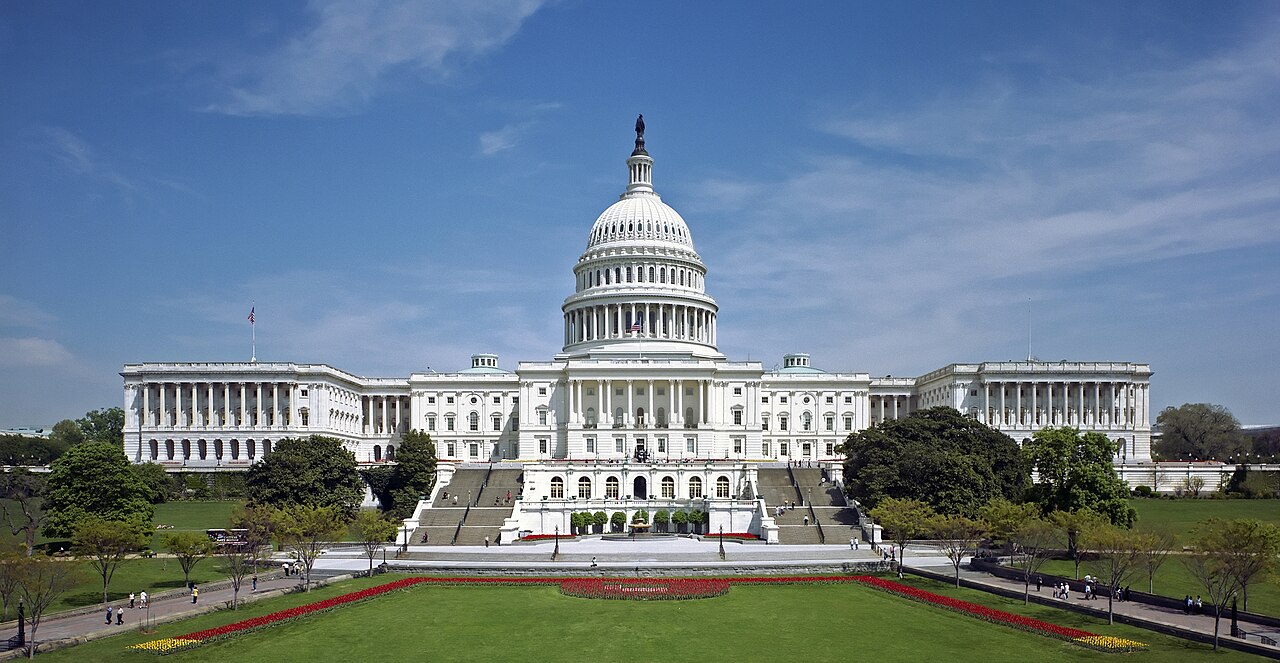
On Thursday 3 September 2026 the US House of Representatives voted 237 to 169 to strip federal funding from universities that participate in boycotts of Israel. Thirty-three Democrats joined the Republican majority. The bill now goes to the Senate, where its prospects are unclear.
Representative Rashida Tlaib, who is Palestinian American, called the measure “an attack on free speech and academic freedom”
and argued that it forces universities to pledge loyalty to a foreign government’s position in order to keep federal student aid.
Advertisement — ad space reserved
The case for the bill
Supporters make two arguments. The first is about discrimination: an institutional boycott, they say, targets people on the basis of national origin, since it applies to Israeli scholars and institutions as such, and federal money should not subsidise that any more than it subsidises other forms of national-origin discrimination. On this view the bill is an anti-discrimination measure attached to a funding stream, not a speech restriction.
The second is about the spending power. Congress is not obliged to fund anything, and it routinely attaches conditions to the money it gives universities. Nobody is prohibited from boycotting; institutions that do so simply forgo a subsidy. Roughly 38 states have passed comparable anti-boycott provisions for state contractors, and supporters treat the federal bill as an extension of an established practice.
The case against it
Opponents start from NAACP v. Claiborne Hardware (1982), in which the Supreme Court held that a politically motivated boycott — there, of white-owned businesses in Mississippi — was protected expressive conduct under the First Amendment. If a boycott is protected speech, they argue, conditioning a benefit on abandoning it is an unconstitutional condition: the government cannot buy up a right it could not directly prohibit.
Several federal courts have applied that reasoning to state anti-boycott laws affecting individual contractors, with mixed results, and one federal appeals court upheld a state law on the ground that a decision about whom to buy from is commercial conduct rather than speech. That split is why the underlying question is unsettled.
Opponents also raise a vagueness objection: “participates in a boycott” is a phrase that can reach a departmental decision not to sign an exchange agreement, a student government resolution, a faculty senate vote, or an individual professor declining a conference invitation. Universities responding to that risk tend to over-comply, restricting more than the statute requires because the penalty is the entire federal grant and loan relationship.
Advertisement — ad space reserved
The case that cuts the other way
The precedent that most helps the bill’s supporters is Rumsfeld v. FAIR (2006). Law schools had barred military recruiters over the armed forces’ treatment of gay service members; Congress responded with the Solomon Amendment, conditioning federal funds on granting recruiters equal access. A unanimous Supreme Court upheld it, holding that the law regulated conduct rather than speech and that the schools remained free to say whatever they liked about the military while hosting it.
The distinction the courts will have to work out is whether an academic boycott looks more like the expressive boycott in Claiborne or the access restriction in FAIR. Reasonable lawyers disagree, and the answer may depend on how the final statutory text defines participation.
The wider setting
The vote lands in a year in which federal funding has been used repeatedly as leverage over universities — in disputes over research grants, over international students, and over the existence of particular academic departments. This week a student newspaper at Stanford won a lawsuit over restrictions on pro-Palestinian speech, one of several cases in which courts have pushed back on campus speech measures.
Whichever way the constitutional argument resolves, the practical effect of a bill like this arrives before any court rules. General counsels advise caution the day a measure passes one chamber, not the day it becomes law.
We have covered other recent uses of conditional federal funding, including the Justice Department opinion tying assistance for poor families to immigration reporting.
Advertisement — ad space reserved
Sources
- US House of Representatives roll call vote, 3 September 2026
- Democracy Now!, headlines for 4 September 2026, including remarks by Rep. Rashida Tlaib
- NAACP v. Claiborne Hardware Co., 458 US 886 (1982); Rumsfeld v. FAIR, 547 US 47 (2006)
- Reporting on the Stanford Daily’s successful suit over campus speech restrictions, 4 September 2026
Leave a Reply