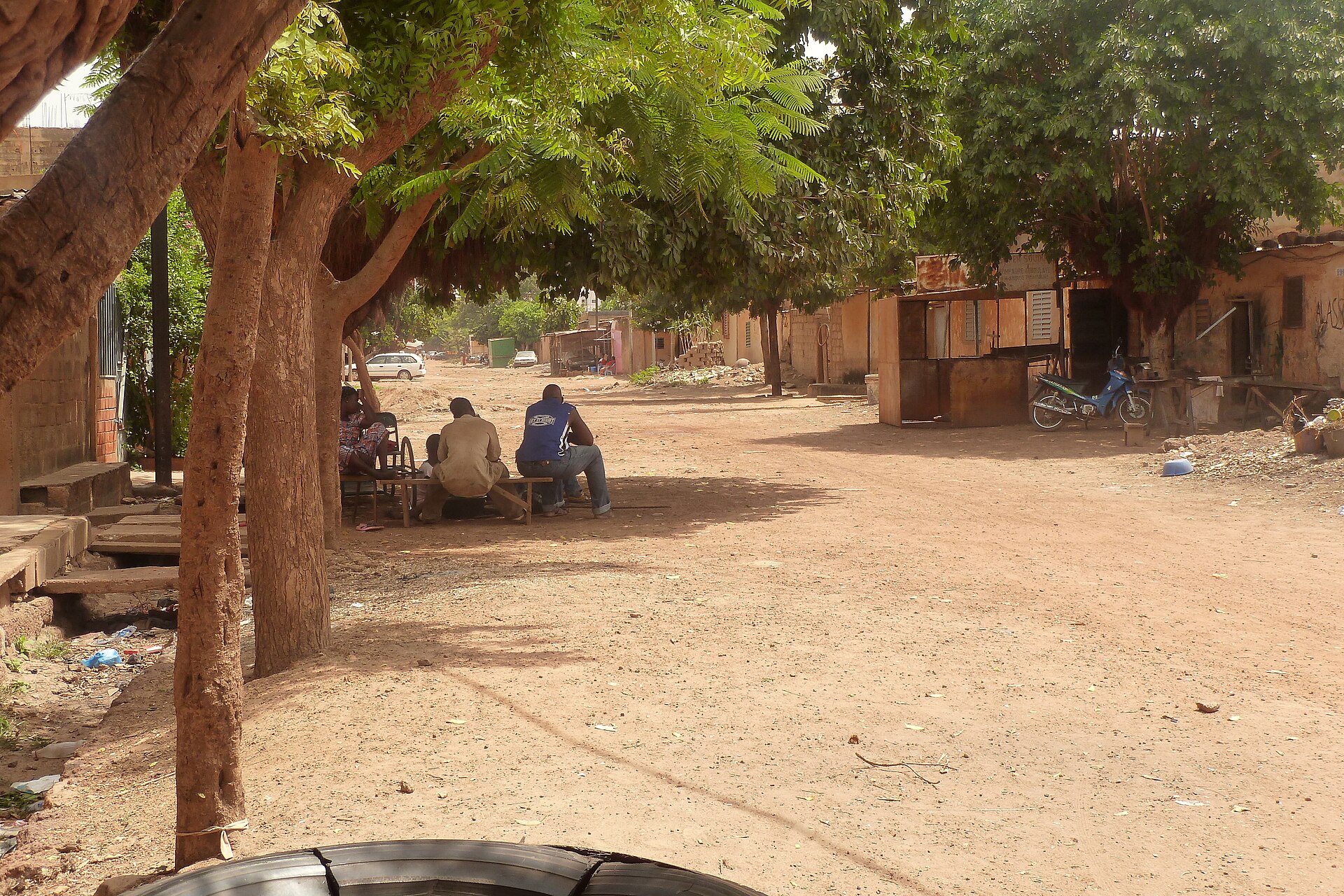
Burkina Faso has not officially updated its internal displacement figures since March 2023.
The last consolidated national figure, from that date, was 2.1 million people displaced — roughly nine per cent of the population. Three and a half years later, in a country where non-state armed groups are estimated to control around half the territory, that remains the official number.
Advertisement — ad space reserved
What is still being counted
Not everything stopped. A rapid response coordination platform continues to register new displacements, recording roughly 400,000 new internally displaced people in 2025, similar to 2024 and down from the much higher figures of 2022 and 2023.
The European Commission’s humanitarian arm estimates 4.5 million people in need of humanitarian assistance in Burkina Faso in 2026. Government data for 2026 records 1.6 million people in acute food insecurity, of whom more than 223,000 are in the emergency phase. The International Rescue Committee puts the number in critical need at 6.3 million.
So there are numbers. What there is not is a current official figure for how many Burkinabè are displaced in total — the single statistic that determines the size of a humanitarian response.
Why a government might stop publishing
Several explanations are offered, and they are not mutually exclusive. None of them is confirmed, and it is worth being explicit that this is inference rather than established fact.
The first is capacity. Registering displaced people requires officials to reach them. In areas under blockade or armed group control, that access does not exist, and a government cannot count what it cannot reach.
The second is presentation. A displacement figure is a direct measure of how much of a country a government does not control. A rising number is politically difficult for an administration that came to power in a 2022 coup partly on the argument that its predecessor could not contain the insurgency.
The third is methodological. Registration systems can become unreliable — double counting, people returning and leaving repeatedly — and a government may genuinely believe an old figure is better than a bad new one while a revised methodology is developed.
The first and third are ordinary problems that afflict statistical systems in conflict everywhere. The second is the one that changes how the silence should be read, and the honest position is that outsiders cannot determine which is doing the work here.
Advertisement — ad space reserved
What the absence of a number does
Humanitarian funding is allocated against measured need. Response plans are costed per person. Donor governments justify allocations to their own parliaments using figures.
When the headline figure stops moving, the appeal built on it stops growing, regardless of what is happening on the ground. Burkina Faso has appeared repeatedly at or near the top of the Norwegian Refugee Council’s annual list of the world’s most neglected displacement crises, and in the year it ranked first its response plan was funded at under forty per cent.
The EU’s own allocation illustrates the direction: €43.1 million in 2025, an initial €27.5 million in 2026. Whether the cut reflects the frozen statistics, wider aid budget pressure, or a judgement about conditions is not something an outsider can determine from the figures alone. All three are plausible.
The blockade tactic, again
The EU’s humanitarian description of its priorities names populations trapped in hard-to-reach areas under blockade and heavily dependent on aid deliveries. That is the same method we described yesterday in Mali, where an armed group has blockaded fuel supplies to the capital for a year.
Burkina Faso, Mali and Niger form the Alliance of Sahel States, all three under military rule and all three facing the same insurgency. Encircling towns and controlling what enters them has become the standard tactic across the region. It produces sieges rather than battles, which is precisely why so little of it is reported.
A country that has stopped publishing how many of its people have been driven from home, in a region where the war is fought by cutting places off, is a story about two kinds of invisibility reinforcing each other.
Advertisement — ad space reserved
Sources
- European Civil Protection and Humanitarian Aid Operations, Burkina Faso country page, updated 2026
- Coordination platform for rapid response, new displacement registrations for 2024 and 2025
- International Rescue Committee, Burkina Faso country page, 2026
- Norwegian Refugee Council, The world’s most neglected displacement crises, annual editions
- FEWS NET, Burkina Faso key message update, March–September 2026
- Our report on the Mali fuel blockade, 8 September 2026
Leave a Reply