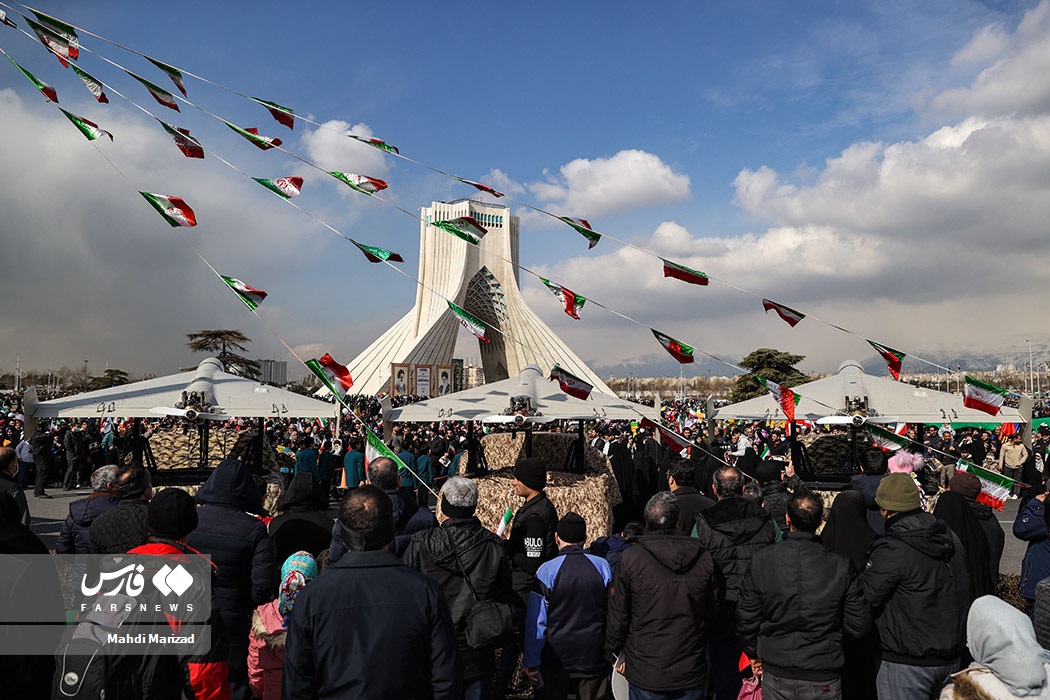
Russian drones and missiles have crossed into Moldovan and Romanian airspace repeatedly over recent months. In most cases the published record describes the same sequence: detection, notification, airspace closure, and then a wait for the object to leave or come down on its own.
The obvious question is why nobody shoots them down. The answer is more interesting than reluctance.
Advertisement — ad space reserved
Detection is not the hard part
Seeing a drone is comparatively straightforward with modern radar, though small, low-flying objects made partly of composite materials are harder than aircraft. Shahed-type drones have been modified to reduce their radar signature, including honeycomb structures inside the wings.
The difficulty is what happens after detection, and it splits into three problems.
The cost problem
A one-way attack drone is cheap. The interceptor missiles that surface-to-air systems fire are not — they run from tens of thousands of dollars into the millions.
Using an expensive missile against a cheap drone wins the engagement and loses the exchange, especially when the drones arrive in quantity and the interceptor stock is finite and slow to replace. This is why Ukraine has developed cheaper methods — machine guns from helicopters and trucks, guided rockets costing a fraction of a full missile, and interceptor drones.
Those cheaper methods require systems a country has to have bought and crews it has to have trained. A state that has not built that layer has only the expensive option, or none.
Advertisement — ad space reserved
The falling debris problem
This is the one most often left out. A drone that is shot down does not vanish. It falls, usually with its warhead, onto whatever is beneath it.
Over open country that may be acceptable. Over a town it is a decision to create a crash site. Air defence commanders weigh the risk the object poses against the risk of bringing it down where it is, and over populated areas the calculation frequently favours tracking it and warning people rather than engaging.
The drone that delayed President Zelensky’s departure this week came down in a sunflower field, started four fires and injured nobody. Nobody shot it down. That outcome is a reasonable illustration of why the default is what it is.
The political problem
Moldova is not a member of NATO. Romania is. That difference matters less for the physics than for what an engagement would mean.
Destroying a Russian military object is an act with consequences a small state has to be prepared to absorb alone if it is not covered by an alliance. Governments in that position have generally chosen documentation over engagement — recording the violation, protesting, and building a record — which is what Moldova’s published statements consistently describe.
Critics argue this establishes that airspace can be violated without cost, and that the absence of a response invites repetition. Defenders argue that a country with limited air defence and no alliance guarantee cannot make credible threats it cannot sustain, and that pretending otherwise is more dangerous than restraint.
Both positions are held by serious people, and the disagreement is not really about drones. It is about what a small state’s options are when a much larger neighbour is at war next door.
Our report on this week’s incident is here.
Advertisement — ad space reserved
Sources
- Moldovan Defence Ministry and police statements on airspace violations, August and September 2026
- Open Source Munitions Portal, Shahed-131 and -136 visual guide, on radar-reduction measures and counter-drone methods
- Published material on interceptor costs and low-cost counter-UAV systems
- Associated Press reporting on the 8 September drone that came down in Rîșcani district
Leave a Reply