There is a phrase seismologists and structural engineers repeat often: earthquakes don’t kill people, buildings do.
It is a simplification, and specialists in the field would be the first to say so — landslides, tsunamis and fires triggered by earthquakes also kill. But it points at something the research supports: most deaths in most earthquakes are caused by structures failing. That makes the question of why structures fail worth examining.
Advertisement — ad space reserved
What makes a building survive
Earthquake-resistant design is not exotic. The principles have been understood for decades and most of them are unglamorous.
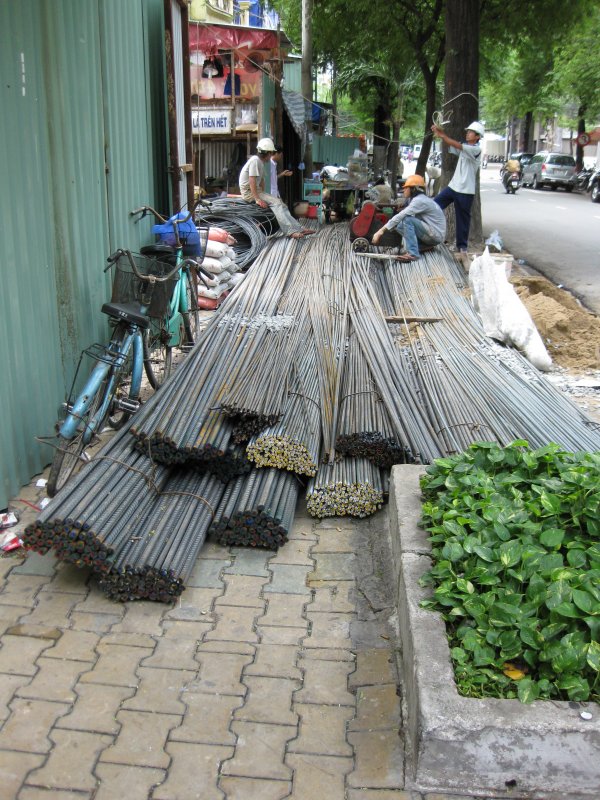
A building needs to move without breaking apart, which means connections between columns, beams and floors must hold when the structure flexes. Concrete needs adequate steel reinforcement, correctly placed and properly tied. Walls need to be tied to floors so they cannot peel away. Heavy, rigid construction on soft ground behaves badly, and the ground itself has to be assessed before anything is designed.
None of this requires advanced technology. It requires design, materials, supervision and inspection — each of which costs money.
The economics of the extra cost
Estimates of what seismic design adds to construction cost vary widely by country, building type and the standard being met. Published figures for new construction generally fall somewhere between a few per cent and around a tenth of the total. It is a real cost, and by the standards of a building project it is not enormous.
Economists who study disaster risk point to a timing problem. The cost is paid immediately, by whoever builds, while the benefit accrues to whoever occupies the building during an event that may be decades away — or may never come.
The argument runs that this produces weak market incentives. A developer selling apartments captures little premium for structural safety that buyers cannot see and cannot easily verify. A family building their own home incrementally, room by room as money allows, is rarely in a position to commission an engineer.
That reasoning is the standard justification given for mandatory building codes: that safety of this kind is not something buyers can reliably assess for themselves.
Advertisement — ad space reserved
Codes and enforcement
Most earthquake-prone countries have adopted seismic codes, often modelled on international standards. Engineers who work on post-earthquake assessments frequently observe that the difference between countries lies less in the text of the regulations than in what happens on site.
Whether an inspector visits while the reinforcement is still visible, before the concrete is poured. Whether penalties for non-compliance outweigh the saving from cutting corners. Whether anyone assesses the older buildings that predate the code entirely.
There is a counter-argument worth noting. Codes written for wealthy countries can be expensive to comply with, and critics contend that standards set too high, in places where much housing is self-built, can push construction into the informal sector where no standard applies at all. Others respond that weaker codes simply institutionalise the risk. Both positions appear in the professional literature.
The retrofit problem
Codes generally apply to new construction. The buildings that fail in most earthquakes were built before the current code, and strengthening an existing structure is considerably more expensive than building it correctly at the outset.
Retrofitting also disrupts the people living there, requires access to every unit, and produces no visible improvement afterwards. Governments that fund it have little to show for the spending unless an earthquake arrives.
Schools and hospitals are the usual priority, on the reasoning that both concentrate vulnerable people and both are most needed in the hours after an event. A significant part of a hospital in Cali collapsed on Monday.
Why the question is asked at all
Earthquakes of comparable magnitude have produced very different death tolls in different places, and researchers who study this attribute much of that variation to construction quality rather than to chance.
That is a contested field, and the variables are hard to separate: population density, time of day, soil conditions and distance from the epicentre all matter too, and poorer countries face constraints that are not simply a matter of political will.
What is not seriously disputed is the underlying point. Nobody can prevent an earthquake. A significant share of what an earthquake does to people is determined by decisions made in advance — which is why the assessment of what failed, and why, is usually the most consequential part of the response, long after the search teams have gone.
Prompted by the Colombia earthquake of 10 August 2026. Background drawn from published earthquake-engineering and disaster-economics literature.
Advertisement — ad space reserved
Leave a Reply