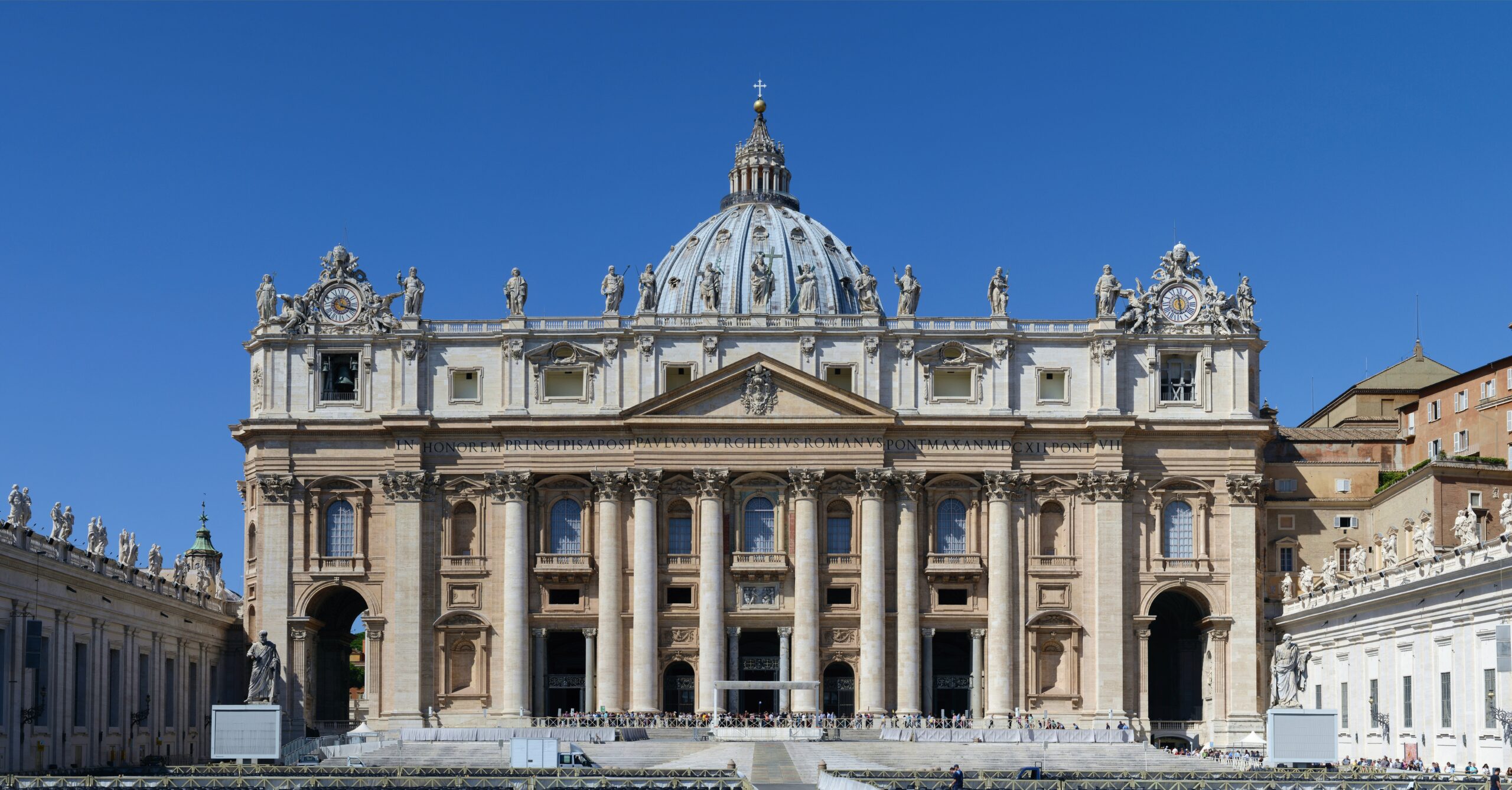
Pope Leo XIV has promulgated a new Fundamental Law for Vatican City State, which entered into force immediately on 31 July 2026 — replacing a constitutional framework rewritten only three years earlier.
It is the fourth such text in the history of the modern Vatican state, and the speed of the change is itself part of the story.
Advertisement — ad space reserved
Two things called “the Vatican”
This is the distinction that makes the rest comprehensible, and it is almost never explained.
The Holy See is the governing authority of the Catholic Church worldwide. It is what sends nuncios to capitals, signs treaties, holds observer status at the United Nations and issues teaching to more than a billion Catholics.
Vatican City State is a territory of about 44 hectares inside Rome, created by the Lateran Pacts in 1929. It has walls, a post office, a railway station, a pharmacy, a fire service and a few hundred residents.
The Pope heads both. But a Fundamental Law concerns the second — the machinery of running a small territory — rather than doctrine or the governance of the Church itself.
Why the state exists at all
The territory exists to guarantee the independence of the first thing. For centuries the popes ruled substantial lands across central Italy; those were absorbed into the new Italian state in the nineteenth century, leaving the papacy without territory and in a long standoff with Rome.
The 1929 settlement resolved it by creating the smallest viable state — enough sovereign ground that no government could claim jurisdiction over the Pope, and not enough to constitute a political power in its own right.
That logic explains why constitutional questions there are not merely administrative. They concern the arrangement that keeps the Church’s leadership answerable to no other state.
Advertisement — ad space reserved
Where the Pope’s authority comes from
Reporting on the new law indicates that its significant changes concern how the Vatican understands the source of the Pope’s temporal authority — his power as head of the state, as distinct from his spiritual office.
That sounds abstract and has practical consequences. If temporal authority is understood as flowing directly from the spiritual office, then delegating it to officials is a matter of the Pope’s discretion, revocable at will. If it is understood as resting on the state’s own constitutional order, then structures acquire a degree of independent standing.
The Vatican has been through years of financial reform, a criminal trial of a cardinal, and successive reorganisations of its curial departments. Questions about who holds which power, and on what basis, are not theoretical there.
The unusual speed
Two details stand out. The text replaces one issued in 2023 — a very short interval for a constitutional document. And it entered into force immediately, without the customary gap between promulgation and implementation.
Immediate entry into force generally signals either that the changes were considered urgent, or that the drafters saw no need for institutions to prepare. Either reading is worth noting, and neither can be confirmed from the fact alone.
Why it matters outside the walls
Very few people live in Vatican City. But the Holy See’s ability to act internationally — to mediate, to speak on refugees or conflict, to negotiate with governments over the position of Catholics in their countries — rests on the sovereignty this small state provides.
Constitutional arrangements there are the legal foundation for an institution with more than a billion members. That makes a technical document about a 44-hectare territory rather more consequential than its size suggests.
Source: Catholic Nutshell News, 10 August 2026. Historical background on the Lateran Pacts and the structure of Vatican City State.
Advertisement — ad space reserved
Leave a Reply