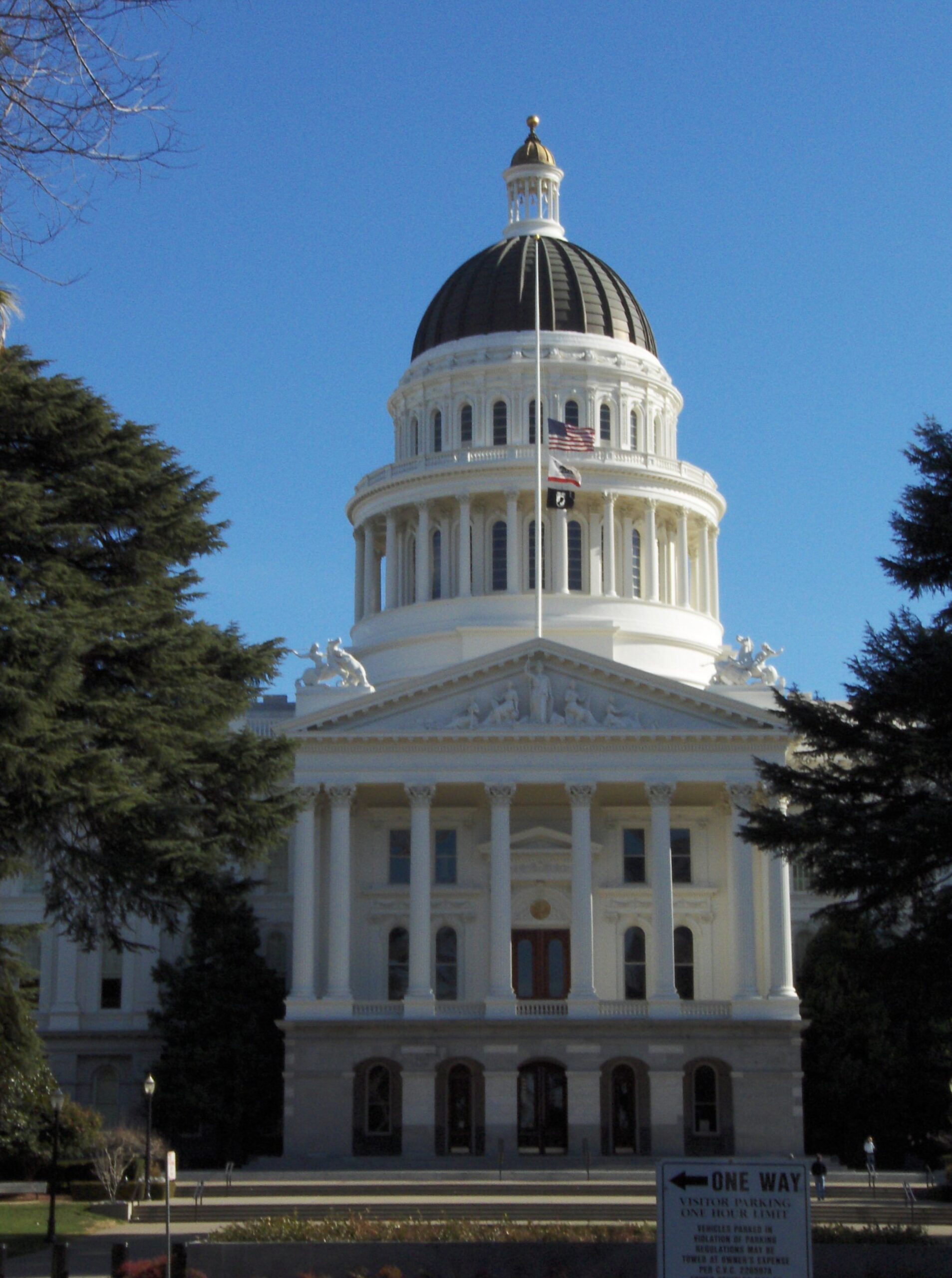
While attention stays on Washington, the rules that will actually govern artificial intelligence in the United States are being written in state capitols — and this week produced a great deal of writing.
In Sacramento, California legislators held two of the session’s most consequential committee votes on Thursday. By the end of the week, 24 AI-related bills had moved toward floor votes and two had received final approval. In Albany, New York’s session closed on 1 June having passed a package that includes a children’s chatbot safety bill, an AI training-data transparency act, the FAIR News Act, a data-centre moratorium and a ban on AI-assisted surveillance pricing. Governor Kathy Hochul has until 31 December to sign.
Advertisement — ad space reserved
What the bills are actually about
Reading across the states, the legislation clusters into a few recognisable categories.
Disclosure. Requirements to label AI-generated content, particularly in political campaign material. Pennsylvania has bills on both general AI disclosure and campaign-specific rules, plus one requiring provenance tools in generative products.
Children. Safety requirements for chatbot operators, especially “companion” services, and rules for schools. New Jersey has bills on both, alongside a resolution urging whistleblower protections for AI company employees.
Training data. Transparency about what material models were trained on — the question at the centre of the copyright disputes.
Specific harms. Bans on nudification apps, restrictions on surveillance-based pricing, and limits on data-centre construction.
Why the states and not Congress
Federal AI legislation has repeatedly stalled. States face fewer procedural obstacles, and two of them — California and New York — have enough economic weight that a rule adopted there tends to become the practical national standard, because it is cheaper for companies to build one compliant product than fifty.
California matters most, since the largest AI developers are headquartered there. A disclosure requirement passed in Sacramento reaches products used worldwide.
Advertisement — ad space reserved
The argument against
Industry groups make a coherent case that fifty different regimes are worse than one, even a strict one. A company shipping a product in every state faces conflicting disclosure formats, differing definitions of what counts as an AI system, and separate compliance regimes — a burden that falls hardest on small developers, not the firms with legal departments.
There have been repeated attempts to pre-empt state AI laws federally, on exactly that argument. Opponents counter that pre-emption without a substantive federal standard means no rules at all, and that the states are legislating precisely because Congress has not.
How to read this from outside the US
The European Union took the opposite route: one comprehensive statute, negotiated slowly, applying uniformly. The American approach is many narrow laws, passed quickly, in overlapping jurisdictions.
Both produce rules that affect products used everywhere. The difference is that the European rules are legible — you can read the act — while the American ones require tracking dozens of bills across dozens of legislatures, most of which never make the news. That opacity is not accidental, and it is worth remembering when someone says the United States has no AI regulation.
Sources
Transparency Coalition AI legislative update, 14 August 2026, tracking bills in California, New York, New Jersey and Pennsylvania.
Advertisement — ad space reserved
Leave a Reply