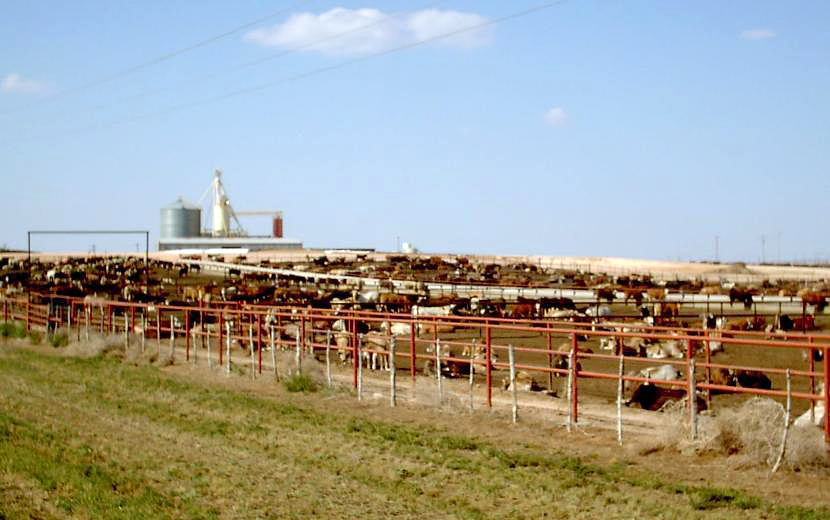
On Thursday 13 August 2026, workers on the afternoon shift at Tyson Foods’ beef plant in Joslin, Illinois arrived to find the plant closed. Supervisors told them it was shutting permanently, effective immediately. Most job duties ended that day; some in-process operations ran into Friday. About 2,500 people lost their jobs, in a village whose resident population is 56.
A letter to employees, obtained by the local station WQAD, said the workers would be compensated through Monday 12 October. Three weeks later, several hundred of them are still holding rallies outside the gates, and the state’s politicians are trying to find a buyer for a plant that was operating profitably enough to employ a small town’s worth of people until the morning it wasn’t.
Advertisement — ad space reserved
Why the date on the letter matters
Under the federal Worker Adjustment and Retraining Notification Act — the WARN Act — employers of a certain size generally have to give 60 days’ notice of a mass layoff or plant closing. The Act does not require them to keep the plant open for those 60 days. Employment lawyers on both sides of these cases will tell you the same thing: a common way to satisfy the obligation is to close immediately and keep paying wages and benefits through the notice period.
Count forward 60 days from 13 August and you land on roughly 12 October. That is why the closure can feel to workers like no notice at all while, on paper, the notice period is being observed. What people experience as “we found out at the door” and what the statute counts as “notice” are two different things, and the gap between them is not an accident — it is how the law was written.
What the arrangement does not give people is time. Sixty days of pay is not sixty days of job-hunting while still employed; it is sixty days of pay while already unemployed, in a labour market where 2,500 people with similar skills are looking at once.
The company’s explanation
Tyson announced the closure of Joslin and of a case-ready facility at Eagle Mountain, Utah — about 723 jobs there, according to state filings — and said it was pursuing the sale of another beef facility in Washington state. The company described the moves as strategic changes to position its beef business for long-term success, and said capacity would shift to plants in Dakota City, Nebraska; Holcomb, Kansas; and Amarillo, Texas.
The reason it gave was cattle. Tyson cited what it called one of the most historic cattle shortages the country has experienced, and pointed to USDA inventory data showing continued limited heifer retention — meaning ranchers are still selling young females rather than holding them back to rebuild herds. The US cattle herd is at its lowest level in about 75 years, the result of years of drought in the western states, high costs for feed, fuel and fertiliser, and consolidation that has squeezed the margins of the ranchers who supply the packers.
That explanation is not fabricated. Beef packing plants are built to run near capacity; when the cattle supply tightens, the least efficiently located plants lose money first. Tyson’s beef segment posted an adjusted operating loss of $138 million in its third quarter, even as the company’s overall adjusted operating income rose 8 per cent to $547 million.
Advertisement — ad space reserved
The reading the workers give it
Those two numbers — a losing division inside a profitable company — are where the argument sits. Union representatives and worker organisations put it roughly like this: the segment’s loss is real, but the company as a whole is making money, the shortage was visible in USDA data for years, and a firm that knew this was coming could have chosen to warn people rather than to close a plant between shifts. Democracy Now! reported that Tyson’s chief executive, Donnie King, was paid over $34 million in 2025 according to securities filings, a figure organisers have used to argue that severance was a choice rather than a constraint.
The counter-argument, which Tyson has not spelled out in these terms but which is standard in the industry, is that announcing a closure in advance in a business built on livestock supply contracts and perishable inventory invites the workforce to leave early and the suppliers to divert cattle, which can make an orderly wind-down impossible. Firms in this position tend to conclude that a fast closure with paid notice is less damaging than a slow one.
Both of those can be true at once. What the second does not explain is why the notice period is the legal minimum rather than the six months the workers are asking for.
What a region loses
Most of the Joslin workforce lives in the Quad Cities, on the Illinois-Iowa border about 160 miles west of Chicago. Tyson was among the largest employers in the region. Figures presented alongside Governor J.B. Pritzker’s remarks and reported by the station KWQC put the potential loss to the local economy at around $116 million a year in wages.
The workforce was largely made up of immigrants, with people from West and Central Africa, Latin America and Burma among those on the line. Meatpacking is one of the most dangerous industrial jobs in the United States, and it has for decades been staffed disproportionately by recent arrivals. That matters for what happens next: workers whose immigration status is tied to employment, or whose English is limited, have fewer options in a sudden mass layoff than the raw job numbers suggest.
What is being asked for
Former Joslin workers, represented by United Food and Commercial Workers Local 1546, have been protesting outside the closed plant and marched on the state capitol in Springfield on 3 September. Their demands are six months of full pay and benefits instead of the notice-period wages, and state intervention to reopen the plant — including calls for the governor to use eminent domain to bring it into public ownership, an unusual step that has no recent precedent in American meatpacking and would face immediate legal challenge.
The more likely route, and the one state officials appear to be pursuing, is finding a buyer for the site. Whether that is realistic depends on the same cattle arithmetic that Tyson used to justify leaving.
Advertisement — ad space reserved
The wider pattern
Nearly 5,000 Tyson employees had already been laid off in 2026 before Joslin, through closures in Nebraska and Georgia and downsizing in Texas. Four companies process the large majority of US cattle, which means decisions about where beef gets packed are made in a handful of rooms. When the herd shrinks, that concentration turns a national supply problem into a set of very local catastrophes.
We looked at another part of the same food economy this week, when California growers began ploughing lettuce back into the ground as demand fell away.
Sources
- Labor Notes, “Treated Worse than Cattle: 2,500 Tyson Workers Laid Off, Plant Shutters Overnight”, 1 September 2026
- WQAD News 8, reporting on the Tyson closure letter and resources for affected workers, August 2026
- NBC Chicago and Patch, on the 13 August closure announcement and statements by Illinois legislators
- Tyson Foods third-quarter earnings release and company statement on beef operations
- NationOfChange, on Illinois efforts to find a buyer and the Quad Cities wage estimate, 4 September 2026
- Democracy Now!, interview on the Joslin and Eagle Mountain closures, 4 September 2026
Leave a Reply