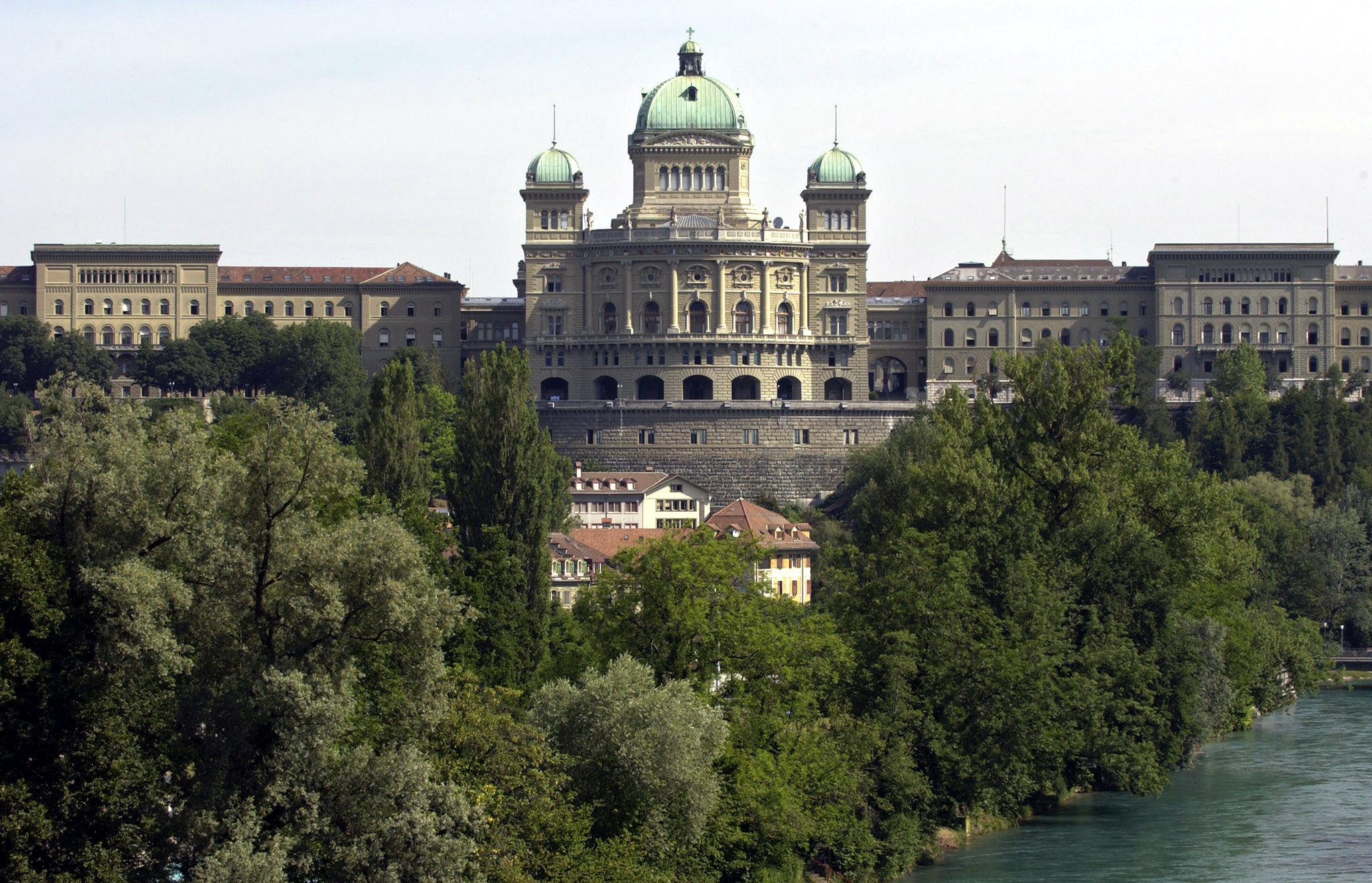
On 27 September, Switzerland holds a referendum on what its neutrality means. The question is not whether the country should be neutral — nobody on the ballot is arguing otherwise. The question is whether a strict definition of neutrality should be written into the federal constitution, binding future governments in ways the present arrangement does not.
Advertisement — ad space reserved
What is on the ballot
The proposal is a popular initiative, filed with the Federal Chancellery in April 2024 with just under 130,000 valid signatures — comfortably above the 100,000 needed to force a national vote. Switzerland’s system of direct democracy allows citizens to put constitutional amendments to the whole country in this way, and constitutional initiatives require a double majority to pass: a majority of voters, and a majority of cantons.
If approved, the constitution would commit Switzerland to a neutrality that is perpetual and armed, prohibit membership of military alliances, and bar the country from imposing coercive measures against states at war unless those measures carry a United Nations mandate. Exceptions would remain for humanitarian obligations and for Switzerland’s traditional role in offering good offices and mediation.
Neutrality is already in the constitution — it has been in some form since 1848, and the practice dates to 1815 — but it appears there as a purpose to be safeguarded rather than a defined rule. That gap is precisely what the initiative aims to close, and precisely what its opponents want to preserve.
The case for
Supporters, campaigning under the banner of safeguarding Swiss neutrality, argue that the established practice has been stretched out of shape. They point to Switzerland’s adoption of European Union sanctions on Russia after the 2022 invasion of Ukraine, and to closer cooperation with NATO in areas such as training, as steps that blurred the line between neutrality and alignment with one side.
Christoph Blocher, a former federal councillor and the initiative’s most prominent advocate, has argued that for a small state neutrality functions as deterrence: a potential aggressor must weigh the cost of invading a country that is nobody’s enemy. He describes the government’s more flexible interpretation as dangerous, and notes that Russia’s designation of Switzerland as an unfriendly state followed Bern’s decision to join Western sanctions. Walter Wobmann, the Solothurn MP presenting the campaign, has run two successful initiatives before, on minarets in 2009 and face coverings in 2021.
Blocher has also acknowledged something the campaign rarely leads with: if voters reject the initiative, Swiss neutrality continues. The vote is about how rigidly it is defined, not whether it survives.
Advertisement — ad space reserved
The case against
The Federal Council opposes the initiative and launched its campaign on 11 August, with Foreign Minister Ignazio Cassis making the argument on the government’s behalf. Its position is that neutrality is already recognised and protected under international law, that it already serves Swiss security, independence and prosperity, and that replacing a flexible practice with a rigid constitutional formula would remove room for manoeuvre without buying anything in return.
Opponents also press a specific consequence. Because Russia holds a veto on the UN Security Council, sanctions on Russia through the UN are close to impossible in practice. A requirement for a UN mandate would therefore, in their reading, function as a standing prohibition on sanctioning one particular country. The initiative would not automatically cancel Switzerland’s existing measures, but it would constrain what Bern could do next.
The Swiss People’s Party is the only major party backing the initiative; the others recommend rejection.
The Russian intervention
What has made this vote unusual is that a foreign government has taken a public side. Russian foreign ministry spokesperson Maria Zakharova used Telegram to urge Swiss voters to approve the initiative. Russian state broadcaster RT published a piece arguing that Switzerland had forgotten Russia’s role in the country’s creation — a framing the Bern historian Marco Jorio has dismissed as an abusive exaggeration.
Switzerland’s Federal Intelligence Service has gone further, warning of a targeted campaign that in its assessment combines diplomatic pressure, factual errors and outright propaganda, spread partly through platforms such as Telegram. How much any of it actually shifts votes is disputed, including among Swiss analysts. Foreign messaging is easy to document and hard to measure, and the honest position is that its documented existence and its unproven effect are two different claims.
The intervention has been used inside the campaign. Gerhard Pfister of the Centre Party has said Russia’s position shows the proposal is in effect a pro-Putin initiative. Wobmann has responded that his party has never had contact with Russian political officials, while maintaining that imposing sanctions on Moscow was a mistake in the first place. Both statements can be true at once: an endorsement nobody asked for does not establish coordination, and it does not make the endorsement irrelevant either.
Advertisement — ad space reserved
Where the vote stands
A Tamedia/Leewas survey in June put support at around 34 per cent against 54 per cent opposed. An online RTS poll produced a much wider gap, though online self-selecting polls are not comparable to commissioned surveys and should not be read as a forecast.
Swiss initiatives usually lose. Most fail, and support commonly erodes over a campaign as the government’s arguments circulate. But the double-majority rule cuts in more than one direction, and votes with a strong rural-urban split have surprised observers before — including the two initiatives Wobmann previously carried.
One more vote follows. Parliament loosened Swiss arms export rules in December 2025, allowing deliveries to 25 partner states even where those states are involved in an armed conflict. That change faces its own referendum in November. Taken together, the two votes amount to Switzerland reconsidering, in public and within weeks, what a neutral country is permitted to do.
Sources
- Swiss Federal Department of Foreign Affairs — the Neutrality Initiative and the Federal Council’s position
- Le News — the initiative campaign launch in Bern
- The Local Switzerland — Russia’s endorsement and Swiss reactions
- World Radio Switzerland — the intelligence service’s warning on the influence campaign
- Brussels Signal — the initiative’s text, signatures and consequences for sanctions
Advertisement — ad space reserved
Leave a Reply