Advertisement — ad space reserved
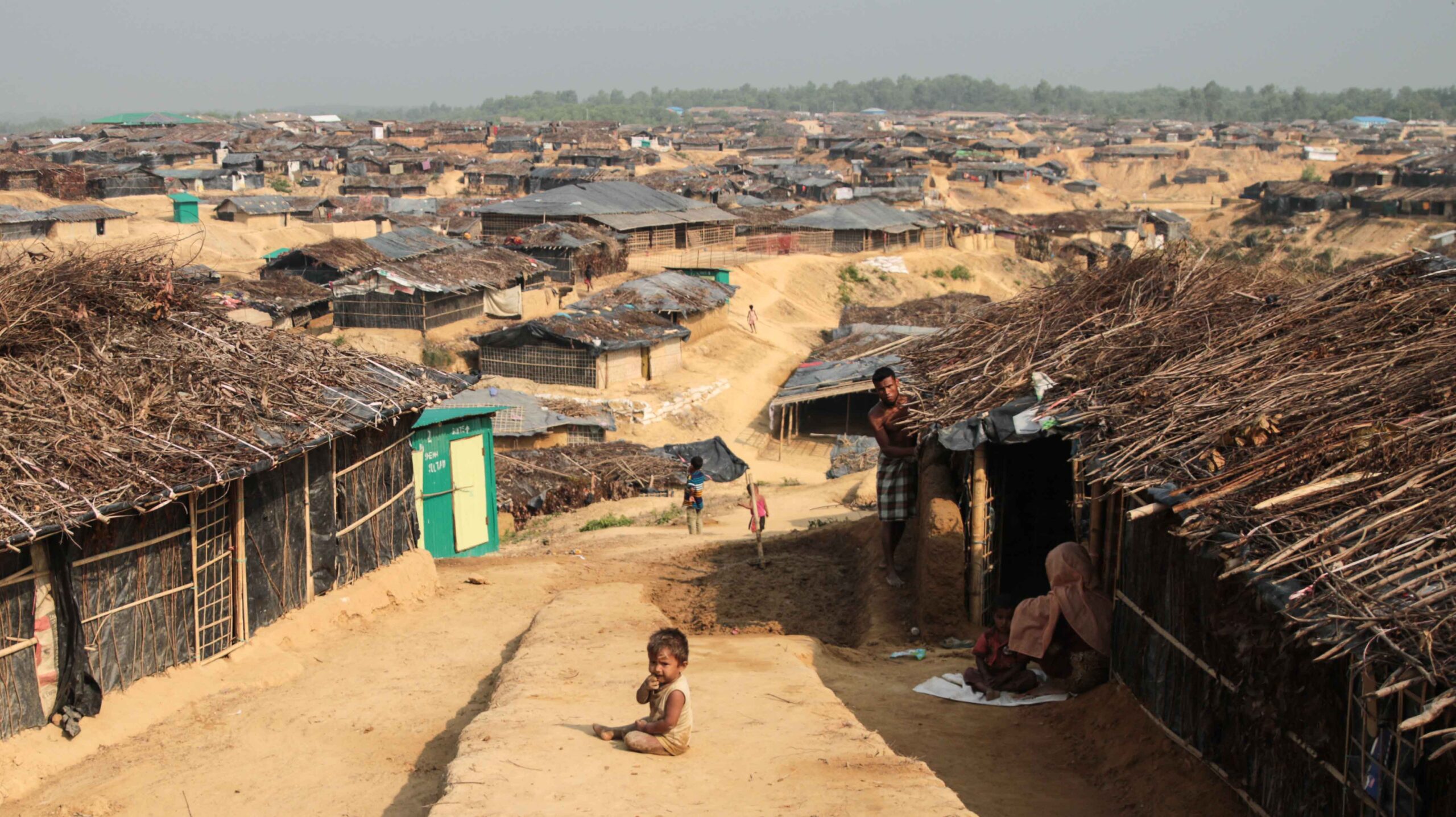
Nine years after the exodus from Rakhine State, Save the Children reported at the end of August that 35 per cent of Rohingya refugees in Bangladesh are expected to face crisis or emergency levels of hunger this year.
More than 1.2 million people live in the camps around Cox’s Bazar, the largest refugee settlement in the world. A child born there in 2017 starts secondary school this year, having never left. That is the framing the agencies have settled on for the anniversary, and it is accurate, but it obscures a more specific argument that has been running since the spring.
The dispute over a word
In April, the World Food Programme changed how food assistance is distributed in the camps. Rather than a flat per-person value, rations were differentiated by assessed vulnerability. Around two-thirds of the population received less than before, with the lowest tier dropping to roughly seven US dollars a month against a previous twelve.
WFP was explicit that this should not be called a ration cut, and its reasoning is technical rather than evasive. In humanitarian usage, a ration cut means dropping food assistance below 2,100 calories per person per day, the recommended minimum for emergency food aid. WFP’s position was that even the reduced tier still clears that threshold, and that differentiating rations by need improves fairness and equity across the caseload. The agency also stated that the change was not caused by the funding cuts.
Bangladesh’s Refugee Relief and Repatriation Commissioner, Mohammad Mizanur Rahman, disagreed publicly. He said the change means exactly what a cut means for the people receiving it, and warned that refugees would attempt to leave the camps in search of food and work.
Both statements can be true at once. A calorie floor is a floor. It is not a diet, and it does not cover the cost of anything that is not staple food.
Advertisement — ad space reserved
There is a precedent, and it is recent
This has been tested before, in the same camps, with the same population. In 2023 a funding shortfall pushed the monthly food voucher down to eight dollars in two steps. By November of that year, WFP reported that 90 per cent of camp residents could not afford an adequate diet, and acute malnutrition among children reached 15 per cent — the highest rate ever recorded in the settlement.
Rations were subsequently restored. The episode is the strongest available evidence on what happens when the voucher value falls in a population that is legally barred from working, and it is the reason aid workers treat small changes in the figure as consequential rather than administrative.
The mechanism is the one we set out in our explainer on why aid cuts surface months later as sicker children. Nothing visible happens in week one. The damage is cumulative and it shows up in a clinic, not in a distribution queue.
The appeal is smaller than the need
The UN, its partners and the Bangladeshi government launched an appeal of 710.5 million dollars for Rohingya refugees and host communities in 2026. That request is 26 per cent lower than the previous year’s.
It was not reduced because needs fell. Agencies describe the plan as hyper-prioritised — a term of art meaning the appeal has been rewritten to ask only for what is most likely to be funded, concentrating on immediate life-saving activity. Education, livelihoods, protection work and site maintenance are the categories that lose out when a response is narrowed this way.
Those categories are not decorative. Reporting from the camps has linked the closure of schools after last year’s cuts to rises in kidnapping, child marriage and child labour. UNHCR has noted that community-run maintenance projects, which both employ refugees and keep camp paths passable through the monsoon, have shrunk from hundreds of schemes engaging dozens of people each to a handful engaging a few.
Advertisement — ad space reserved
Why nobody can simply go home
Every discussion of the camps eventually reaches the same wall. The Rohingya are in Bangladesh because of violence in Myanmar in 2017 that the United States has formally described as genocide. The military that conducted those operations seized power in Myanmar in 2021 and remains in control.
Repatriation requires a state willing to receive people as citizens with rights. That does not currently exist, and no amount of funding for the camps changes it. This is what humanitarian agencies mean when they call a situation protracted: the emergency response has become the permanent arrangement, without anyone deciding that it should.
Meanwhile new arrivals have continued to cross from Rakhine, adding to a caseload that the funding assumes is static.
What would actually change the numbers
Three things, in descending order of plausibility.
Restoring the voucher value would move the hunger figure fastest, because the relationship between voucher value and dietary adequacy in these camps is unusually well documented. Allowing refugees to work legally would reduce dependence structurally, and has been resisted by Dhaka for two decades on the grounds that it would make the settlement permanent — a concern that nine years of evidence has arguably already answered. A safe return to Rakhine would end the problem, and is not available.
The anniversary coverage will note that a generation has grown up in the camps. The more useful observation is that the response is now being budgeted as though the crisis were winding down, at the point where a third of the population is expected to be in crisis-level hunger.
Sources
- Save the Children press release, Cox’s Bazar, 25 August 2026
- UN News and UNHCR reporting on the 2026 Joint Response Plan
- World Food Programme statements on differentiated rations, April 2026
- Associated Press reporting on the April 2026 distribution change
- WFP camp nutrition data, 2023
Advertisement — ad space reserved
Leave a Reply