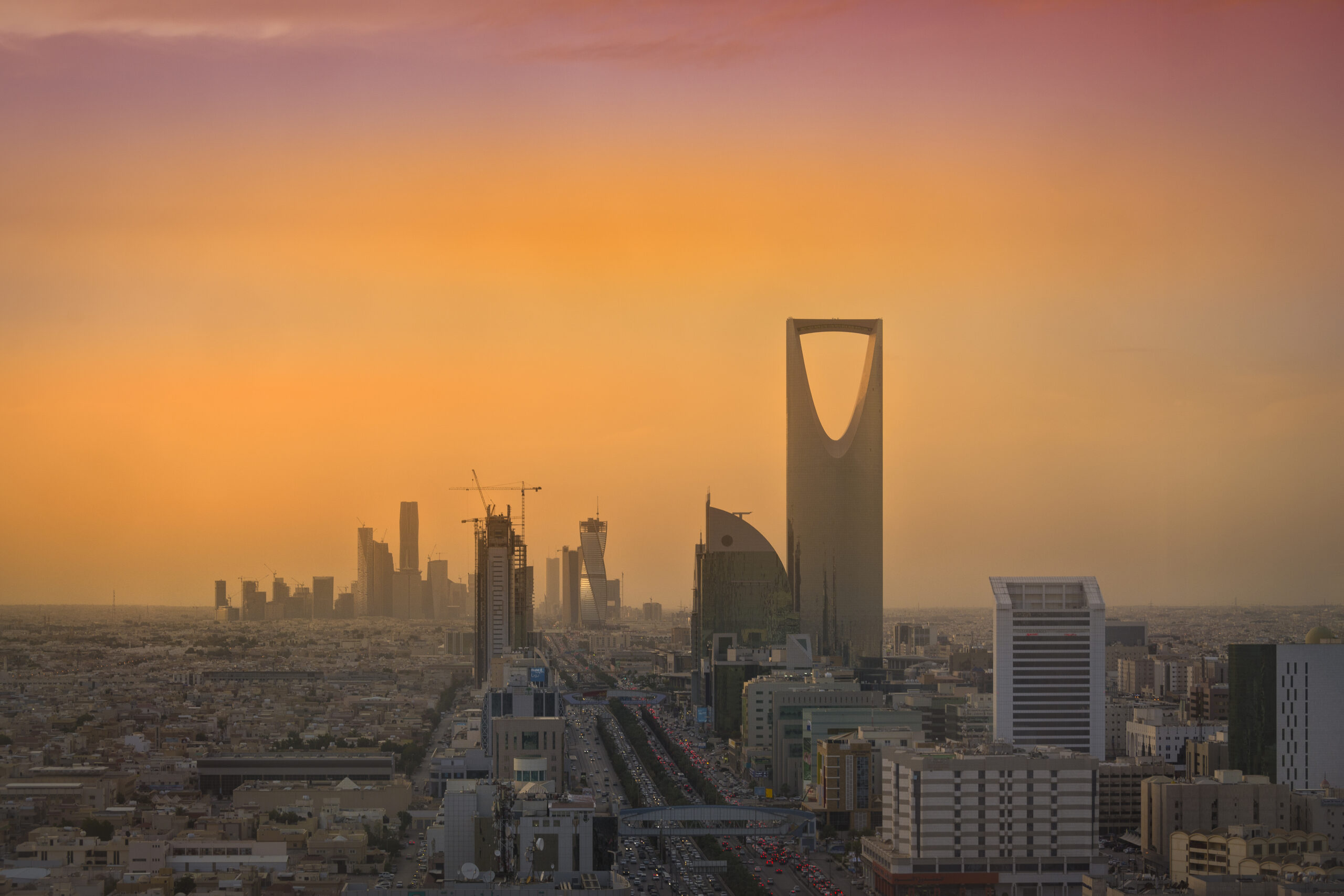
At least 16 people have been killed in a factory fire in Riyadh, Saudi Arabia. Those who died were migrant workers.
Industrial fires happen everywhere. What makes this a recurring story rather than an isolated accident is who tends to be inside the buildings, and why they are difficult to protect.
Advertisement — ad space reserved
Who builds and runs the Gulf
Across the Gulf states, a very large share of the workforce consists of migrant workers, drawn mainly from South Asia, the Philippines, Egypt and increasingly from parts of Africa.
They build the towers, staff the factories, drive the lorries, clean the offices and maintain the infrastructure. In several Gulf countries, non-citizens make up the substantial majority of the labour force.
This is not incidental to how these economies function. It is how they are structured.
The sponsorship system
To understand why workplace safety is so difficult to enforce here, you have to understand the employment arrangement that has historically governed migrant labour in the region — usually referred to by the Arabic word kafala, meaning sponsorship.
Under it, a worker’s legal status in the country is tied to a specific employer. In its stricter historical forms, that meant a worker could not change jobs or leave the country without the sponsor’s permission.
The consequence for safety is direct. A worker who reports a blocked fire exit, refuses to enter an unsafe building or complains to authorities risks not merely dismissal but the loss of their legal right to remain — and, very often, the ability to repay debts taken on to get the job in the first place.
Saudi Arabia and several neighbours have introduced reforms in recent years easing job transfers and exit requirements, and labour ministries have expanded inspection regimes. Human rights organisations have generally described those changes as real but incomplete, with enforcement lagging behind the written rules.
Advertisement — ad space reserved
Why factory fires kill so many
Fatal industrial fires follow a depressingly consistent pattern worldwide, and it is rarely the flames themselves that do the killing.
Smoke moves faster than fire and incapacitates within minutes. Exits blocked by stored materials, or locked to prevent theft, turn a survivable fire into a fatal one. Buildings converted from one use to another often lack compartmentation to slow a fire’s spread. And where workers sleep on or near the premises — common where accommodation is provided by the employer — a fire at night finds people asleep and unfamiliar with escape routes.
Each of those is a known, solvable engineering problem. They persist where inspection is weak or where the people at risk cannot safely complain.
What follows for the families
The aftermath of a death abroad is bureaucratic in a way that compounds the grief.
Bodies must be identified and repatriated, which requires consular involvement and money. Compensation, where it exists, depends on the employer’s insurance and on legal processes conducted in a language and system the family does not know, from thousands of kilometres away.
And the income stops. Migrant workers typically support extended families, and remittances are a major flow of money into the regions they come from. A death removes a household’s entire income at the same moment it imposes new costs.
Why this is reported here
Sixteen deaths in a European or North American factory would be a major national story with named victims and a public inquiry.
Migrant worker deaths in the Gulf are usually reported as a figure, without names, and disappear within a day. That gap is not because the deaths matter less. It is because the people who died had no vote, no local press advocating for them, and families too far away to hold anyone to account.
Naming that imbalance is the least a newspaper can do.
Source: Wikipedia Portal: Current Events, August 2026. Background on Gulf labour arrangements from published human rights reporting.
Advertisement — ad space reserved
Leave a Reply