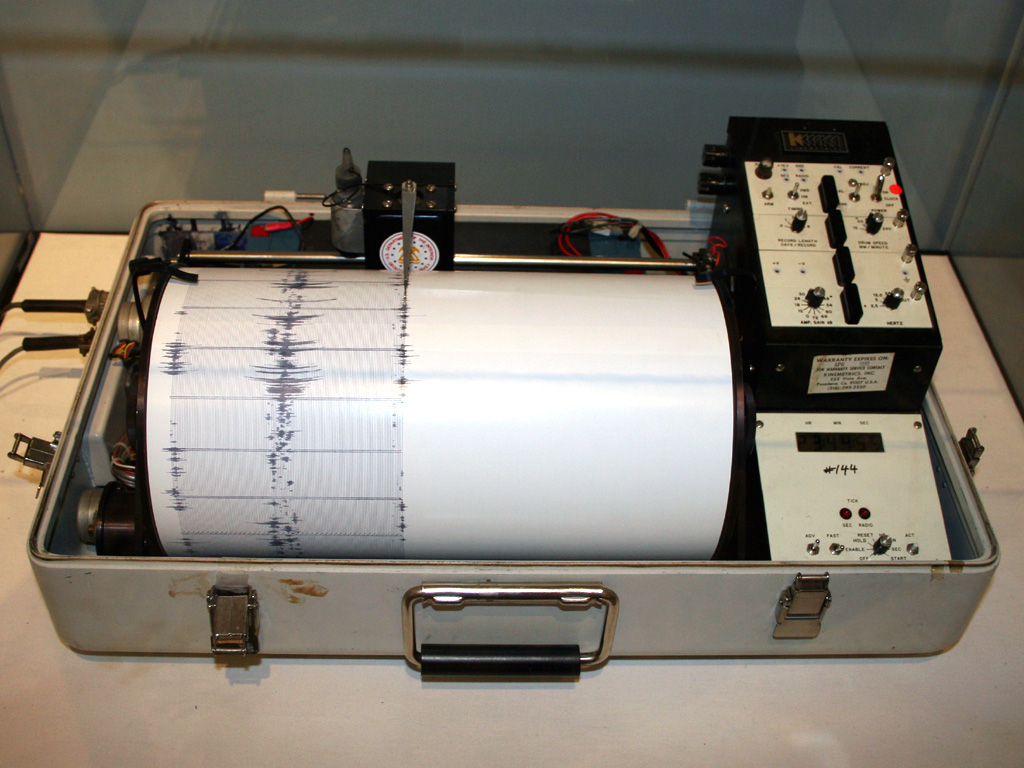
When a magnitude 7.7 quake struck off Flores early on 15 August, a tsunami warning went out within minutes and was withdrawn within the hour. To anyone watching, that sequence can look like a false alarm. It is closer to the opposite.
Advertisement — ad space reserved
Why Indonesia shakes so much
The Ring of Fire is not a single feature but a horseshoe of plate boundaries around the Pacific, running from New Zealand up through Indonesia, the Philippines and Japan, across to Alaska and down the Americas. Around three-quarters of the world’s active volcanoes sit along it, and the great majority of large earthquakes happen there.
Indonesia sits at a particularly busy junction, where the Indo-Australian plate grinds beneath the Eurasian plate and several smaller plates complicate the picture. Subduction — one plate forced under another — is the process that produces both the deep trenches and the volcanic arcs, and it is the setting for the largest quakes recorded anywhere.
Why depth matters more than magnitude
A magnitude number alone tells you little about consequences. Two figures matter alongside it.
Depth. Saturday’s quake was about 10 kilometres down. Shallow quakes deliver far more shaking to the surface than deep ones of the same magnitude, because the energy has less rock to travel through. A magnitude 7.7 at 300 kilometres depth might be barely felt; the same magnitude at 10 kilometres devastates.
Distance to people. The same event offshore from an unpopulated coast and beneath a city produce entirely different casualty figures. This is why an initial magnitude reading tells you a tsunami might be possible but tells you almost nothing about how many people will die.
Advertisement — ad space reserved
How a tsunami warning actually works
The critical constraint is time. A tsunami generated close to shore can arrive in fifteen to twenty minutes. There is no possibility of measuring a wave, confirming it and then warning people — the wave would arrive first.
So warnings are issued on the earthquake’s characteristics alone: magnitude, depth, location, and whether the fault motion was the vertical kind that displaces water. That happens automatically, within minutes, before anyone knows whether a wave exists.
Confirmation comes afterwards, from tide gauges on coastlines and from pressure sensors on the seabed that detect a passing wave in deep water. When those instruments show no significant sea-level change — as Indonesia’s agency reported on Saturday, after waves under one metre were recorded — the warning is cancelled.
The system is deliberately built to over-warn. A cancelled warning costs an evacuation that turned out to be unnecessary. A missed one costs lives. Given that trade-off, any system calibrated to avoid false alarms would be the wrong system.
The part technology cannot fix
Indonesia built out its warning infrastructure substantially after the 2004 Indian Ocean tsunami, which killed more than 220,000 people across a dozen countries. Sensors, sirens and mass alerts followed.
The recurring weakness has been the last stretch: buoys damaged or out of service, sirens without power, alerts that do not reach a village where the mobile network has just gone down with the quake. Saturday illustrated the problem directly — police reported that power cuts were disrupting the flow of information across the affected area.
Which is why the oldest advice remains the most important, and it needs no infrastructure at all: if you are on the coast and the shaking is strong enough that standing is difficult, move inland and uphill immediately. Do not wait for a siren, and do not go down to look at the sea. On Flores on Saturday morning, people ran before any official instruction reached them — and in a shallow quake near shore, that is the response most likely to save them.
Sources
US Geological Survey and Indonesian Meteorology, Climatology and Geophysics Agency material on the 15 August event, together with standard seismological and tsunami-warning literature.
Advertisement — ad space reserved
Leave a Reply