Pope Leo XIV spent Saturday 22 August in two very different places: the Republic of San Marino in the morning, where he praised the enclave’s republican tradition, and Rimini in the afternoon, where he became the first pope since John Paul II in 1982 to address the annual meeting of Communion and Liberation. The second stop is the one with political weight.
The morning: a country of 33,000 people
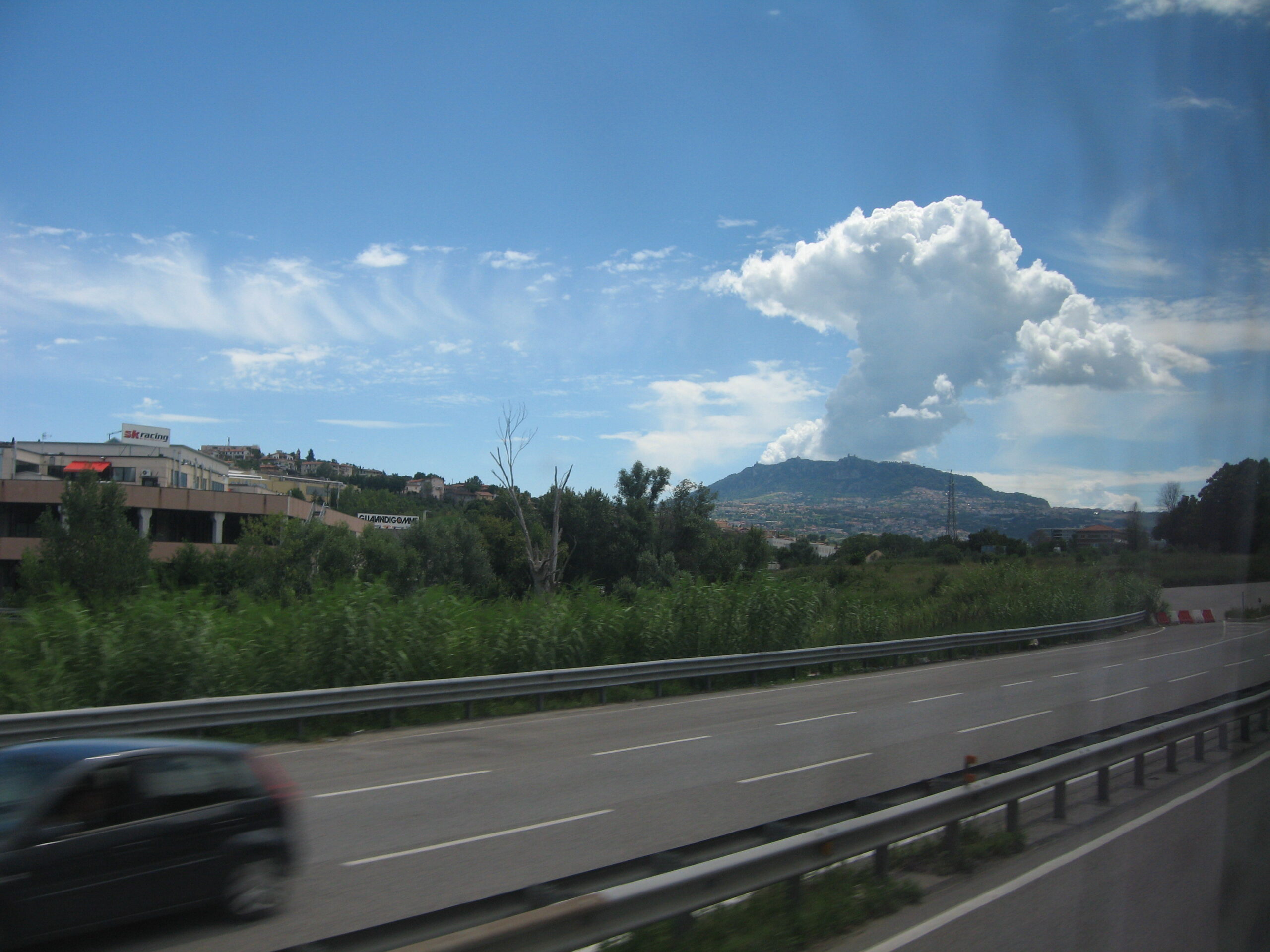
San Marino is 60 square kilometres of the Apennines with a population of around 33,000, entirely surrounded by Italy. It calls itself the world’s oldest surviving republic, dating its independence to the thirteenth century, and it is governed by two Captains Regent who rotate every six months — currently Alice Mina and Vladimiro Selva, who flanked the pope on the balcony of the Palazzo Pubblico.
Addressing local authorities, Leo praised the republic as a model of political freedom and civic responsibility. He reflected on Saints Marinus and Leo, crediting them with translating the Christian message into what he called a new community and political model characterised by freedom, mutual respect and communion. He paired that with a warning against political and economic systems that place power above the human person.
To the crowd in Piazza della Libertà he was simpler, saying he was happy to be among them and urging them to remain united in their welcoming spirit. He also held a prayer service in the basilica.
From Plain Sight News
We cover faith fairly, and we do not spare institutions. Our editorial standards.
A papal visit to San Marino is rare rather than unprecedented. John Paul II went in August 1982, the first visit by a head of the Catholic Church to the republic, and Benedict XVI made a pastoral journey to the area in 2011. The trip follows Leo’s visit in March to another European microstate, the principality of Monaco. San Marino’s Catholic community is served by a single diocese shared with Italy and about a dozen parishes.
The afternoon: what the Rimini Meeting is
The Meeting for Friendship among Peoples, held each August in Rimini on the Adriatic coast, is now in its 47th edition. It is organised by Communion and Liberation, a Catholic movement founded in Italy in the 1950s, and it draws hundreds of thousands of visitors over a week of exhibitions, debates and speeches.
Describing it as a religious festival undersells it. The Rimini Meeting is where Italian politics, Catholic culture and business meet, and it has historically been associated with the Christian Democratic tradition that dominated post-war Italian government. Ministers go there to be seen. This year’s speakers include the Latin Patriarch of Jerusalem, Cardinal Pierbattista Pizzaballa, and both of Italy’s deputy prime ministers, Antonio Tajani and Matteo Salvini.
Leo was scheduled to speak at 4pm. Before the address he was to visit an exhibition on Saint Augustine — the theologian whose thought shaped the Augustinian order to which the pope belongs, which makes the choice less incidental than it looks.
Why a papal appearance there is read politically
Popes choose their platforms, and the choice communicates something whatever is said from them. Communion and Liberation has had a complicated relationship with recent pontificates: influential under John Paul II, less favoured under Francis, who intervened in the movement’s governance and was publicly cool towards movements that mixed ecclesial and political influence.
Supporters of the visit will read it as a normalisation — a pope acknowledging a large lay movement and its cultural work rather than keeping it at arm’s length. Critics will read the same event as a pope lending presence to a gathering with a distinct political lineage, in a country where the Church’s proximity to power is an old argument. Both readings will be made this week, and the text of the address is what each will draw on.
From Plain Sight News
Got a tip, or a story we have missed? Get in touch.
The theme running underneath
The line Leo used in San Marino — a warning against systems that place power above the human person — is consistent with what he has said repeatedly since his election just over a year ago: peace, coexistence, and the primacy of the person over political and economic machinery. Euronews reported him pressing that message of peace and dialogue from both stops.
It is also a message that can be received very differently depending on the audience. In a republic of 33,000 people it reads as a compliment to a small state that has survived by not being worth conquering. Delivered in Rimini, in front of serving Italian ministers, the same words carry an edge. That is presumably the point of saying them in both places on the same day.
From Plain Sight News
World news in plain sight and in plain language. About us.
Sources: Associated Press; Euronews; Holy See Press Office.
Leave a Reply