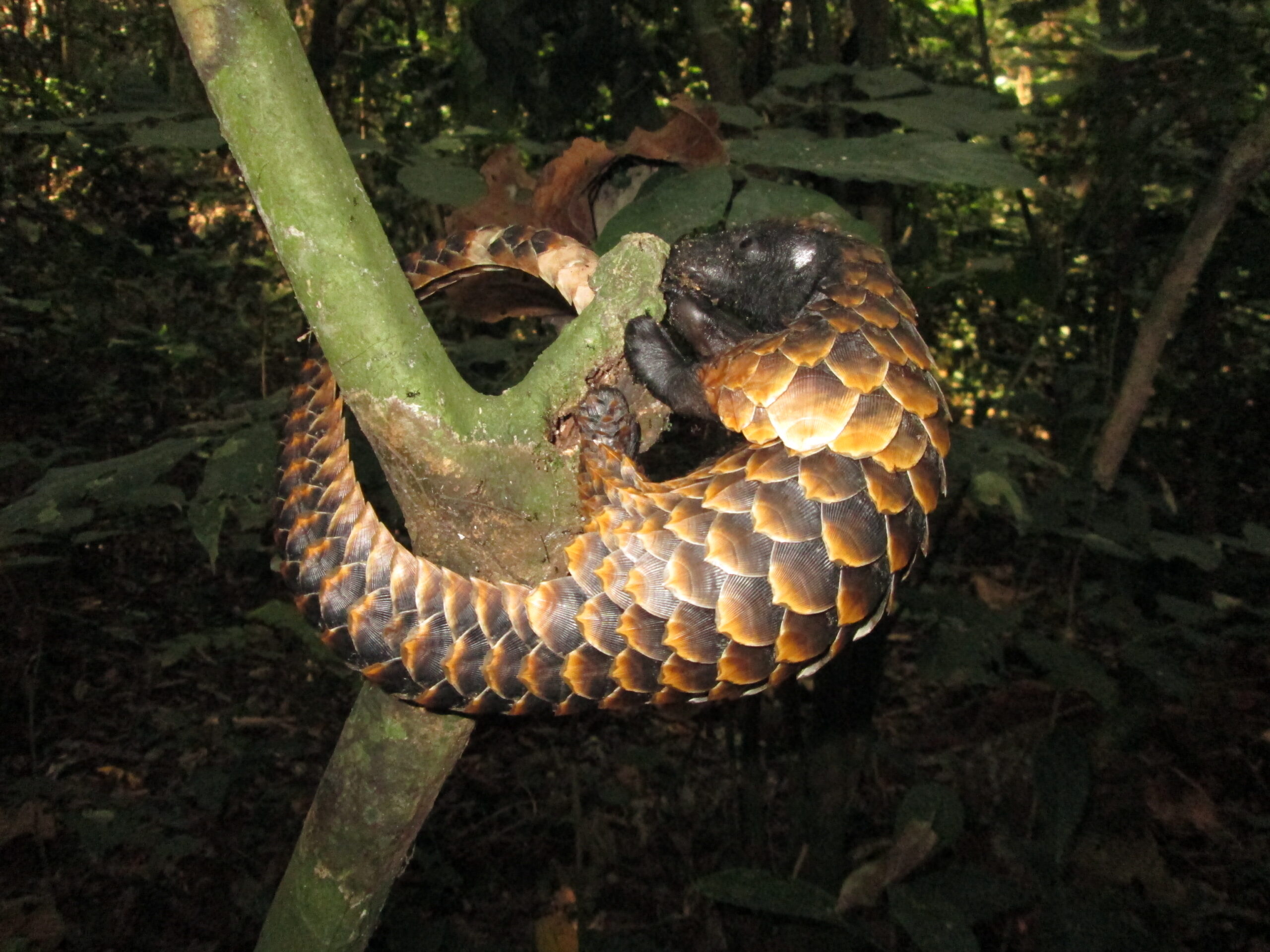
Between one and three million pangolins are estimated to have been trafficked in the last decade. It is a scale that would make headlines in almost any other category of wildlife crime, and it makes almost none. Most people who see a pangolin for the first time on a phone screen have never heard of the species.
Advertisement — ad space reserved
What a pangolin is
A pangolin is a scaly, ant-eating mammal, more closely related to carnivores than to armadillos or anteaters, which it resembles. Eight species exist, four in Asia and four in Africa. All are nocturnal, solitary, slow-moving and rely on rolling into an armoured ball as their principal defence — a strategy that is highly effective against leopards and completely useless against humans with sacks.
They are the most trafficked wild mammal in the world.
What they are trafficked for
Two markets, both principally in East and South-East Asia.
The scales — which are made of keratin, the same material as human fingernails — are used in traditional Chinese and Vietnamese medicine, prescribed for a range of conditions from lactation problems to arthritis. There is no evidence they work; keratin is keratin.
The meat is served as a luxury dish in some high-end restaurants across the region, marketed as an exotic status food. A single animal can fetch several hundred dollars at the point of consumption.
Chinese authorities removed pangolin scales from the official pharmacopoeia in 2020 and reclassified all Chinese pangolin species as first-class protected, matching the giant panda’s legal status. Enforcement has increased, seizures have grown, and the trafficking has partly shifted to online channels and to sourcing from Africa rather than Asia — where four species remain, and where enforcement capacity is generally lower.
Advertisement — ad space reserved
The scale of the seizures
Single seizures now sometimes contain scales representing tens of thousands of animals. Because scales are stripped and shipped separately, one container can represent an entire regional population being removed from the wild. Enforcement agencies extrapolate from seizure weights using standard conversion figures — around 400 grams of scales per African pangolin — to estimate how many animals a shipment represents.
The four Asian species are all listed as either endangered or critically endangered by the IUCN. The four African species are listed as vulnerable to endangered, and the trend is worsening for all of them.
Why enforcement stays hard
Pangolins are trafficked along the same routes and often by the same networks as ivory and rhino horn. The economics are attractive to organised crime: low weight, high value per kilo, medium detection risk, and — critically — a species whose slow reproductive rate means demand can outrun supply for years before markets adjust downward. Female pangolins typically produce a single offspring at a time.
Prosecutions are also uneven. Cases that result in arrests often involve low-level couriers rather than the traders and financiers organising the trade. Convictions carry penalties that vary widely between countries, and sentences that would deter a professional trafficker in one jurisdiction are recovered from a single shipment’s margin in another.
Why it matters beyond one species
Two reasons worth stating.
Pangolins eat ants and termites in enormous quantities — a single adult can consume around 70 million insects a year. Their removal has knock-on effects on soil ecology and pest populations that are hard to measure but not zero.
And the same infrastructure that moves pangolin scales moves other wildlife products, weapons, drugs and people. Wildlife trafficking is estimated by Interpol to be among the largest categories of transnational organised crime by value, alongside narcotics, arms and human trafficking. It is not marginal in any economic sense; it is treated as marginal because most of its victims cannot speak.
Sources
IUCN Red List assessments for the eight pangolin species; CITES Appendix I listing since 2016; UN Office on Drugs and Crime World Wildlife Crime Report; TRAFFIC and Wildlife Justice Commission reporting; Chinese State Council 2020 pharmacopoeia decision.
Advertisement — ad space reserved
Leave a Reply