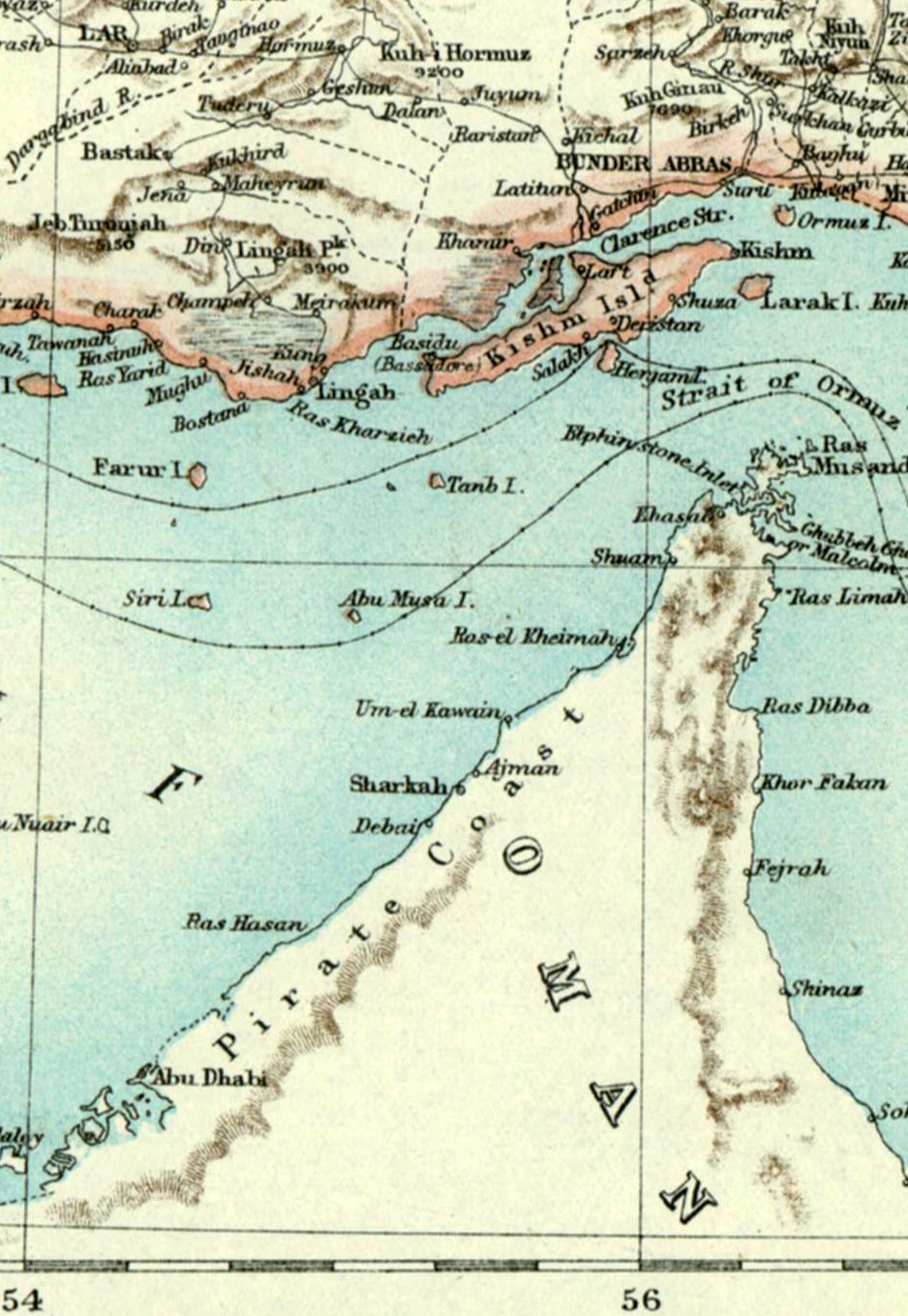
Reports that Iran and Oman are close to an agreement on managing the Strait of Hormuz have moved the strait back to the centre of the war — and prompted a threat from Washington against the country doing the mediating. Beneath the diplomacy is a straightforward energy question: roughly a fifth of the world’s seaborne oil normally passes through a channel that is, at its narrowest, about 33 kilometres wide.
Advertisement — ad space reserved
Why Oman is the country in the middle
The shipping lanes through Hormuz run through Omani territorial waters, not Iranian ones. The Musandam peninsula — Omani territory, separated from the rest of the country by the UAE — sits on the southern side of the narrows. Any arrangement about who transits, on what terms, is geographically Oman’s business whether or not Oman seeks the role.
Oman also occupies an unusual diplomatic position. It maintains working relations with Tehran and with Washington simultaneously, and has hosted quiet contacts between them for years. That is why an agreement brokered in Muscat is plausible where one brokered almost anywhere else in the Gulf would not be.
What “managing” the strait would mean
This is where a deal gets difficult, and it is worth being precise, because the word covers several very different arrangements.
- Deconfliction. Procedures for vessels to declare routes and avoid being mistaken for a target. Modest, technical, and the easiest to agree.
- Escort and inspection. Who may stop a ship, on what grounds, and who verifies. Considerably harder, because it touches enforcement.
- Charges for transit. Any payment attached to passage would be the significant one — and the most consequential far beyond the Gulf.
The third item is the one maritime lawyers watch. Under the law of the sea, the right of transit passage through an international strait is not something a coastal state may charge for or suspend. A precedent in which passage becomes conditional or billable would not stay in Hormuz; it would be cited at every strait in the world where a coastal state would like more leverage than it currently has.
Advertisement — ad space reserved
The condition that has not moved
Iran’s stated position has been consistent: reopening depends on Washington honouring the June memorandum. That memorandum has now lapsed without being honoured or replaced, which removes the thing Iran said it was waiting for and leaves the condition attached to nothing in particular.
Whether that makes a deal easier or harder is genuinely arguable. One reading is that with the memorandum gone there is nothing left to trade, and an Oman-brokered arrangement becomes the only route available. Another is that Tehran has lost its stated reason to compromise and gains from prolonged closure, because a closed strait is itself the pressure. We have covered the reasoning on both sides in our earlier piece on the Hormuz talks.
What it costs while nobody agrees
The strait has not been reliably usable for weeks. Attacks on shipping have continued, including on UAE-linked tankers. Cargo that would normally take the direct route is going the long way or not moving, insurers are pricing war risk into every voyage, and those costs pass into fuel prices well beyond the Gulf.
That is the practical case for a narrow, technical deal even between parties who agree on nothing else: the arrangement does not have to end the war to let ships move. Whether either side wants ships to move more than it wants leverage is the question the next few weeks will answer.
Sources
- Just Security — Early Edition, 18 August 2026
- Washington Post — world coverage of the Hormuz negotiations
Advertisement — ad space reserved
Leave a Reply