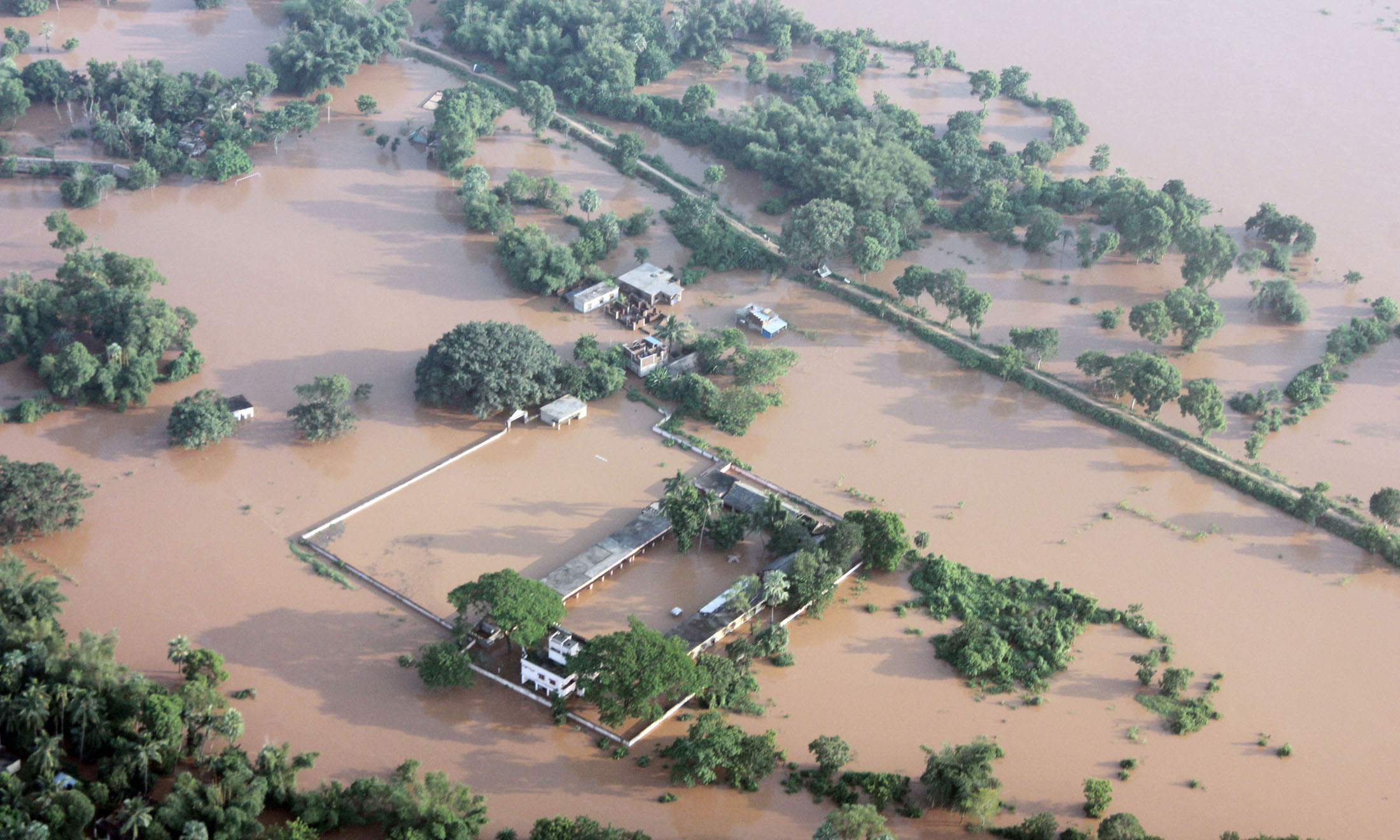
Floodwater has displaced more than 95,000 people across six districts of Odisha in eastern India, after a depression over the Bay of Bengal brought heavy rain to the state through 15 August.
The State Emergency Operation Centre reported around 270,000 people affected across 503 villages in 52 blocks of Balasore, Bhadrak, Jajpur, Mayurbhanj, Keonjhar and Kendrapara districts. A total of 95,206 people have been moved into 226 relief camps.
Advertisement — ad space reserved
Which rivers, and why it matters
The flooding is being driven by the Baitarani, Brahmani, Jalaka and Budhabalanga rivers and their tributaries. The rising Subarnarekha has compounded the problem in Balasore, which was already dealing with flooding from two other rivers.
Odisha’s geography makes this a recurring event rather than a freak one. Several major river systems reach the Bay of Bengal across a flat coastal plain, and when a low-pressure system stalls over the catchment, the water arrives in all of them at once. Villages sit on ground only slightly above the flood level, so a modest rise inundates a wide area.
An under-construction bridge over the Kani river, a tributary of the Baitarani, was washed away by flash floods in the Dasharathpur block of Jajpur district on Saturday — the kind of loss that outlasts the flood itself, since a missing crossing isolates communities for months.
The response
Disaster Management Minister Suresh Pujari said the relief camps have cooked food, safe drinking water, sanitation, lighting and medical care, with specific arrangements for children, pregnant women, elderly people and people with disabilities. Free kitchens are running in affected areas and dry food is being distributed. State disaster response teams have been evacuating people by boat.
Water levels in some major rivers have begun to recede, but continuous rain has caused waterlogging in several other locations, so the situation is improving and deteriorating simultaneously depending on where you stand.
Advertisement — ad space reserved
The part that gets missed
Odisha’s evacuation system is one of the more effective in the region, built after the 1999 super cyclone that killed roughly 10,000 people. The state now moves people out before water arrives rather than rescuing them afterwards, and the low death tolls in recent flood seasons reflect that preparation rather than good luck.
What preparation cannot prevent is the economic damage. Standing crops in a flooded field are lost, and August is the middle of the kharif growing season. Livestock drown. Homes built of mud and thatch dissolve. The people in those 226 camps will mostly return to houses that need rebuilding and a harvest that is gone, and that loss does not appear in any casualty figure.
Prime Minister Narendra Modi acknowledged the flooding and landslides affecting several states in his Independence Day address on 15 August, saying the nation stood with affected families. What that translates into in relief and compensation terms will be worked out over the coming weeks.
Sources
Odisha State Emergency Operation Centre figures and statements by Disaster Management Minister Suresh Pujari, reported by Press Trust of India, IANS, India.com and Siasat, 15 August 2026.
Advertisement — ad space reserved
Leave a Reply