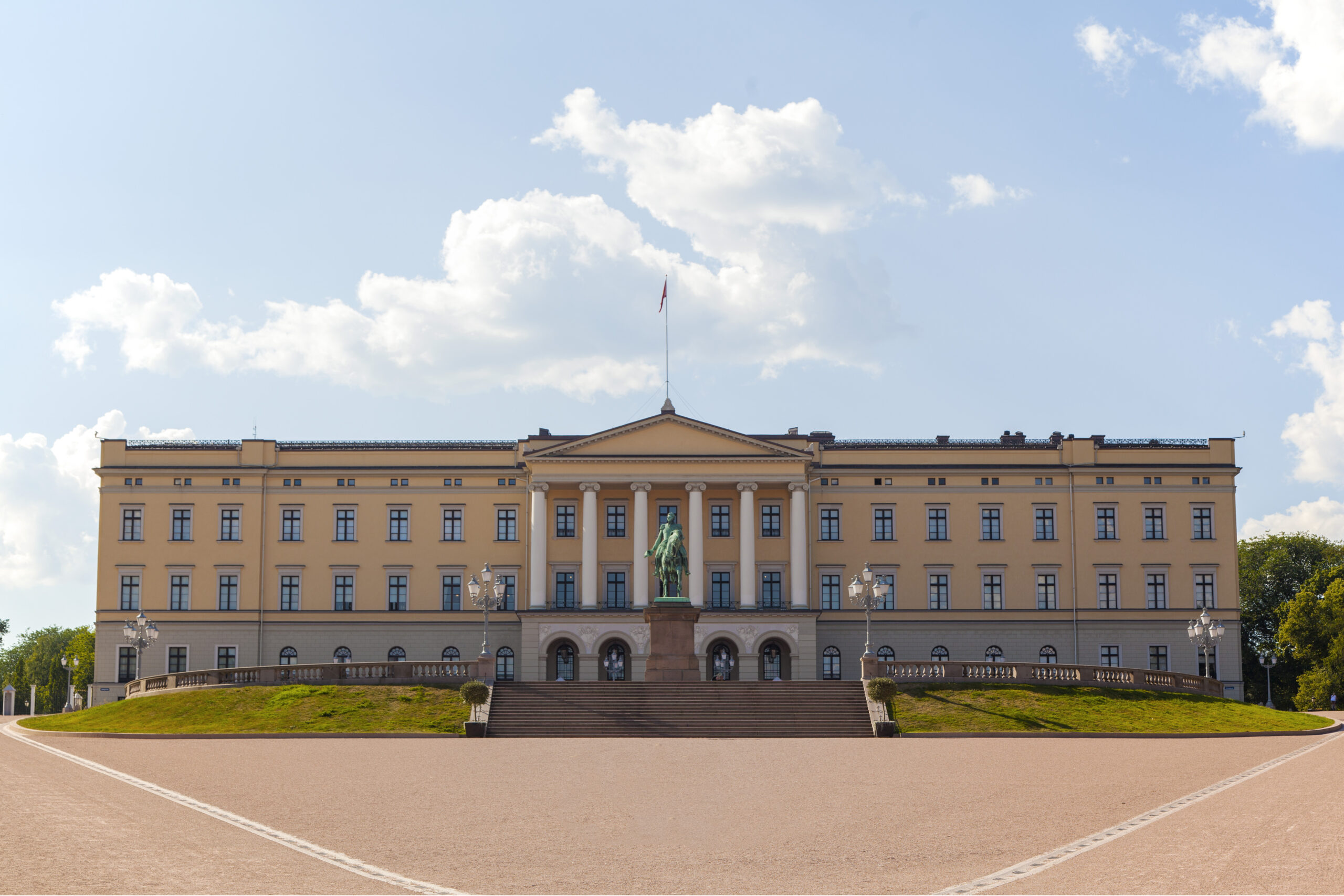
King Harald V of Norway died on Friday 28 August at 06:35, at Oslo University Hospital Rikshospitalet, where he had been admitted since 17 August. He was 89, and had reigned for 35 years. He was Europe’s oldest serving monarch.
Tomorrow his son takes the oath before parliament. This is what happens between those two events, and why almost none of it involves a crown.
Advertisement — ad space reserved
There is never a gap
Crown Prince Haakon became King Haakon VIII at the moment his father died. Not at a ceremony, not on signature — at 06:35 on Friday morning. In the Norwegian system the throne is never vacant, which is the point of hereditary succession as a constitutional device rather than a ceremonial one.
The same day, the new king met his ministers in an extraordinary Council of State and formally notified them. His statement to the council was a piece of constitutional plumbing rather than rhetoric: that his father had died at 06:35 on 28 August, and that under the provisions of the Constitution he had assumed the government of the kingdom.
On Tuesday 1 September he takes the oath before the Storting, promising to govern the Kingdom of Norway in accordance with its Constitution and laws. That oath is required. It is not what makes him king.
No coronation, by design
Norway will not hold a coronation, and this is not a modern economy measure. Article 12 of the 1814 Constitution originally required the king to be crowned and anointed at Nidaros Cathedral in Trondheim. In 1908 the Storting voted by a large majority to repeal it, on the view that the ceremony was undemocratic and archaic. The last Norwegian coronation was in 1906, for Haakon VII and Queen Maud.
What remains is optional: a consecration, or benediction, at Nidaros, at which the regalia are displayed but not worn. Queen Mette-Marit is expected to be consecrated alongside her husband if that ceremony goes ahead.
The contrast with the British model is not accidental. Norway’s monarchy was re-established by referendum in 1905 and has since been deliberately framed as an office held at the sufferance of an elected parliament in a country of 5.5 million, where real power sits with the Storting.
Advertisement — ad space reserved
The mourning, and the funeral
The government declared a period of national mourning running from Friday until after the funeral. The royal flag over the palace in Oslo was lowered to half-mast. Harald’s coffin was carried from the hospital to the Royal Palace, where it lies in state in the Palace Chapel; NRK reports it is to be adorned with the crown and sceptre, as with previous monarchs.
On Sunday, memorial services were held in churches across the country. The royal family attended at Asker Church, near the Skaugum estate. That evening the Royal House confirmed the state funeral for Wednesday 9 September, at Oslo Cathedral — the church where Harald married Sonja in 1968 and where Haakon married in 2001. Burial follows at the Royal Mausoleum in Akershus Fortress, alongside Olav V, Crown Princess Märtha, Haakon VII and Queen Maud.
A joint sarcophagus for Harald and Sonja was designed by the architecture firm Snøhetta. Its materials and design were kept confidential during his lifetime and will be revealed after the funeral.
The reign, briefly
Harald was born in 1937 and spent the war in exile in the United States after the German invasion, returning in 1945. He became king in January 1991 on the death of Olav V, and reigned through the period in which Norwegian oil and gas revenues transformed the country’s finances.
He courted Sonja Haraldsen for nine years before Olav V, after consulting parliament, permitted the marriage; she was a commoner, and the king is believed to have relented only when his son indicated he would otherwise renounce the throne. They married at Oslo Cathedral in August 1968 and were married 57 years.
He declined to abdicate, unlike several ageing European monarchs in recent years, despite health problems dating back two decades. Prime Minister Jonas Gahr Støre said the country was united in grief and gratitude.
Who is heir now
Crown Princess Ingrid Alexandra, 22, is now first in line — set to become Norway’s first reigning queen since Margaret in the fourteenth century, under the absolute primogeniture Norway adopted in 1990. Queen Sonja survives her husband, together with two children and five grandchildren.
Advertisement — ad space reserved
Sources
Announcement and biographical detail from the Royal House of Norway and the Norwegian government; funeral date via The Washington Post; succession mechanics and reign summary via NPR and CNN.
Leave a Reply