At least 13 people have been killed, including a child, and 39 injured in a Ukrainian drone attack on an oil refinery in Nizhnekamsk, in the Russian republic of Tatarstan.
A child died roughly 1,000 kilometres from the front line. That distance is the story.
Advertisement — ad space reserved
Where Tatarstan is
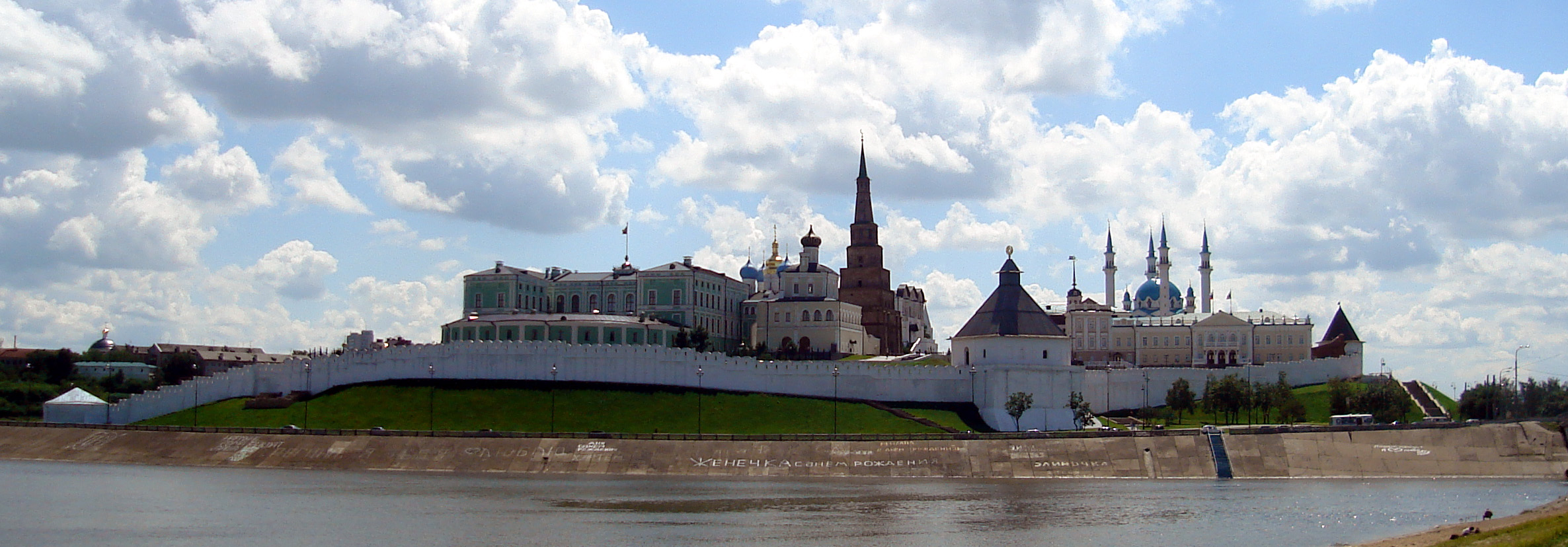
Tatarstan is a republic within the Russian Federation, lying well east of Moscow along the Volga. Nizhnekamsk is an industrial city built around petrochemical production — a place that exists because of the refinery, in the way that mining towns exist because of mines.
It is a very long way from Ukraine. Reaching it requires a drone with range that would have seemed implausible in the early phase of this war, and it demonstrates that no part of Russia’s energy infrastructure can now be assumed to be beyond reach.
Why refineries are targeted
Refineries have been struck repeatedly during this war for reasons that are, in military terms, coherent.
Crude oil is not usable as fuel. It has to be processed into diesel, petrol and jet fuel — and that processing happens at a relatively small number of large, fixed, expensive installations that cannot be moved or hidden. Damaging one reduces the output of the fuel that moves an army, and it does so more directly than sanctions can.
Refineries are also economically central. Fuel exports fund the state. So a refinery sits at the intersection of military logistics and national revenue, which makes it a target in a way an oil field is not.
None of that resolves the legal question, and it is worth being precise about why.
Advertisement — ad space reserved
Dual-use and the limits of the argument
International humanitarian law permits attacks on military objectives — things that by their nature, location, purpose or use make an effective contribution to military action, and whose destruction offers a definite military advantage.
A refinery supplying an army’s fuel can meet that definition. But the same refinery also supplies civilian heating, transport and agriculture, and it is staffed by civilian workers. Facilities of this kind are usually described as dual-use, and they are among the hardest cases in the law of armed conflict.
Even where a target is lawful, an attack must still be proportionate: the expected civilian harm must not be excessive relative to the anticipated military advantage. Whether that test was met here cannot be judged from casualty figures alone. It depends on what was known before the strike and what precautions were taken — evidence that outside observers do not have.
What can be said without qualification is that 13 people are dead, one of them a child, and 39 are injured.
Who works at a refinery
The people inside a petrochemical plant are operators, engineers, maintenance crews, control-room staff, cleaners and canteen workers. They are civilians in every ordinary sense, whatever the facility’s role in a war economy.
Industrial sites are also unusually dangerous places to strike. Refineries hold enormous quantities of flammable and toxic material under pressure. A single hit can produce fires and releases that injure people far beyond the point of impact — which is part of why casualty numbers at such sites are often high relative to the size of the attack.
Why we cover this
Civilian deaths in this war are more often reported when they occur in Ukraine, for reasons that are partly practical — access, language, the presence of international journalists — and partly a matter of which side readers in Europe and North America identify with.
We have reported on a three-year-old and his grandparents killed by a Russian strike in Ukraine. A child killed in Tatarstan is not a smaller loss, and reporting it is not a comment on the justice of either side’s cause.
A newspaper that only counts the dead on one side is not reporting a war. It is participating in one.
Source: Reuters, 10 August 2026.
Advertisement — ad space reserved
Leave a Reply