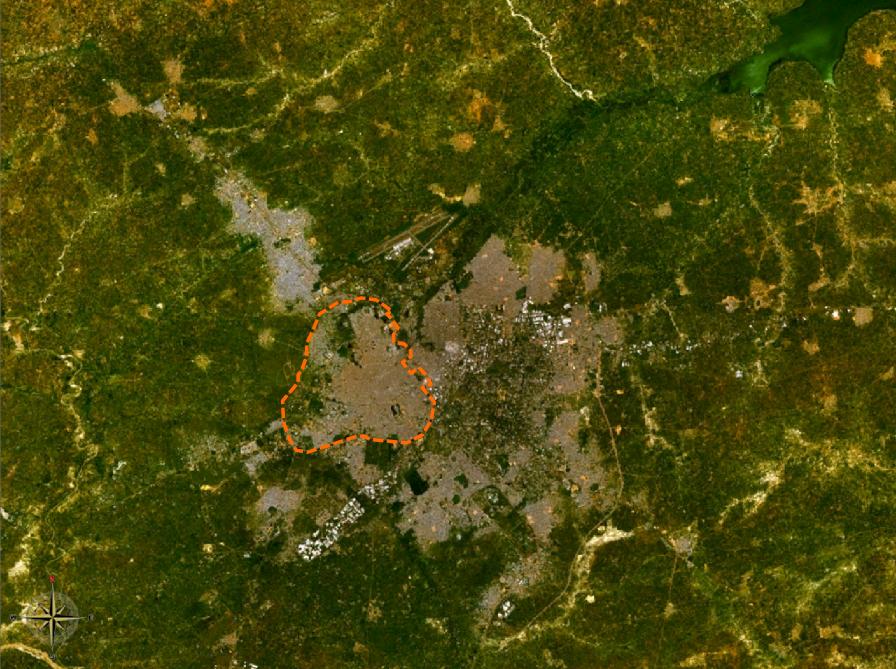
The number of violent incidents recorded in north-west Nigeria rose 78 per cent in the first half of 2026 compared with the same period last year, according to ACLED.
The perpetrators are usually described as bandits, which is part of why almost nobody outside Nigeria hears about it.
Advertisement — ad space reserved
What the word conceals
“Banditry” in the Nigerian north-west covers armed groups operating across Zamfara, Katsina, Sokoto, Kaduna and neighbouring states. They raid villages, seize livestock, occupy forest reserves, levy communities for protection, and carry out mass kidnappings for ransom — including from schools.
Some hold territory. Some run something resembling a taxation system. Several field hundreds of armed men on motorcycles. By most functional measures these are insurgent organisations without an ideology, and researchers of the region have argued for years that the criminal label produces a policy response mismatched to what is actually happening.
The categorisation matters practically. A criminal problem is handled by police, gets no international attention and generates no humanitarian appeal. An armed conflict draws conflict monitors, aid funding and diplomatic engagement. The people displaced are equally displaced under either heading.
Why the numbers are rising
Explanations offered by researchers of the region overlap and none is sufficient alone.
Longstanding competition between pastoralist and farming communities over land and water has intensified as grazing routes have been converted to cultivation and rainfall patterns have shifted. Weapons have become easier to obtain, partly as a consequence of instability across the Sahel. State presence in rural areas is thin, and where communities have organised self-defence militias, the resulting cycle of reprisal has often widened the violence rather than contained it.
There is also a straightforward economic logic. Kidnapping for ransom works. It generates revenue reliably, requires little capability, and the payment of ransoms — by families with no alternative — funds the next operation.
Advertisement — ad space reserved
The argument about ransom
This is the sharpest policy disagreement, and both positions are held by people who have thought hard about it.
The case for prohibiting ransom payments, which Nigeria has legislated in some form, is that payment is the business model. Remove the revenue and the incentive collapses. States that have held this line against kidnapping elsewhere argue it works over time.
The case against is immediate and human. A family whose child has been taken, in a region where the state cannot mount a rescue, is being asked to accept a probable death for the sake of a deterrent effect that accrues to other people later. Prohibition also tends to drive payments underground rather than stop them, which removes what visibility authorities had.
No government has found a satisfactory answer to that. Nigeria’s difficulty is that it is being asked the question at a scale few states have faced.
Why it stays unreported
Three reasons, familiar from other stories on this beat.
The violence is dispersed across a large rural area rather than concentrated in a city, so it produces many small incidents rather than a few large ones. International coverage of Nigeria has centred for over a decade on the north-east and Boko Haram, and a second, larger conflict in a different region does not fit that established frame. And access is dangerous, so the reporting that exists is done overwhelmingly by Nigerian journalists working at considerable risk.
A 78 per cent increase in six months is the kind of figure that would lead bulletins if it described a country readers had been taught to watch.
Advertisement — ad space reserved
Sources
- ACLED data cited in reporting on a 78 per cent rise in recorded incidents in north-west Nigeria in the first half of 2026
- ACLED Nigeria country profile and Conflict Index entry
- Published research on armed groups, pastoralist–farmer competition and kidnapping economies in north-west Nigeria
- Nigerian legislation on ransom payments and reporting on its application
Leave a Reply