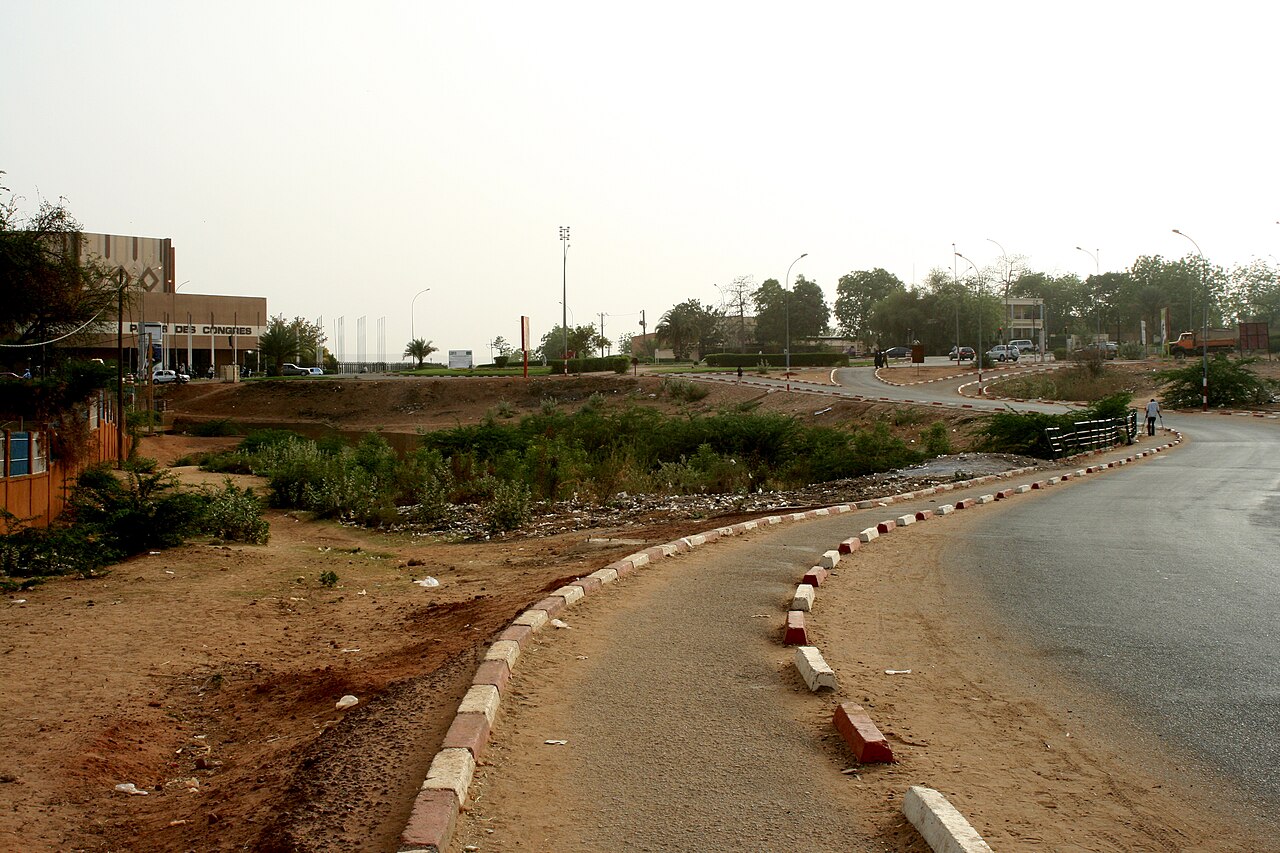
Gunfire and explosions broke out at Base 101 in Niamey, the air base attached to Niger’s capital airport, overnight on 28 August 2026. Dissident soldiers took officers hostage before loyalist forces regained control. Dozens of mutineers were arrested. Defence Minister General Salifou Mody said the soldiers had broken with military discipline and regulations.
It was the third assault on the airport complex this year. General Abdourahamane Tiani, who has led the country since the 2023 coup, has not appeared in public to confirm his own whereabouts.
Advertisement — ad space reserved
Why that base
Base 101 is not an ordinary garrison. It hosts Turkish drones, personnel from Russia’s Africa Corps, and the headquarters of the Alliance of Sahel States — the bloc formed by the juntas of Niger, Mali and Burkina Faso after they left the West African regional body ECOWAS.
That concentration explains why a mutiny there is a different event from a mutiny elsewhere. Whoever holds the airfield holds the drones that conduct the counter-insurgency campaign, the foreign contingent that secures the leadership, and the physical seat of the alliance the junta has built its foreign policy around. It is also the route out of the country.
Who put it down
According to analysis published by the Critical Threats Project, Russia was decisive in thwarting the attempt, and Algeria also acted to protect its Nigerien partners. There is no indication the two coordinated, though the Russian ambassador in Niamey publicly praised Algiers for its support of the junta.
The detail that says most about the state of the region is the one about the alliance: the Alliance of Sahel States, the bloc Niger helped create precisely to provide mutual security guarantees, did not respond to the crisis. A member government faced an internal armed challenge and its own regional organisation was absent. The security that arrived came from Moscow and Algiers instead.
Advertisement — ad space reserved
The pattern juntas fall into
Three attempts on one airport complex in a single year is a rate that tells you something about the durability of the arrangement rather than about any individual plot. Governments that take power by force face a structural problem: the same route is available to everyone who follows them, and the officers most capable of using it are the ones closest to the leadership.
The standard responses are to purge the officer corps, to fragment command so no single unit can act alone, and to rely on foreign guards whose loyalty is contractual rather than national. Each of those measures reduces coup risk and degrades military effectiveness — which matters in a country fighting jihadist insurgencies across most of its territory.
Tiani’s continued absence from public view is the kind of detail that produces rumours in the absence of information. It should be read carefully: leaders stay out of sight after such events for reasons ranging from injury to security precaution to the simple wish not to be filmed reacting.
Sources
- Critical Threats Project, Africa File, 3 September 2026
- Statements by Niger’s Defence Minister Gen. Salifou Mody, as reported, August 2026
- Regional reporting on the Base 101 mutiny, 28 August to 5 September 2026
Leave a Reply