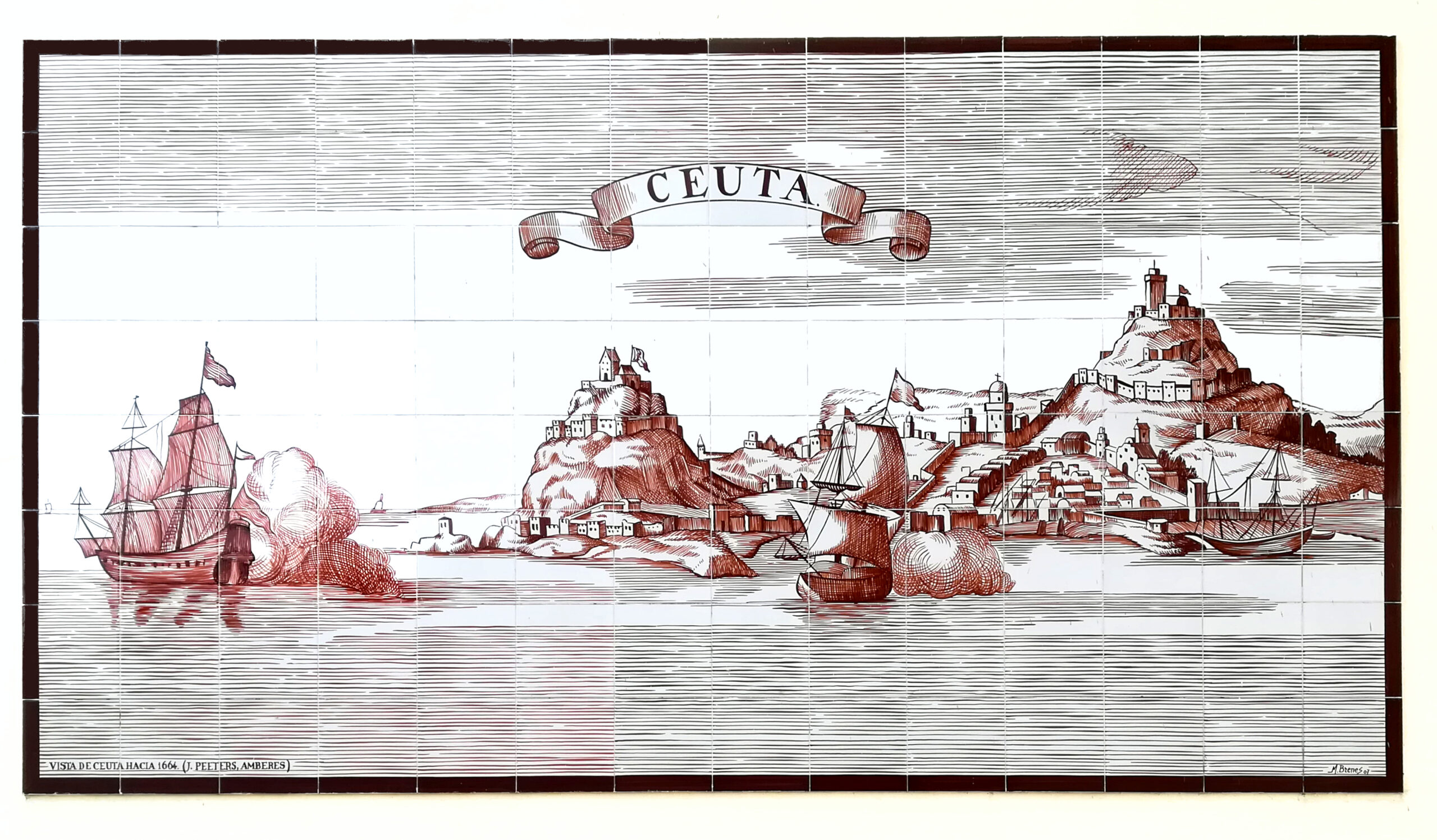
Morocco has added barbed wire and increased police deployments near the border with Ceuta, the Spanish enclave on the North African coast, after online calls circulated for another mass crossing attempt.
The reinforcement is a response to social media appeals rather than to an event that has happened — which is itself the notable part of the story.
Advertisement — ad space reserved
What Ceuta is
Ceuta is Spanish territory on the African continent, roughly 19 square kilometres bordered by Morocco on land and the Mediterranean on the other side. With Melilla, further east, it forms the European Union’s only land border with Africa.
That geography has a consequence that maps make obvious: reaching Ceuta means reaching EU soil without crossing the sea. For anyone hoping to claim asylum in Europe, a fence a few metres high replaces a voyage that drowns thousands of people a year. The enclave is therefore fortified with multiple fence lines, sensors and surveillance, and Spain and Morocco co-operate closely on policing it.
Why Morocco’s posture is the variable
The fences are Spanish. The approach to them is Moroccan, and that asymmetry has been a feature of the relationship for years.
In May 2021, thousands of people crossed into Ceuta in a single episode during a diplomatic dispute between Madrid and Rabat, at a time when Moroccan border controls were widely reported to have been relaxed. Spain accused Morocco of using migration as leverage; Morocco denied it. The episode ended with a substantial shift in Spanish policy on Western Sahara.
That history is why a Moroccan decision to add wire and officers is read as a political signal as well as an operational measure. When Rabat reinforces the approach, crossings fall sharply. The current deployment indicates co-operation is functioning.
Advertisement — ad space reserved
The online element
Calls for coordinated crossings have circulated on social media before, sometimes producing large gatherings and sometimes nothing at all. They are difficult for authorities to assess: the audience is real but the intention behind a post is not, and a call that reaches tens of thousands of people may be organised by nobody in particular.
The dynamic is worth watching because it changes what border enforcement responds to. Deployments are now made against anticipated online mobilisation rather than observed movement — a form of pre-emption that is hard to evaluate, since a crossing that does not happen proves nothing either way.
The people involved
Those attempting to reach Ceuta are mostly young men from Morocco and from sub-Saharan countries, and in past episodes a significant number have been unaccompanied minors — which creates obligations under both Spanish and international law that a fence does not resolve.
Spain’s practice of returning people who cross immediately, sometimes called hot returns, has been litigated repeatedly in European courts. The underlying pressure is unchanged: a land border with the EU on the African continent, and a sea route that is far more dangerous.
Sources
Al Jazeera reporting on the Moroccan deployment, 15 August 2026; background from prior coverage of the May 2021 Ceuta crossings and European Court of Human Rights rulings on summary returns.
Advertisement — ad space reserved
Leave a Reply