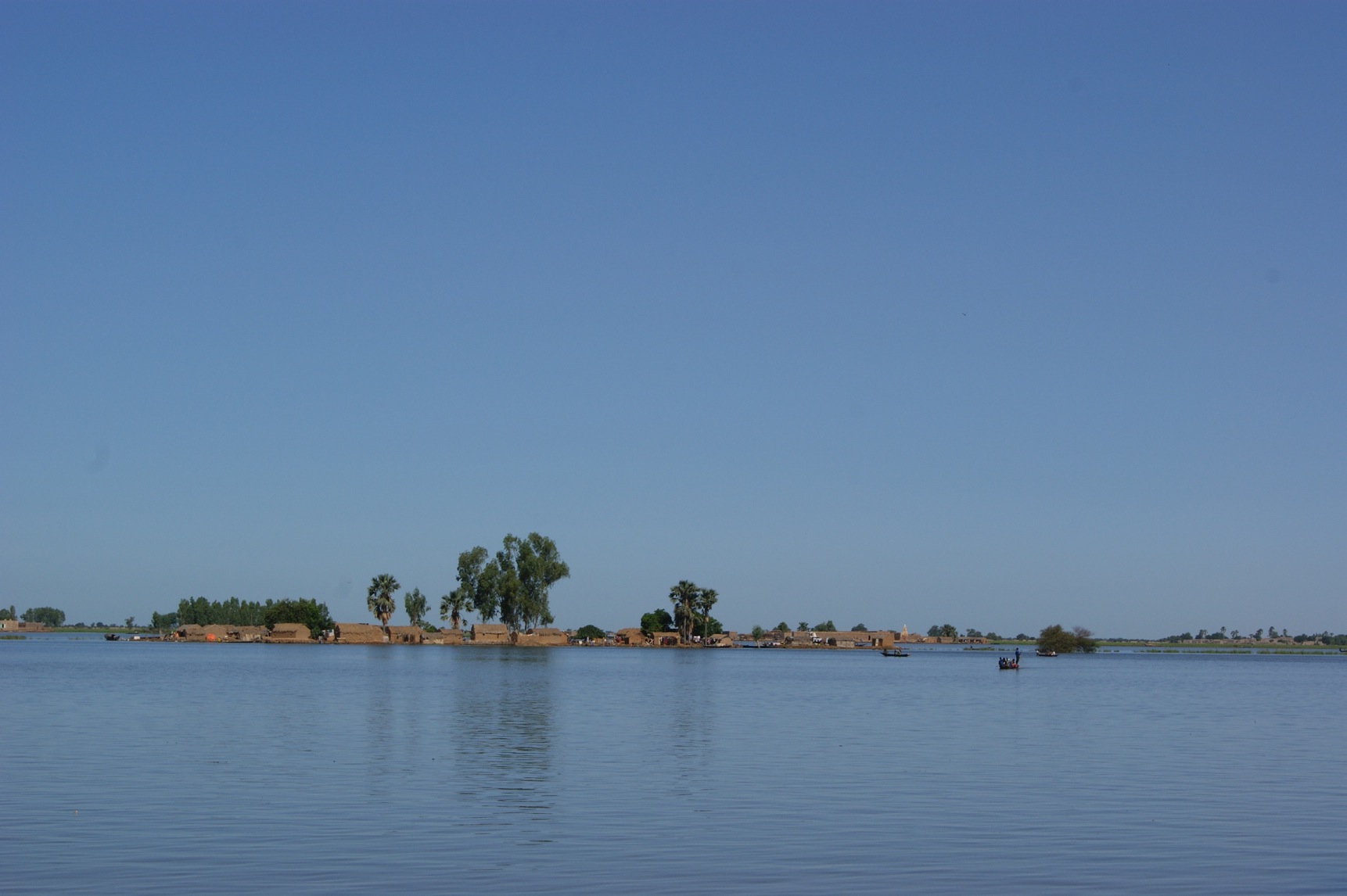
More than 415,000 people are internally displaced in Mali, most of them women and children, according to humanitarian coordination reporting. The drivers listed are insecurity, climate shocks and health pressures, and the situation is described as critical.
Mali is covered internationally when a coup happens or when a convoy is ambushed. The displacement that sits underneath those events is reported almost nowhere.
Advertisement — ad space reserved
“Internally displaced” is not a softer word for refugee
The distinction is legal and it has consequences. A refugee has crossed an international border and acquires protection under the 1951 Refugee Convention, with an agency — UNHCR — holding a formal mandate for them.
An internally displaced person has not crossed a border. They remain, in law, the responsibility of their own government — frequently the same government whose conflict displaced them, or which cannot reach the areas they fled to. There is no convention conferring individual rights on them, only a set of guiding principles that are not binding.
In practice this means internally displaced people are harder to count, harder to reach, and far less visible in international politics than refugees arriving at a border. Globally they outnumber refugees by a wide margin and receive a fraction of the attention. Mali’s 415,000 is a case in point.
Three causes that are really one
Insecurity, climate shocks and health pressures are listed separately in the reporting, but in central Mali they operate as a single system.
Rainfall in the Sahel has become less predictable, which compresses the grazing season and pushes herders further and earlier into farmed land. Competition over water and pasture between herding and farming communities becomes violent. Armed groups recruit from whichever side feels less protected, and state forces respond in ways that often deepen the grievance. Families leave. Having left, they lose access to the clinics and vaccination programmes they were registered with, so routine illness becomes dangerous.
Researchers who study the Sahel are careful about the causal claim here, and this paper will be too. The dominant position in the literature is that climate change acts as a threat multiplier rather than a direct cause — it worsens pressures created by governance, land tenure and demography, and is not sufficient on its own to produce conflict. A minority position holds that the multiplier framing understates the role of climate; another cautions it can be used to depoliticise what are fundamentally failures of the state. None of these positions is settled.
Advertisement — ad space reserved
Mostly women and children
That phrase appears in almost every displacement report and is usually read as a measure of vulnerability. It is also a description of what happened to the households.
Adult men are disproportionately absent from displaced populations because they have been killed, have joined armed groups, have stayed behind to hold land, or have migrated for work. A displaced population skewed towards women and children is usually a population of separated households, and family separation drives a distinct set of problems: loss of income, interrupted schooling, and heightened protection risks for those travelling without the household they started with.
These are the conditions that produce onward movement months or years later — towards Bamako, towards the coast, and eventually towards the Mediterranean routes that Europe reports as a migration story without reference to where it began.
Advertisement — ad space reserved
Sources
- Humanitarian situation reporting for Mali, via ReliefWeb, October 2026
Leave a Reply