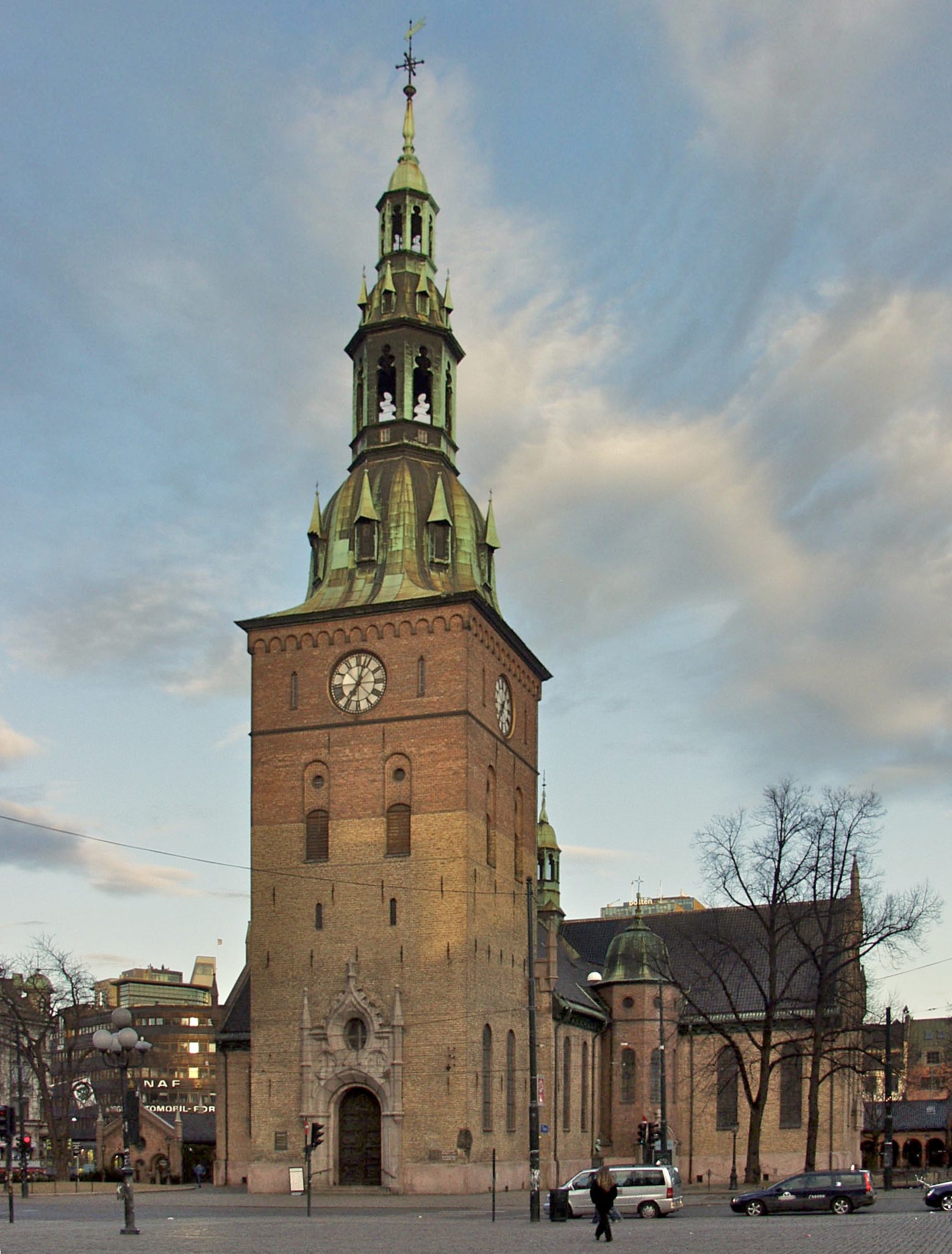
King Harald V of Norway was buried on Wednesday in Oslo, after a state funeral attended by heads of state and government from across Europe and beyond. He died on 28 August at the age of 89.
Heads of state walked behind the coffin through central Oslo. Among them was Ukrainian President Volodymyr Zelensky, whose journey to the funeral has itself become a disputed story.
Advertisement — ad space reserved
The reign that ended
Harald V acceded in 1991 and reigned for more than three decades. He was the first monarch born in Norway in centuries, and his family’s history is bound up with the country’s twentieth century: the royal household went into exile during the German occupation and returned in 1945.
Norway is a constitutional monarchy in which the monarch’s political powers are formal. Government is conducted by ministers accountable to the Storting. What the office carries instead is continuity and a role in national self-understanding — which is precisely what makes the death of a long-reigning monarch a significant public event in a country whose politics the monarch does not run.
Funerals as diplomacy
State funerals of this scale are among the few occasions that bring large numbers of leaders to one city without a summit agenda, and a great deal of business is conducted around them.
That happened here. Zelensky’s Oslo programme included meetings with the Norwegian prime minister, the finance minister and the foreign minister, covering military and civil aid and a European air defence project. None of those meetings would have been scheduled as a standalone visit at short notice.
Diplomats have a term of art for this — working funerals — and it is not cynicism. A gathering that requires no negotiation over agenda, precedence or communiqué removes most of the friction that makes summits slow to arrange.
Advertisement — ad space reserved
The security problem underneath
The other thing a state funeral concentrates is risk. Assembling most of a continent’s leadership in one place on a fixed, published date is a protection problem of a kind that rarely arises otherwise, and it is handled by closing airspace, restricting movement and coordinating protective details across dozens of delegations.
The drone incident on Zelensky’s outbound leg is a reminder that the difficulty now begins well before arrival. Protecting a head of state inside a host city is a solved problem for a country like Norway. Protecting an aircraft transiting the airspace of a third country that is not in NATO and does not intercept what crosses it is not.
What follows
Succession in a hereditary monarchy is automatic and requires no decision, which is one of the arrangement’s few uncontested advantages. The constitutional position of the Norwegian crown is unchanged.
Debates about the monarchy itself will resume in due course, as they do periodically in every European monarchy, and they are genuine debates with serious arguments on both sides — about democratic principle on one, and about the value of a head of state who owes nothing to any party on the other. The week after a funeral is not usually when they are held.
Advertisement — ad space reserved
Sources
- Reuters and Associated Press coverage of the funeral of King Harald V, Oslo, 9 September 2026
- Washington Post, reporting on heads of state walking behind the coffin
- Norwegian public broadcaster NRK, interviews with Prime Minister Jonas Gahr Støre
- Reporting on President Zelensky’s Oslo meetings on military and civil aid
Leave a Reply