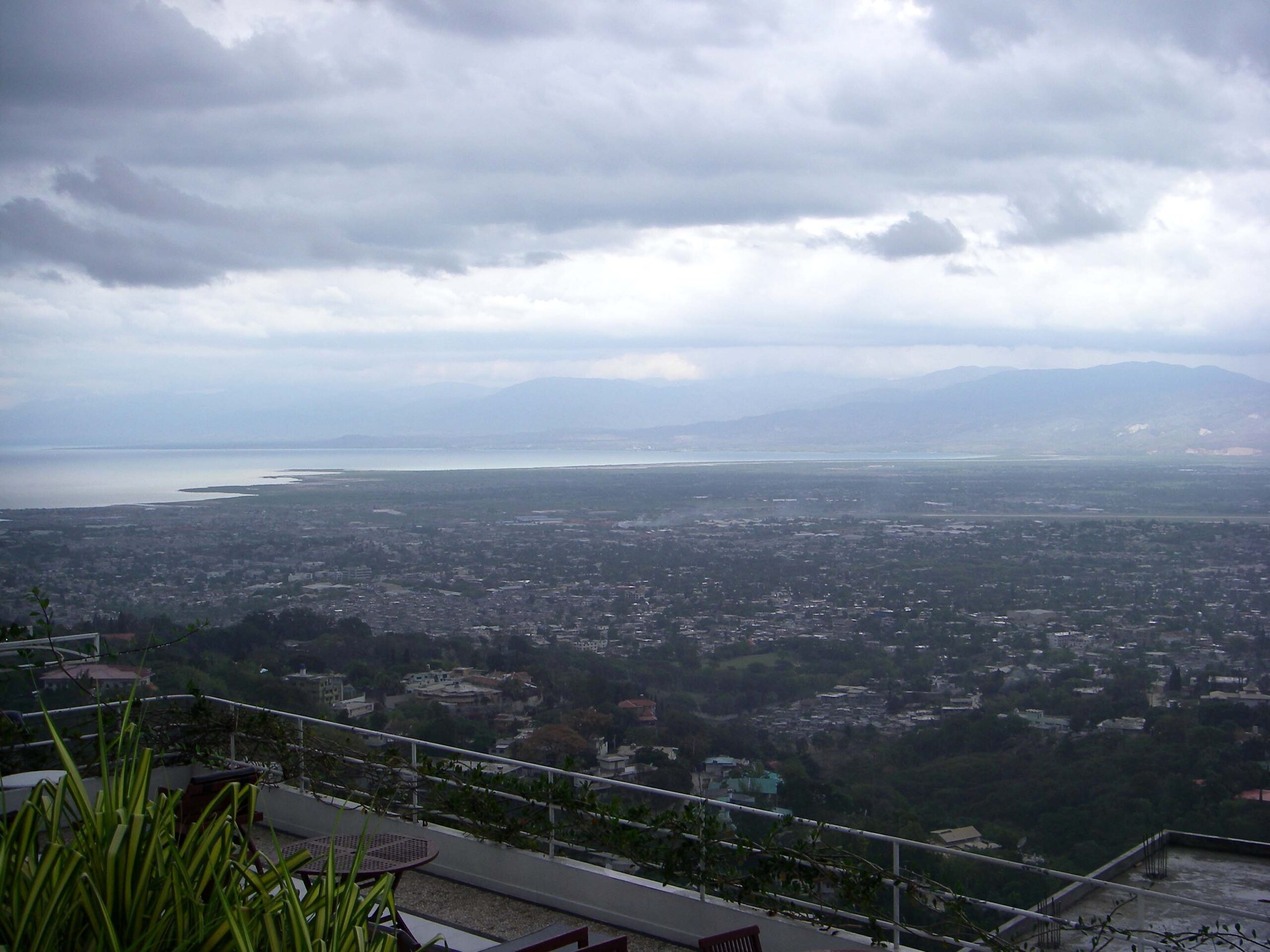
At least 47 people were killed and 22 injured in an overnight gang raid on Kenscoff, a farming community in the hills above Port-au-Prince, according to the United Nations Integrated Office in Haiti. Houses were set on fire. The attack began at about 10.30pm local time.
The Haitian rights organisation RNDDH put the figure lower, estimating 30 to 40 killed and 15 to 20 wounded, while saying a complete tally was difficult to establish. The UN office said its own estimate could still change. Al Jazeera reported at least 30 dead.
Kenscoff’s mayor, Jean Massillon, said armed men raided the community and killed residents, and that access and communication problems made a definitive count impossible.
Why this hillside
Kenscoff is not a random target. It sits in a strategic position overlooking the routes into Pétion-Ville — which holds several embassies, upscale hotels and the temporary seat of government — and above a major road running from the capital into southern Haiti.
Control of that high ground means control of movement. The community has suffered around a dozen attacks by armed groups since last year, and hundreds have died in them, forcing thousands from their homes. A gang coalition has spent years consolidating control over the capital and pushing outward into surrounding areas.
From Plain Sight News
The anger at the police
The government condemned what it called a heinous attack and promised to reinforce security. Residents responded by demanding the local police chief resign, saying people were killed minutes from the police station.
The picture from residents is not simply one of absence. Several said dozens of police had tried to repel the attackers during the night and that some officers were injured. They also said they did not identify any gang members among the dead. National police chief Vladimir Paraison, visiting Kenscoff later that day, said the police had not given up.
Both things appear to be true: officers fought, and the community was not protected. That is what an outgunned police force looks like, and it is the reason foreign governments have spent years trying to reinforce it.
Among the houses reported burned was the home of Jean William Pape, one of Haiti’s most prominent public health figures.
The wider crisis, and the December election
Around 6.4 million Haitians require humanitarian assistance and nearly 1.5 million are internally displaced. The UN-backed Gang Suppression Force, mandated to help the police, is working towards a strength of more than 5,500 personnel; a spokesperson did not immediately say whether troops were being sent to reinforce Kenscoff.
Haiti is due to hold an election in December — its first in a decade, after repeated postponements as armed groups expanded their reach. An attack of this scale on high ground overlooking the capital raises the obvious question of whether voting can be organised and protected in areas where the state does not reliably control the roads.
Meanwhile the United States announced last week that it would begin twice-weekly deportation flights to Haiti, following a Supreme Court ruling permitting the administration to end temporary protected status for an estimated 350,000 Haitians.
From Plain Sight News
On the numbers
The spread between 30 and 47 dead is not evasion by any party. Counts in the first hours after an attack come from different methods — a UN office aggregating reports, a rights group verifying individual cases, journalists on the ground — and verification is slower than reporting. The lower figures are usually the more strictly verified ones; the higher ones usually turn out closer to the eventual total. Both are worth publishing, with their sources attached.
From Plain Sight News
Sources
- ABC News / Reuters, on the toll, the RNDDH estimate and the Gang Suppression Force, 25 August 2026
- Reuters via TimesLIVE, on the police response and the December election, 25 August 2026
- Associated Press, from Kenscoff, 24 August 2026
- Democracy Now!, on displacement figures and US deportation flights, 25 August 2026
Leave a Reply