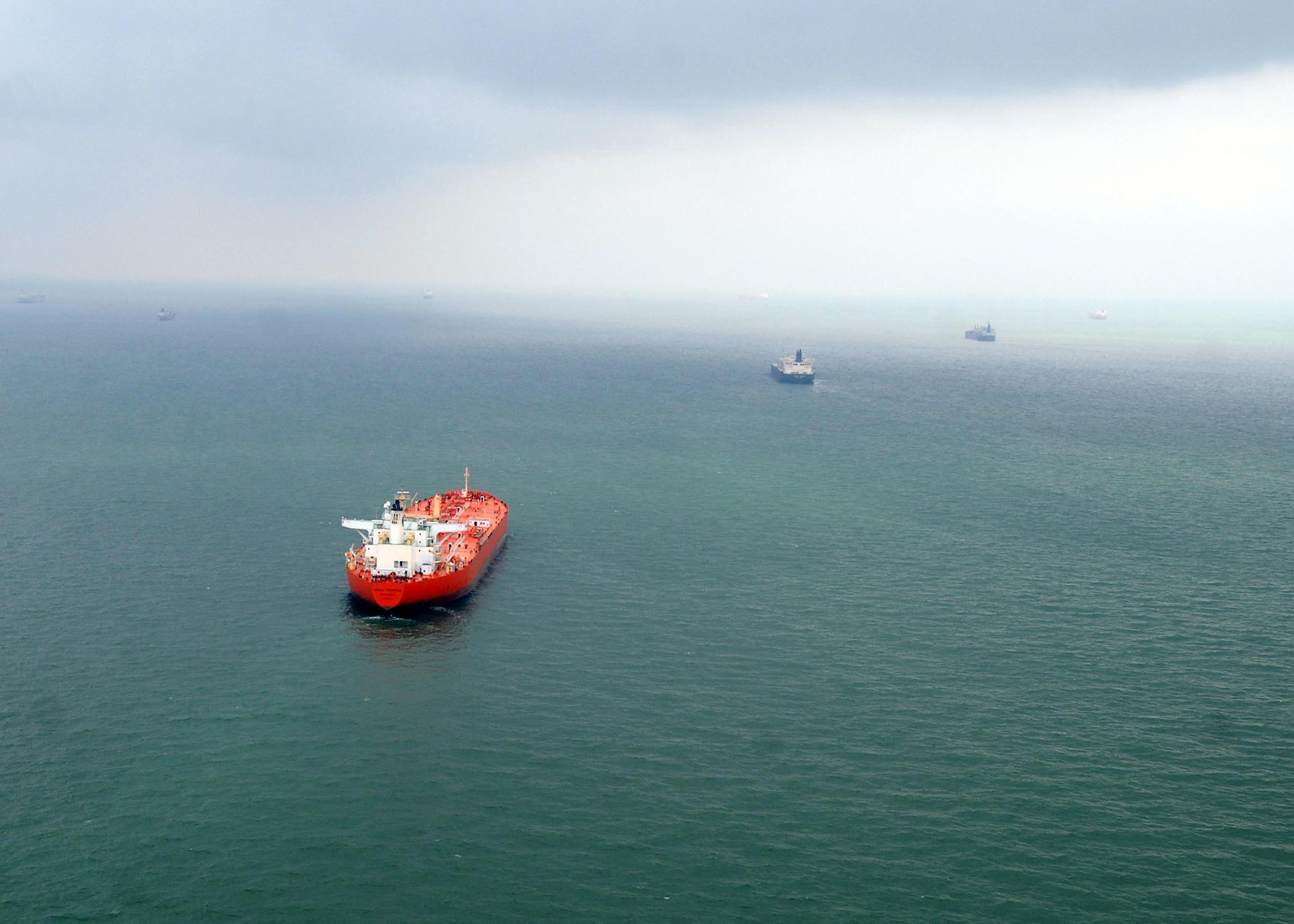
India’s shipping minister Sarbananda Sonowal has reported that more than 4,000 Indian seafarers have been repatriated and 62 Indian vessels have successfully transited the Strait of Hormuz, under an operation named Urja Suraksha.
It is a rare piece of news that treats the crews as the story rather than the cargo.
Advertisement — ad space reserved
Who actually crews the world’s ships
Global shipping runs on a workforce drawn heavily from a small number of countries — India and the Philippines prominent among them. A tanker may be owned in one country, registered in a second, insured in a third and crewed by people from a fourth.
That structure is efficient and it distributes risk unevenly. When a waterway becomes dangerous, the people physically exposed to that danger are usually not nationals of the states arguing over it, and often not of the state whose flag the ship flies.
Why repatriation is a government operation
Seafarers work on fixed contracts, and getting home normally means the ship reaching a port with onward flights. When routes close, insurance is withdrawn or airspace shuts, that ordinary chain breaks and crews can be stranded — sometimes aboard vessels that cannot safely sail.
Repatriating 4,000 people therefore involves consular staff, negotiated port access, chartered transport and coordination with shipowners across several jurisdictions. It is unglamorous work and it is the difference between a crisis and a catastrophe for the families involved.
Advertisement — ad space reserved
What life aboard looks like in a crisis
A merchant ship carries a small crew — often around twenty people for a large tanker. They work months-long contracts, usually with limited internet, and are frequently the last to learn how the situation around them is developing.
When a route becomes dangerous, the decisions are taken elsewhere. Owners, charterers and insurers determine whether a vessel sails. Crews are told. Refusing to sail is possible in principle and difficult in practice, particularly for seafarers whose future employment depends on agencies that place them.
Transits of a contested strait are typically made at speed, often at night, with lookouts posted and defensive measures readied. Crews describe the waiting as the hardest part — a passage of many hours during which nothing can be done except continue.
Why the flag on the stern matters
The state whose flag a vessel flies carries primary responsibility for it, including for the welfare of its crew. But many ships are registered in countries chosen for low cost and light regulation rather than any real connection to the owner.
That creates a gap in a crisis. A seafarer’s own government may have no jurisdiction over the ship. The flag state may have little capacity or inclination to help. The owner may be a company that exists chiefly on paper.
Operations like this one exist partly to fill that gap. When a country repatriates its own nationals from ships it does not control, it is stepping in where the ordinary system of responsibility has not delivered.
Advertisement — ad space reserved
The economic stake for India
The operation’s name translates roughly as “energy security”, which indicates what is at issue. India imports a very large share of its crude oil, and much of it comes through the Gulf. Escorting and tracking vessels through a contested strait is not only a duty of care towards crews; it is a matter of keeping fuel arriving.
Seafarers’ remittances are also a significant flow of money into the households and regions they come from. A prolonged disruption to the trade reaches those places long before it shows up in national statistics.
The part usually left out
Coverage of the Strait of Hormuz is largely written in the language of barrels, premiums and prices. Those are real. But every vessel in those figures has perhaps twenty people aboard, working in a place where ships are being hit.
Sixty-two safe transits is a number worth noticing for the same reason a casualty figure is: it stands for people who got home.
Sources: Government of India shipping ministry statement, 7 August 2026; Wikipedia Portal: Current Events.
Advertisement — ad space reserved
Leave a Reply