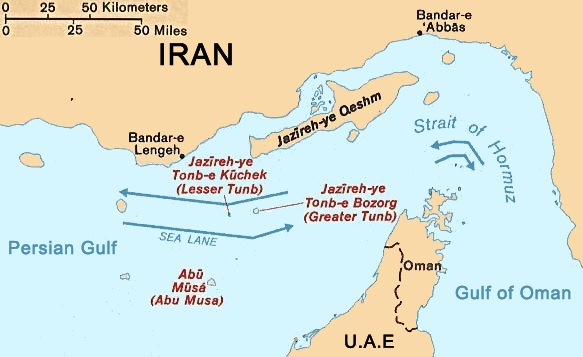
Two governments are making flatly incompatible claims about the same stretch of water, and the shipping data supports neither of them completely.
On 12 August, President Donald Trump wrote on Truth Social that the United States has total control over the Strait of Hormuz, describing the naval blockade of Iran as a wall of steel and saying he thought the US would keep the strait. He told reporters the same day that Iran did not have control, and said the US Navy had swept the waterway for mines.
Iran’s response came within a day and from several directions at once. The Islamic Revolutionary Guard Corps said no commercial or tanker vessel could transit safely without the authorisation and supervision of Iran’s armed forces. The commander of the Basij organisation said the strait was under Iranian management and control. Iran’s foreign minister, Abbas Araghchi, told Washington to be careful, posting that something worse than fake news is fake intelligence.
Advertisement — ad space reserved
What the traffic figures show
The most useful measure of who controls a waterway is not what either side says about it. It is how many ships are willing to use it.
Fourteen vessels crossed the strait on Tuesday, according to shipping data reported by CNN. Before the war, roughly 120 crossed daily. Traffic has fallen to near three-month lows. Carl Schuster, a former director of the US Pacific Command’s Joint Intelligence Center, put the reason plainly: few merchant shipping companies are confident that the US can guarantee safe passage.
That figure undercuts both claims. If the United States controlled the strait in any commercially meaningful sense, ships would be sailing. If Iran controlled it, Iranian trade would be moving — but the US naval blockade, in place since 13 April, still bars vessels from Iranian ports, which has strangled Iran’s cashflow.
What exists is not control by either party. It is a vacuum that neither can fill, in which insurers and shipowners make their own assessments and mostly decide to wait.
Advertisement — ad space reserved
The permit system
Behind the rhetoric is a concrete Iranian institution. In May, Tehran established a Persian Gulf Strait Authority and declared that no vessel may pass through Hormuz without a permit issued by it. Iranian officials have pointed to an interim understanding reached in June as granting them the right to administer shipping there. The parliament speaker said in June that management of the strait would never return to what it was before the war.
Whatever its legal standing — and a coastal state charging for transit through an international strait is contested under the law of the sea, as we set out when Iran and Oman began talking about joint management — the authority exists and issues documents. That is a fact shipowners must reckon with regardless of what Washington says.
Why the pressure is rising
The International Energy Agency has warned that global oil stockpiles are drawing down rapidly. Stockpiles are what has absorbed five months of disruption; when they thin, the price effects that have so far been muted stop being muted.
Reuters, citing a senior Iranian official, reported that there has been no progress on the central question in mediated talks — whether the US will return to the June interim agreement and set a timetable for its commitments. Iran’s Persian Gulf Strait Authority stated that claims the strait is no longer blocked do not change the position: it remains blocked until Iran’s conditions are met.
Both sides therefore have an incentive to describe the situation in terms that suit them, and neither has an incentive to describe it accurately. The ships anchored off Bandar Abbas are the part of the story that is not a claim.
Sources
CNN shipping data and analysis; Al Jazeera; CNBC; Reuters; the Washington Times; CBS News; and the Congressional Research Service briefing on security developments in the Strait of Hormuz.
Advertisement — ad space reserved
Leave a Reply