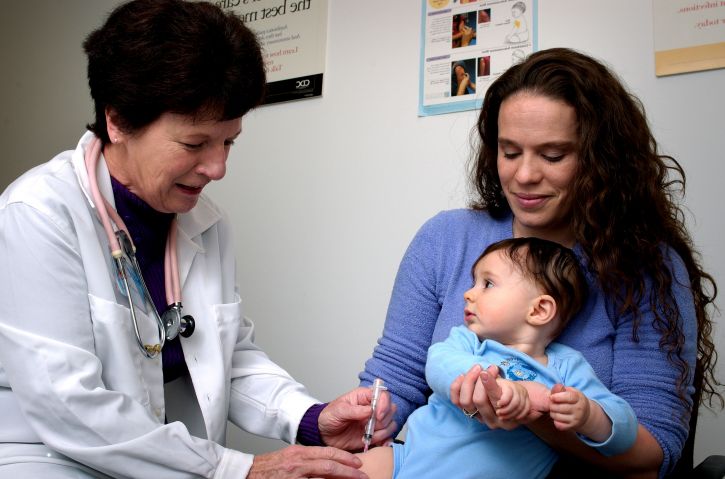
The US State Department will shortly transfer $600 million appropriated by Congress to Gavi, the Vaccine Alliance, covering fiscal years 2025 and 2026. The money supports vaccine delivery for twenty diseases across more than fifty low-income countries, with the bulk of the US contribution expanding access to malaria vaccines.
Advertisement — ad space reserved
What Gavi actually does
Gavi is not primarily a charity that buys vaccines. It is a market-shaping mechanism, and understanding that is the key to the economics.
The problem it was built to solve is that manufacturers had little incentive to produce vaccines for diseases concentrated in countries that could not pay much. Building a production line is a long-term capital commitment, and a market of uncertain size and price does not justify one.
By aggregating demand across many countries and committing to volumes in advance, Gavi turns that uncertain market into a predictable one. Manufacturers can then invest in capacity, and prices per dose fall — often dramatically. Countries co-finance a share that rises as their income does, and eventually transition to funding their own programmes.
Gavi estimates it has vaccinated more than 1.2 billion children and helped prevent more than 20.6 million deaths since its creation. Those are the organisation’s own figures, calculated by modelling deaths averted rather than counted directly — a legitimate method with real uncertainty attached.
Why malaria is where the money is going
Malaria vaccines are a recent addition to the toolkit, after decades in which a vaccine against a parasite was widely doubted to be achievable. They do not replace bed nets, insecticides or treatment; they add to them.
The constraint has been supply and delivery rather than demand, which is precisely the sort of bottleneck an advance-commitment mechanism addresses. It also connects to something we reported this week: malaria and Ebola interact badly in the Democratic Republic of the Congo, because early malaria symptoms resemble early Ebola symptoms, which complicates triage in an outbreak — the situation described in today’s report on the outbreak.
Advertisement — ad space reserved
The argument being made for it
Senate Appropriations Committee Chair Susan Collins framed the funding in security terms, saying Gavi plays a critical role in averting the spread of preventable diseases globally and stopping outbreaks before they reach US borders.
That framing is worth noticing, because it is how global health funding survives politically in a period of aid scepticism. The humanitarian case and the self-interest case point at the same appropriation, and advocates increasingly lead with the second.
Critics of this approach — including some within global health — argue that justifying assistance by domestic benefit makes funding hostage to perceived threat levels, and distorts priorities toward diseases that might travel rather than those that kill the most people. Others argue that any durable coalition requires more than one reason, and that purity about motive has not historically produced budgets.
The structural question underneath
A State Department-sponsored report from the National Academies has set out an evidence-based approach to moving disease-specific programmes toward integrated, country-led health systems.
That is the long-running argument in this field, and it is not really about money. Vertical programmes targeting one disease can deliver results quickly and be measured cleanly. They can also build parallel structures — separate staff, supply chains and reporting — that a national health system does not absorb, so capacity vanishes when the funding does.
Integration is the acknowledged goal and is slower, harder to measure, and much harder to fund. Which is why the argument recurs with every appropriation.
Sources
Advertisement — ad space reserved
Leave a Reply