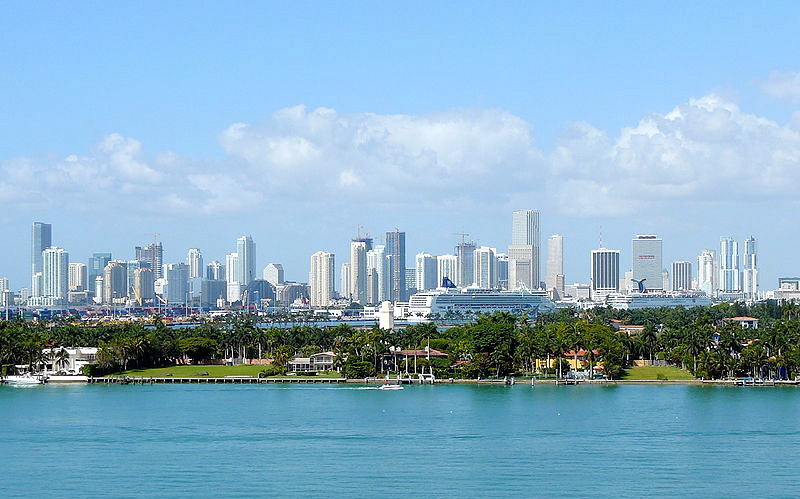
Voters in several US states cast primary ballots on Tuesday. In Florida, Congressman Byron Donalds defeated a crowded field of Republican opponents to become his party’s nominee in the race to succeed Governor Ron DeSantis, who is term-limited.
Advertisement — ad space reserved
What a primary decides
For readers outside the United States, the mechanism is worth restating, because it is unusual. In most democracies, parties choose their own candidates internally — through members, conferences or committees. In the US, that selection is largely made by voters, in a state-run election held months before the real one.
The consequence is that a primary is not a small preliminary. In places where one party reliably wins the general election, the primary is effectively the decisive contest, and it is decided by the fraction of the electorate that turns out for it — typically far smaller, and more committed, than the November electorate.
That structural fact does most of the work in explaining why American candidates often campaign differently before and after a nomination.
The Florida contest
Florida’s governorship was open because of term limits, which produced the crowded field Donalds emerged from. Winning a multi-candidate primary is a different achievement from winning a two-way race: with the vote split several ways, a plurality can be enough, and the winner’s share is not a straightforward measure of how much of the party stands behind them.
Florida has moved from being the archetypal swing state, decided by fractions of a point, to one where recent statewide results have been considerably less close. Whether that reflects a durable change or a run of favourable conditions is genuinely argued among analysts, and this November’s result will be one data point in that argument rather than a settlement of it.
Advertisement — ad space reserved
Where this sits in the calendar
The primary season is close to over, with voters in Alaska, Florida and New Hampshire still to complete their decisions before the November midterm elections. Those elections will determine control of Congress.
Midterms — held halfway through a presidential term — have a consistent historical pattern: the party holding the White House usually loses ground. The pattern is strong enough that political scientists treat it as a baseline expectation and then argue about the size of the swing rather than its direction. It is not a law, and it has been broken.
Reading primary results carefully
Three cautions are worth carrying through the coming weeks, and they apply regardless of which party a result favours.
- Primary turnout is not general-election turnout, so a primary margin says little about November.
- Nominees are chosen state by state; a pattern across a handful of races is a small sample being asked to describe a country of 50 states.
- Some primaries are contested and some are not, so aggregate vote totals across states are not comparable measures of enthusiasm.
What Tuesday established is narrow and real: Florida Republicans have their candidate for governor, and the general election contest can now be described rather than speculated about.
Sources
- WORLD Radio — Wednesday morning news, 19 August 2026
- US News — the Florida gubernatorial primary field and remaining primary states
Advertisement — ad space reserved
Leave a Reply