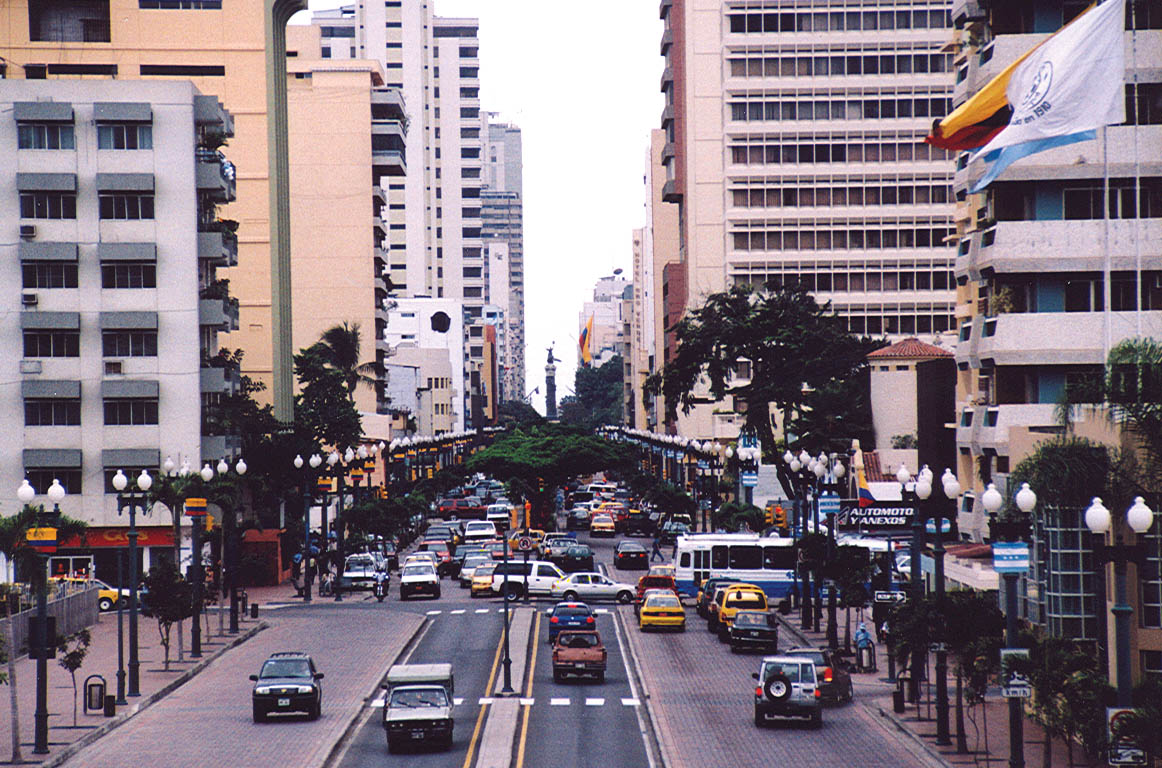
Ecuador is now the sixth most conflict-affected country in the world, according to the conflict monitoring project ACLED. It has more than fifty armed groups actively engaged in violence, including nearly forty gangs, and over half of those gangs were involved in more than 2,500 recorded events targeting civilians in a twelve-month period.
Ecuador is not at war with anyone. It has no insurgency seeking to overthrow the state, no separatist movement, and no foreign adversary. It is a middle-income South American democracy that until recently was regarded as one of the safest countries in the region.
Advertisement — ad space reserved
How a country gets onto that list
ACLED’s index ranks countries on four measures: how deadly the violence is, how dangerous it is for civilians, how geographically widespread it is, and how many armed groups are active. Ecuador scores heavily on the last two.
That combination — many groups, spread widely — is characteristic of criminal rather than political conflict. A civil war tends to have two or three sides and a geography. A criminal conflict fragments, because every time a group is broken up its territory becomes contested by the pieces.
The underlying driver, as researchers of the region describe it, is cocaine logistics. Ecuador sits between the two largest producing countries and has major container ports on the Pacific. It uses the US dollar, which simplifies moving money. When trafficking routes shifted toward its coastline, the value of controlling Ecuadorian ports, prisons and coastal neighbourhoods rose sharply, and groups fought over that value.
Why this gets so little international coverage
Three reasons, and none of them is that the violence is small.
The first is categorisation. International news desks sort the world into war coverage and crime coverage, and crime is treated as domestic news for the country concerned. A death toll that would be reported as a conflict if the perpetrators wore uniforms is reported as a homicide statistic when they do not.
The second is the absence of a narrative frame. There is no government to blame in the way there is in an interstate war, no obvious foreign policy question for readers in Europe or North America, and no side an outside audience is being asked to support.
The third is danger. Reporting on trafficking organisations in the places they control is among the most hazardous work in journalism, and it is done overwhelmingly by local reporters at considerable personal risk. Latin America has been consistently one of the deadliest regions for journalists, and that shapes what gets reported and by whom.
Advertisement — ad space reserved
The regional argument about what to do
ACLED has noted that governments across Latin America are expanding military roles in policing and deepening security cooperation with foreign partners, with several countries expected to adopt tougher measures ahead of elections.
The case for militarised enforcement is that police forces penetrated by trafficking money cannot be relied upon, that armed groups outgun ordinary policing, and that populations living under gang control are asking for the state to arrive in whatever form it can. Governments pursuing this approach point to sharp falls in homicide where it has been applied hard.
The case against, made by human rights organisations and by ACLED’s own analysts, is that militarised policing raises the risk of abuses by state forces, erodes civil liberties, and addresses the symptom rather than the market. On this view, breaking up a dominant group without changing the underlying trade produces the fragmentation that drove Ecuador’s ranking upward in the first place.
Both sides can point to evidence. What neither has produced is a case of a country reducing this kind of violence durably while the trafficking economy remained as profitable as it is.
The point worth holding
Haiti also rose in the same index, from eleventh to eighth, on a near-doubling of fatalities. We reported yesterday on the international force there and its expiring mandate.
Two countries in the Americas are now among the most violent places on earth by measures designed for war zones, and neither is the subject of sustained international attention. Whether a death is counted as conflict or crime is a decision about filing, not about the person who died. It determines which deaths a foreign reader ever hears about.
Advertisement — ad space reserved
Sources
- ACLED Conflict Index, entries for Ecuador and Haiti, including armed group counts and civilian-targeting events
- ACLED Conflict Watchlist 2026, on militarised security policy across Latin America
- Newsweek summary of ACLED’s 2026 conflict projections, December 2025
- Published research on cocaine trafficking routes and Ecuadorian port infrastructure
- Our report on Haiti’s Gang Suppression Force, 7 September 2026
Leave a Reply