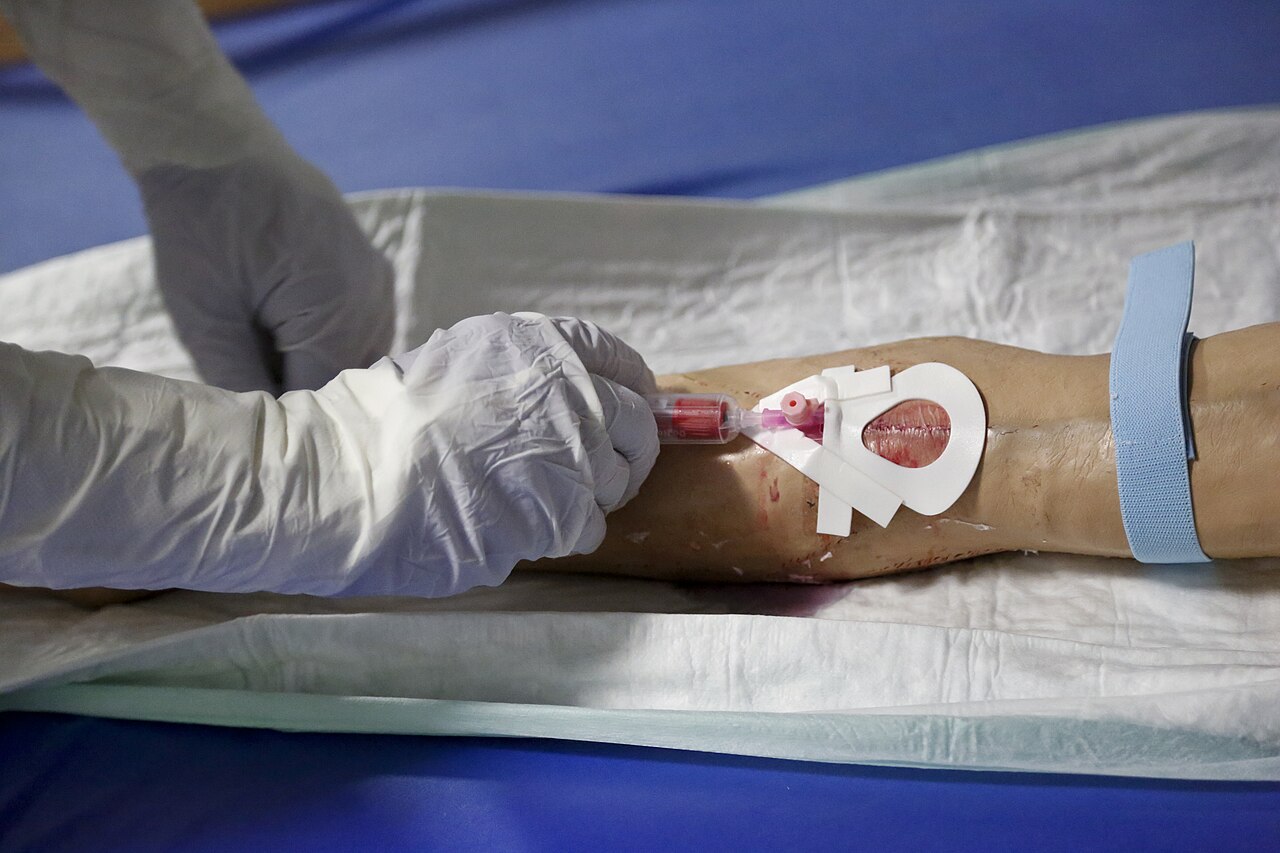
The Democratic Republic of the Congo has reported 6,342 confirmed cases of Ebola and 3,072 related deaths, on figures running to 2 September 2026. A total of 770 patients are in hospital isolation. It is now the second-largest Ebola outbreak ever recorded, and by the US Centers for Disease Control’s assessment it is spreading substantially faster than any previous one.
The outbreak began in May. Nearly four months on, it is not the lead story in most of the world’s newspapers on any given day.
Advertisement — ad space reserved
Why this strain is different
The virus circulating is Bundibugyo, not Zaire. That single fact explains most of what has gone wrong.
The tools built during and after the 2014-16 West African epidemic — the Ervebo vaccine and the monoclonal antibody treatments that transformed survival rates in the 2018-20 Kivu outbreak — were developed against the Zaire species. They are not established as effective against Bundibugyo. The World Health Organization has been explicit that for this species there is no licensed vaccine and no specific treatment, though candidate products are being tested.
Ring vaccination, the technique of vaccinating the contacts of each confirmed case and their contacts in turn, is what has ended recent Ebola outbreaks. Without a vaccine, responders are back to the methods of 2014: isolation, contact tracing, safe burials and supportive care. Those methods work. They work slowly, they require enormous numbers of people, and they depend on communities trusting the responders enough to report their sick.
What the numbers say about survival
Deaths stand at roughly 48 per cent of confirmed cases. That is grim, and it is also an unstable figure: case fatality ratios early in an outbreak are inflated because the sickest people are the ones who get tested, and they fall as surveillance widens and milder cases enter the count. In an outbreak spreading through areas with limited testing, the denominator is the least reliable number in the dataset.
The 770 people in isolation is the figure that describes the strain on the system. Ebola isolation beds are not ordinary beds — they require dedicated structures, water and waste handling, and staff working in protective equipment that limits how long anyone can be inside.
Advertisement — ad space reserved
Where it is, and why that matters
Cases have been confirmed in Haut-Uele, Ituri, North Kivu, South Kivu and Tshopo provinces, with the epicentre around Bunia, Mongbwalu, Rwampara and Nyankunde. Uganda has recorded cases including in Kampala, and a first imported case has been reported in Europe.
Eastern DR Congo is the hardest possible setting for this. It combines armed conflict, large displaced populations, artisanal mining that draws workers across long distances, and dense cross-border trade. Every one of those features moves people, and moving people is how this virus travels. It is the same terrain in which two military offensives are currently under way in South Kivu — front lines and treatment centres in the same provinces.
Médecins Sans Frontières, with more than 1,400 staff deployed, has said it may soon reach its maximum capacity, and that care will have to be decentralised away from the main urban centres because people are reluctant to seek treatment far from home. That reluctance is not irrationality. Going to a distant treatment centre means leaving family, and in previous outbreaks it often meant not coming back.
The imported case, and what it usually does
The first case reaching Europe has prompted the European Centre for Disease Prevention and Control to urge member states to keep investing in preparedness. The pattern here is well established and not flattering: outbreaks of this kind attract sustained international funding at the point where cases appear in wealthy countries, rather than at the point where they are most containable.
The counter-argument deserves airing. Health ministries in Europe are accountable to their own populations, preparedness spending at home is what those electorates authorise, and money spent on domestic readiness is not automatically money taken from the response abroad. But the timing of attention is a fact regardless of the justification, and it has been the same in every filovirus outbreak since 1976.
What to watch
Three things. Whether trials of candidate vaccines and therapeutics against Bundibugyo produce anything deployable this year. Whether the WHO emergency committee’s assessments shift as the geographic spread widens. And whether case numbers in Uganda’s cities grow — urban transmission in a capital is the difference between an outbreak that is being contained and one that is not.
Advertisement — ad space reserved
Sources
- European Centre for Disease Prevention and Control, Ebola disease outbreak situation page, 3 September 2026
- World Health Organization, Ebola outbreak — DRC 2026, and Director-General’s remarks to member states, 1 September 2026
- US Centers for Disease Control and Prevention, Ebola outbreak situation summary, 28 August 2026
- Médecins Sans Frontières, “Ebola disease outbreak 2026: How MSF is responding”, September 2026
Leave a Reply