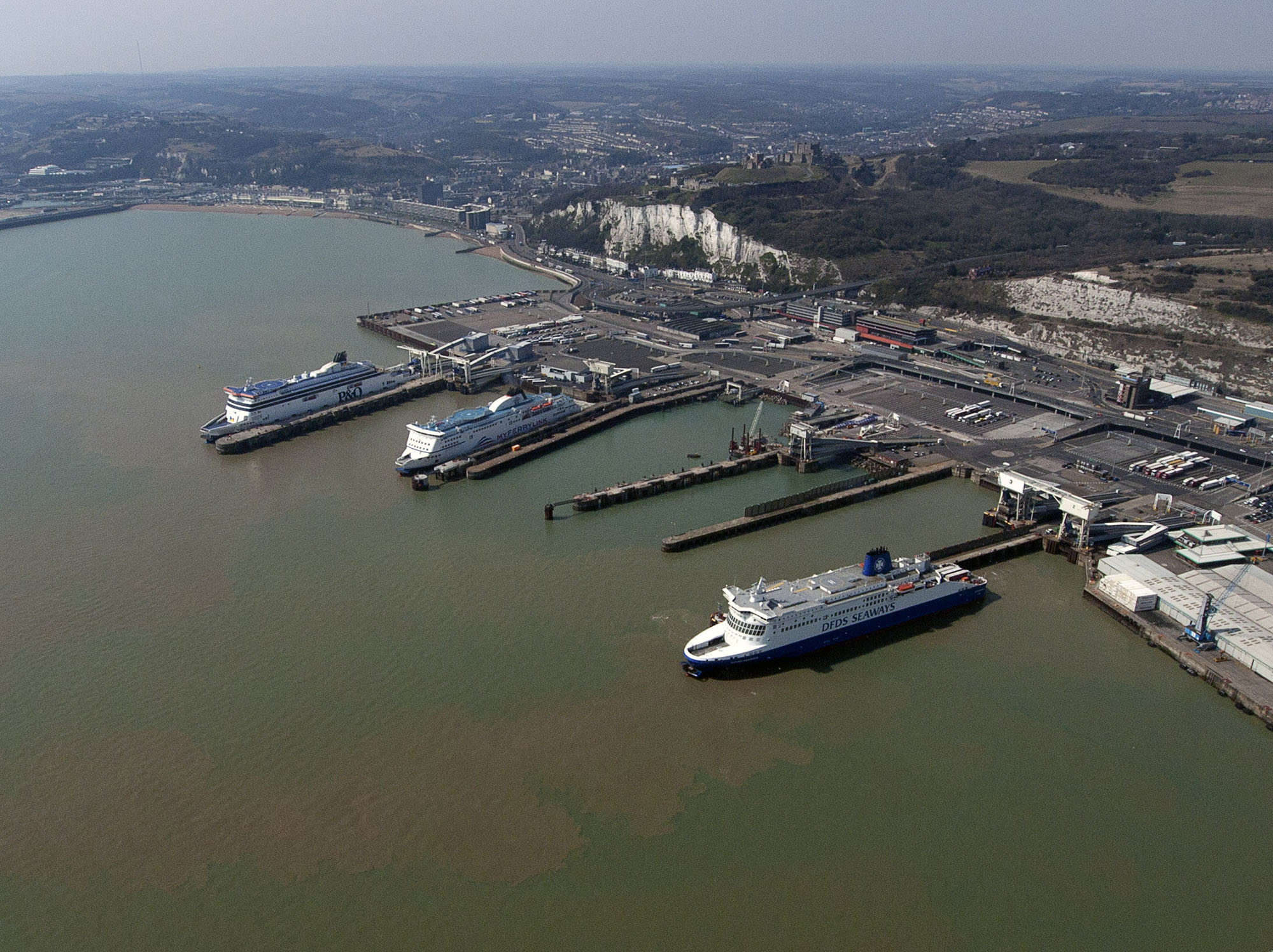
Dozens of men dressed in black, faces covered by balaclavas, blocked the roads leading into the Port of Dover on Saturday morning. The port announced that all traffic in and out had stopped because of an ongoing public order incident. National Highways said the blockage produced a four-mile queue on the approach roads. By around midday, port managers said traffic was moving again, and P&O Ferries confirmed access had been restored.
Kent Police said officers were engaging with the protesters, who had initially closed all routes in and out of the terminal. Footage circulated online showed demonstrators linking arms across a main road and chanting stop the boats. Officials described the action as an anti-immigration protest.
Advertisement — ad space reserved
The geography does not match the grievance
The Port of Dover is Britain’s principal ferry link to France and one of the busiest passenger ports in Europe. It handles lorries, coaches, cars and foot passengers travelling lawfully in both directions, and a substantial share of the country’s goods trade moves through it.
People crossing the Channel in small boats do not pass through it. Small-boat arrivals come ashore on beaches along the Kent coast or are intercepted at sea and brought in by Border Force, which uses separate facilities. Blocking the ferry terminal does not obstruct small-boat crossings by any mechanism. It obstructs freight and holidaymakers.
That mismatch is worth stating plainly, because it is the kind of detail that tends to disappear between a protest and its coverage. Whether the organisers intended a symbolic action at a symbolically loaded site, or simply picked the most disruptive point on the map, is not something we can establish from the available reporting.
What set it off
Norwegian outlet Document reported that the demonstration followed the charging of a 24-year-old man, named as Khalid Ahmed, with firearms offences after police said weapons and ammunition were found in a vehicle at the port of Dover on Thursday. The Norwegian news agency NTB, in its own account, declined to draw a conclusion about whom the demonstrators were protesting against.
The town has been the site of repeated anti-immigration protests focused on Channel crossings. The wider protest wave, running across Britain since 2025, has produced hundreds of arrests and dozens of injured police officers, according to figures compiled on the disorder. Document also reported that the Dover action had the backing of the activist Tommy Robinson.
Advertisement — ad space reserved
The political reaction
The Labour government said the right to peaceful protest is fundamental to democracy, while condemning the behaviour at Dover and the travel disruption it caused, and acknowledging the frustration of those affected.
Mike Tapp, the Labour MP for Dover, was blunter. He said there was nothing wrong with protesting, but that the demonstrators had no right to come to the town, block its roads and wear balaclavas, and that residents were tired of disruption caused by people who do not live there. He also argued that the protesters were unlikely to know that small-boat crossings are down.
That figure is the government’s, and it is worth attributing rather than asserting: ministers say stepped-up law enforcement cooperation between Britain and France has cut crossings this year by more than 40 per cent compared with 2025. It is a claim about a trend within one year, made by the party responsible for the policy. It does not by itself establish the cause of the decline, and it says nothing about the total number of people arriving.
Chris Vinson, a Conservative local councillor, said the protest appeared to be related to illegal migration. He said he was not aware of any violence, while adding that having your vehicle blocked by masked men in paramilitary-style clothing is intimidating regardless.
Nigel Farage of Reform UK, which has risen sharply in national polling on the issue, described asylum seekers as an invasion in a speech on Friday. Reform did not organise the Dover action.
The unresolved question
British law protects peaceful assembly and does not require protesters to be popular, convenient or factually well informed. It does not protect the obstruction of a highway, and covering your face at a protest can itself become an offence where police impose the relevant conditions.
Kent Police had not announced arrests at the time of writing. Whether any follow is the practical measure of where the line was judged to fall on Saturday.
Advertisement — ad space reserved
Sources
- CNN, 5 September 2026
- Al Jazeera, 5 September 2026
- The Washington Post, 5 September 2026
- Document (document.news), 5 September 2026, and NTB
- Port of Dover and National Highways statements, 5 September 2026
Leave a Reply