More than 300 people died of Ebola in eastern Democratic Republic of the Congo in a single week, according to figures reported on Tuesday — among the deadliest weeks recorded in what has become the fastest-growing Ebola outbreak on record.
Since the epidemic was identified in May, more than 2,600 people have died. That is close to half of everyone known to have been infected. European Centre for Disease Prevention and Control figures published this week, covering data to 19 August, recorded 5,290 confirmed cases and 2,516 deaths; the higher figure reflects the days since.
Most of those who die never reach a treatment centre.
The people running the response
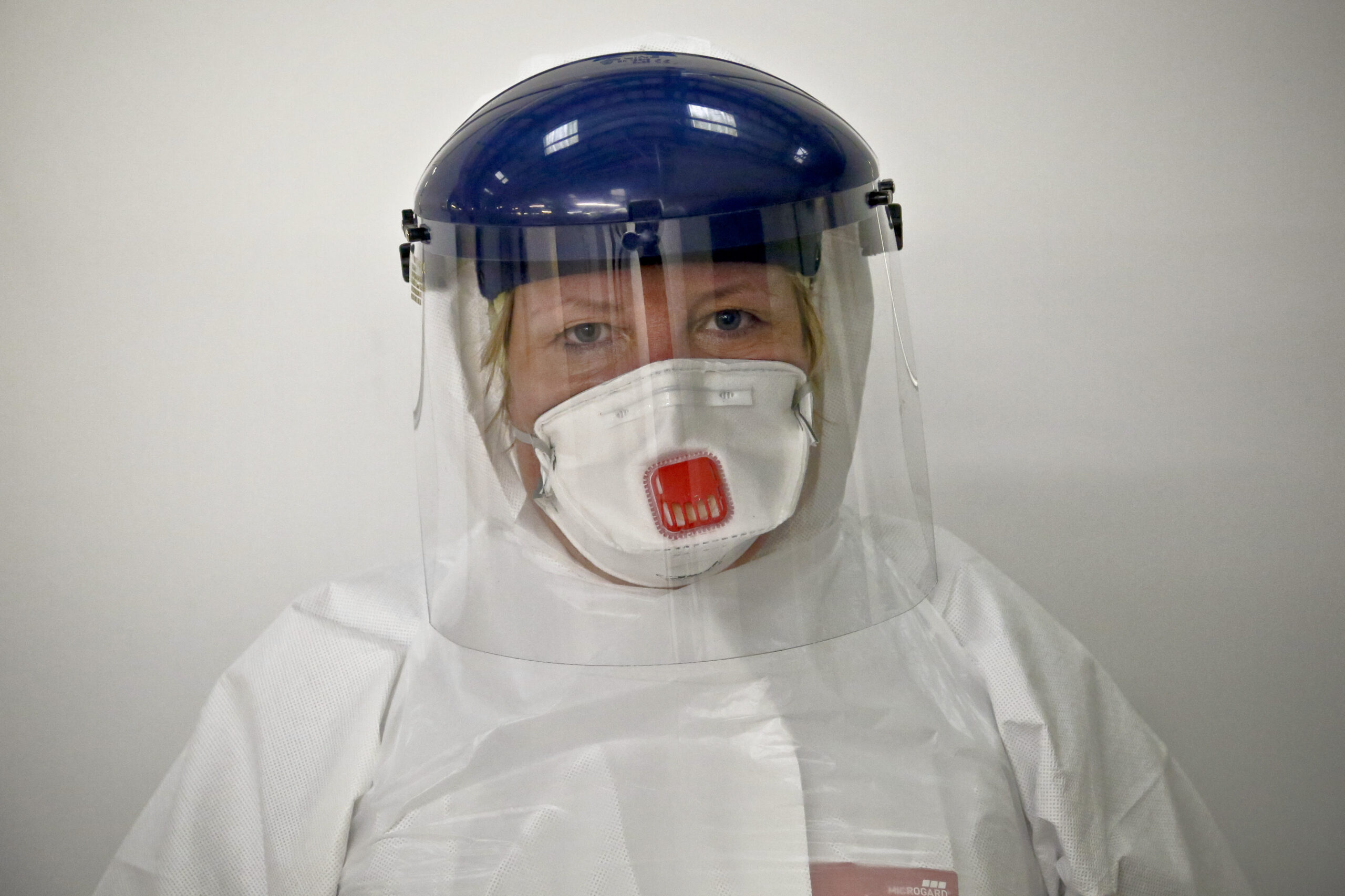
More than 40 health workers have died in this outbreak. That is not incidental to the epidemiology; it is a structural feature of Ebola. The virus spreads through bodily fluids, and the people most exposed to those fluids are the ones caring for the sick — putting in a line, cleaning a room, moving a patient too weak to move themselves.
Reporting by CNN earlier this month from the Elikya treatment centre in Bunia, the capital of Ituri province, described nurses working full shifts in protective equipment while going unpaid, and health workers threatening to walk out over wage arrears. Ituri accounts for more than 90 per cent of confirmed cases.
Separate reporting through June and July found shortages of protective equipment across the province, with supply chains disrupted by suspended flights and by insecurity. Responders have also faced attacks by armed groups, which prevents contact tracing in outlying villages — the single activity on which the entire containment strategy depends.
From Plain Sight News
The vaccine that arrived, and the problem with it
Sixteen thousand doses of an Ebola vaccine reached the Democratic Republic of the Congo on Friday. Officials have not said when they will be offered to frontline workers.
The complication is one this outbreak has carried from the start. Ebola is not a single virus but a group of related species, and the licensed vaccine used in the country’s previous epidemics was developed against the Zaire species. This outbreak is caused by Bundibugyo, a less common species for which there is no proven vaccine and for which treatment options remain limited.
Whether an existing vaccine offers cross-protection against a different species is a scientific question with an incomplete answer. Trials are under way. Until they report, deploying doses is a calculated bet rather than a solution — a point worth holding onto when a shipment of vaccine is reported as though it ends an outbreak.
Where this sits historically
This epidemic has already surpassed the Kivu outbreak of 2018 to 2020, which produced around 3,470 cases over nearly two years. It has done so in roughly three months. Only the West African epidemic of 2014 to 2016, which infected more than 28,600 people and killed 11,325 across Guinea, Sierra Leone and Liberia, has been larger.
The speed is the distinguishing feature. The World Health Organization has described the outbreak as expanding faster than any previous Ebola epidemic, with transmission now recorded across dozens of health zones in six provinces.
From Plain Sight News
Why unpaid wages are an epidemiological problem
It would be easy to file the payroll dispute under administration and move on. It belongs in the clinical story.
An Ebola response is labour-intensive in a way few medical interventions are. Every confirmed case generates a list of contacts who must be visited daily for 21 days. Every death requires a safe burial conducted by a trained team with the family’s agreement. Every treatment centre needs staff willing to enter an isolation ward repeatedly, knowing the risk. All of that runs on people who are paid, supplied and, ideally, insured.
When those people walk out, the case count does not pause. It is the reason experienced responders talk about outbreak control as a logistics and trust problem rather than a medical one, and the reason WHO’s updated recommendations issued this week devote as much attention to community engagement as to clinical care.
Beyond the DRC
The virus has reached Uganda, where the most recent imported case was discharged in July and the 42-day enhanced monitoring period was due to end on 27 August. Two Americans working in the Democratic Republic of the Congo were infected earlier in the year and medically evacuated to Germany. France recorded an imported case in June with no onward transmission.
Those exported cases have all been contained. That is the system working. Whether it keeps working depends on what happens in Ituri.
This article reports published epidemiological figures and news reporting. It is not medical advice. For current guidance, consult your national health authority or WHO.
From Plain Sight News
Sources
- WORLD Radio, Tuesday morning news, 25 August 2026 — weekly death toll and vaccine delivery
- CNN, “Unpaid wages and deadly risk: Why health workers are threatening to abandon the Ebola response”, August 2026
- ECDC, Ebola outbreak in the DRC and Uganda, updated 24 August 2026
- KFF Health News, on protective equipment shortages in Ituri
Leave a Reply