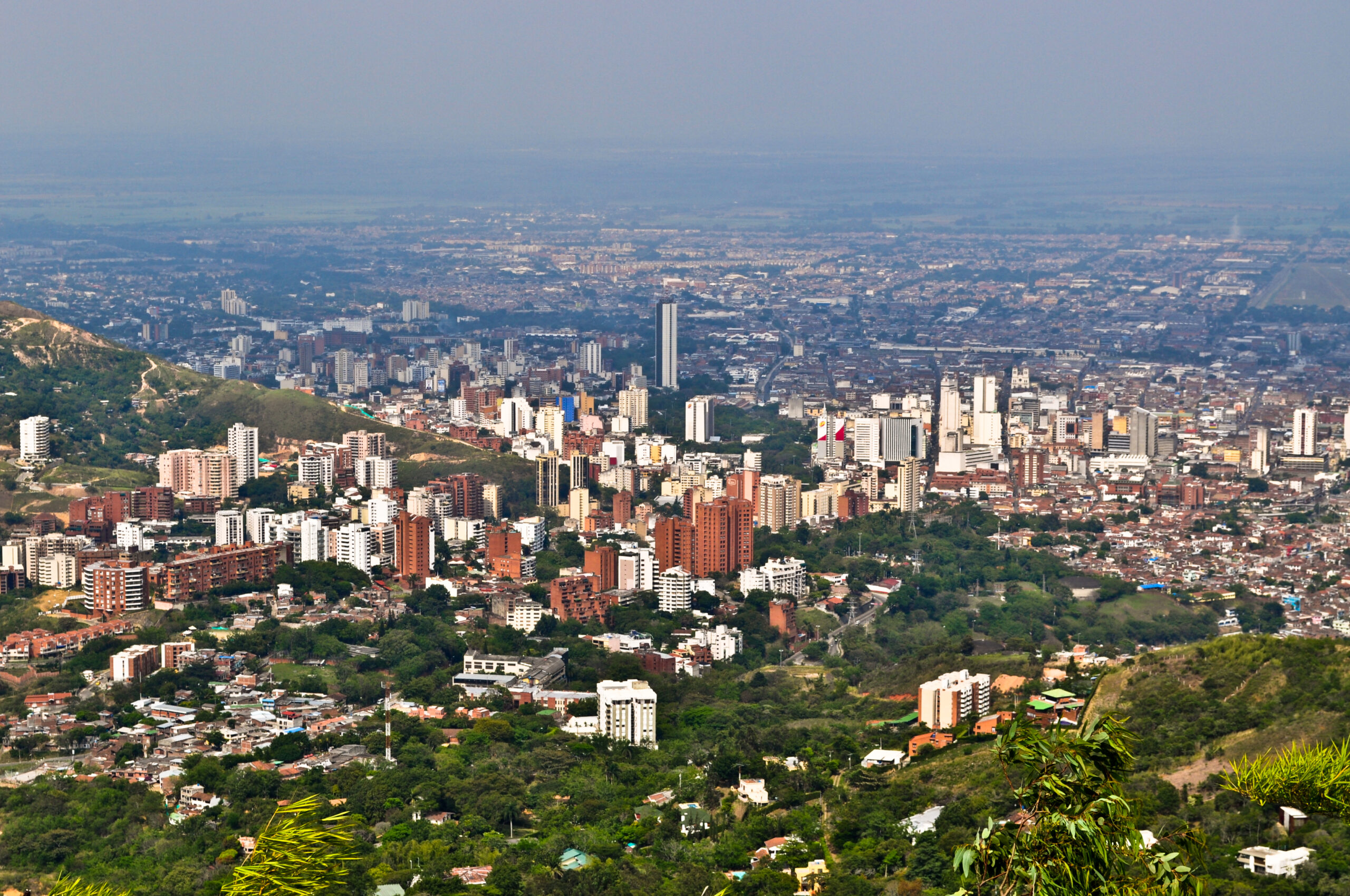
A magnitude 7.4 earthquake struck western Colombia on Monday morning. The death toll has risen to 224, with more than 1,200 injured, and officials expect the figure to rise further. Colombia has declared a national disaster.
The Colombian Geological Service says it was the most powerful earthquake recorded in the country this century.
Advertisement — ad space reserved
Where and what
The epicentre was near San José del Palmar in the Chocó region, roughly 400 kilometres west of Bogotá, at a depth of around 103 kilometres.
The shaking reached cities across western Colombia — Cali, Pereira, Quibdó and Manizales — and was felt in neighbouring Ecuador and Panama. At least 54 aftershocks have followed.
Pereira, in the coffee-growing department of Risaralda, has reported around 60 deaths. In Cali, Colombia’s third-largest city, the mayor said 32 buildings had collapsed, including a substantial part of a hospital. Nationally, 86 buildings are reported down, more than 1,500 homes damaged, and seven airports suspended operations.
Why the numbers keep changing
Anyone following this story since Monday will have seen the toll reported as 111, then 132, then 169, now 224. That is not confusion or error. It is what disaster reporting looks like.
Deaths are counted as bodies are recovered and identified, and recovery takes days. Different bodies count differently: a national emergency agency, a city government, a police force and an association of mayors may each publish figures compiled at different moments from different sources.
Early in an event, the most significant category is often not the dead but the missing — people whose families know they were inside a building that came down. Those figures resolve slowly, and they resolve in both directions.
A deep earthquake
The depth of about 103 kilometres is worth noting, because it shapes everything about how this event behaved.
Colombia’s Pacific coast sits on the Ring of Fire, the arc of seismic activity around the Pacific Ocean where one tectonic plate is forced beneath another. Earthquakes on that boundary can occur far below the surface.
A deep earthquake sends its energy through a greater thickness of rock before it reaches anyone. That weakens the shaking directly above the epicentre compared with a shallow quake of the same magnitude — but it also spreads the effect over a much wider area, which is why this one was felt across several countries and damaged cities hundreds of kilometres apart.
Advertisement — ad space reserved
The first hours
Reports from Cali describe search teams and ordinary residents working together, passing pieces of concrete hand to hand down a line of volunteers.
That detail recurs after every major earthquake, and it reflects something structural rather than sentimental. Specialist urban search and rescue teams take hours to mobilise and longer to arrive. In the first hours — the period when survival rates under rubble are highest — the people digging are neighbours.
It is also dangerous. Damaged buildings continue to collapse, aftershocks bring down what the main shock weakened, and untrained rescuers are at risk from both.
Aftershocks
Fifty-four aftershocks have been recorded. They are the crust settling into its new arrangement, and they can continue for weeks or months, generally decreasing in frequency and size.
Their danger is disproportionate to their magnitude. A moderate aftershock that would be harmless on its own can finish a building the main shock left standing but structurally compromised — which is why authorities keep people out of damaged structures long after the original event, and why residents sleeping outdoors is a rational response rather than panic.
A new government’s first disaster
The response is being led by President Abelardo de la Espriella, who was sworn in only recently, breaking a century-old tradition by holding the ceremony outside Bogotá.
Declaring a national disaster is a legal act with practical consequences: it unlocks emergency funds, allows normal procurement rules to be bypassed, and provides the framework for accepting international assistance.
Relief organisations including Direct Relief have said they are mobilising medical supplies. A damaged hospital in Cali is a particular problem — an earthquake creates a surge of casualties at exactly the moment it reduces the capacity to treat them.
What comes next
The search phase will end within days, as it did in Baguio this week. Then comes the longer, less-reported part: structural assessment of thousands of buildings, temporary housing for displaced families, restoring damaged schools and clinics, and the question of whether reconstruction is built to a standard that survives the next one.
We will continue to report as figures are confirmed. Where numbers in this article differ from those you see elsewhere, the reason is almost certainly the hour at which each was compiled.
Sources: Al Jazeera; CNN; NPR; TIME; El Colombiano; BBC Mundo; Direct Relief; US Geological Survey; Colombian Geological Service, 10–11 August 2026.
Advertisement — ad space reserved
Leave a Reply