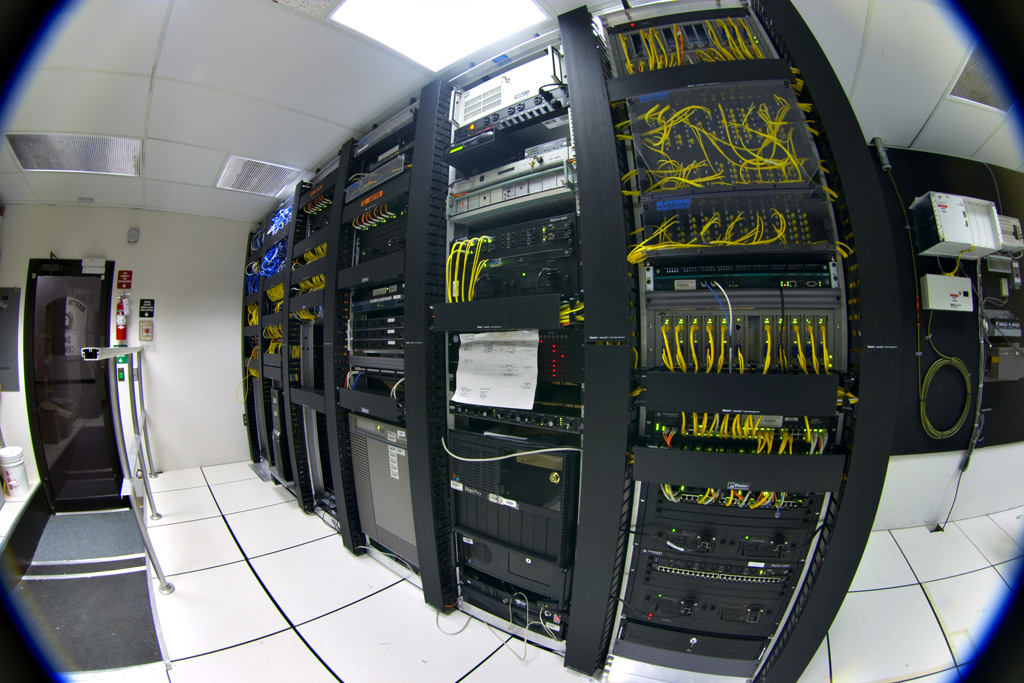
China’s Ministry of Industry and Information Technology set out a plan on 8 September to more than quadruple the country’s AI computing capacity by 2030, raising it from around 2,185 exaflops to 9,800 exaflops over the 2026 to 2030 period.
The figure is abstract enough to pass without much notice. What it describes is a construction programme.
Advertisement — ad space reserved
What an exaflop is, roughly
A flop is a floating-point operation — one arithmetic calculation. An exaflop is a billion billion of them per second. National AI computing capacity in exaflops is a measure of aggregate installed capability across data centres, not the speed of any single machine.
Treat cross-country comparisons of these figures cautiously. The number depends on which precision is counted — AI workloads often use lower-precision arithmetic that produces much larger headline numbers than traditional supercomputing measures — and on which facilities are included. A capacity target is a statement of intent measured by a methodology the announcing government chooses.
What the direction indicates is not in doubt, though, and it is consistent with other recent moves: Alibaba Cloud and Cambricon joining the PyTorch Foundation as platinum members, and more than 250 organisations in China now contributing to foundational open-source AI projects.
Compute as industrial policy
The interesting thing about this announcement is what it treats AI as. Not a research field, and not a consumer product category, but infrastructure — closer to electricity generation or rail than to software.
That framing carries a specific bet: that the constraint on AI capability over the next five years is physical rather than intellectual. Chips, buildings, cooling and above all power. A government that believes this builds capacity and lets applications follow. A government that believes the constraint is talent or algorithms would spend differently.
The bet is not obviously right. Several researchers argue that returns to raw scale are diminishing and that architectural efficiency matters more than the total installed. The counter-position, held by most large labs and evidently by Beijing, is that compute has been the reliable predictor of capability so far and that betting against it has repeatedly been wrong.
Advertisement — ad space reserved
The problem the target does not address
Computing capacity consumes electricity, and quadrupling it means a very large increase in demand from data centres over a period in which China is also pursuing emissions commitments.
This is not a hypothetical tension. Reporting this week noted that one country has ordered 49 data centres to stop drawing additional power, and grid operators in several jurisdictions have begun refusing or deferring new data centre connections because the load cannot be accommodated. Electricity is emerging as the binding constraint on AI expansion in a way that chips were expected to be.
The plan reportedly addresses compute capacity rather than the generation and transmission required to run it. Those are different ministries and different timelines: a data centre can be built in a year or two, while generating capacity and transmission lines take considerably longer.
The comparison worth drawing
It is a useful contrast with Europe, which we wrote about yesterday. The European Union is enforcing a comprehensive AI law while still recruiting the staff to enforce it. China is announcing a capacity target measured in exaflops.
Neither is straightforwardly the wiser approach, and framing it as regulation versus growth misses what each is actually doing. Europe is attempting to establish rules before capability is entrenched, accepting that it may forgo some development. China is attempting to build capability first, on the reasoning that rules follow whoever has the capacity. Both are coherent strategies, and both have visible costs.
What the two announcements share is that each is a claim about where the decisive constraint lies — and each government is spending accordingly.
Advertisement — ad space reserved
Sources
- South China Morning Post, on the Ministry of Industry and Information Technology’s 2026–2030 computing capacity plan, 8 September 2026
- PyTorch Foundation announcements at KubeCon and PyTorch Conference China 2026, Shanghai, 8 September 2026
- Tech Startups, Top tech news today, 8 September 2026, on data centre power restrictions
- Our report on the European AI Office and enforcement capacity, 8 September 2026
Leave a Reply