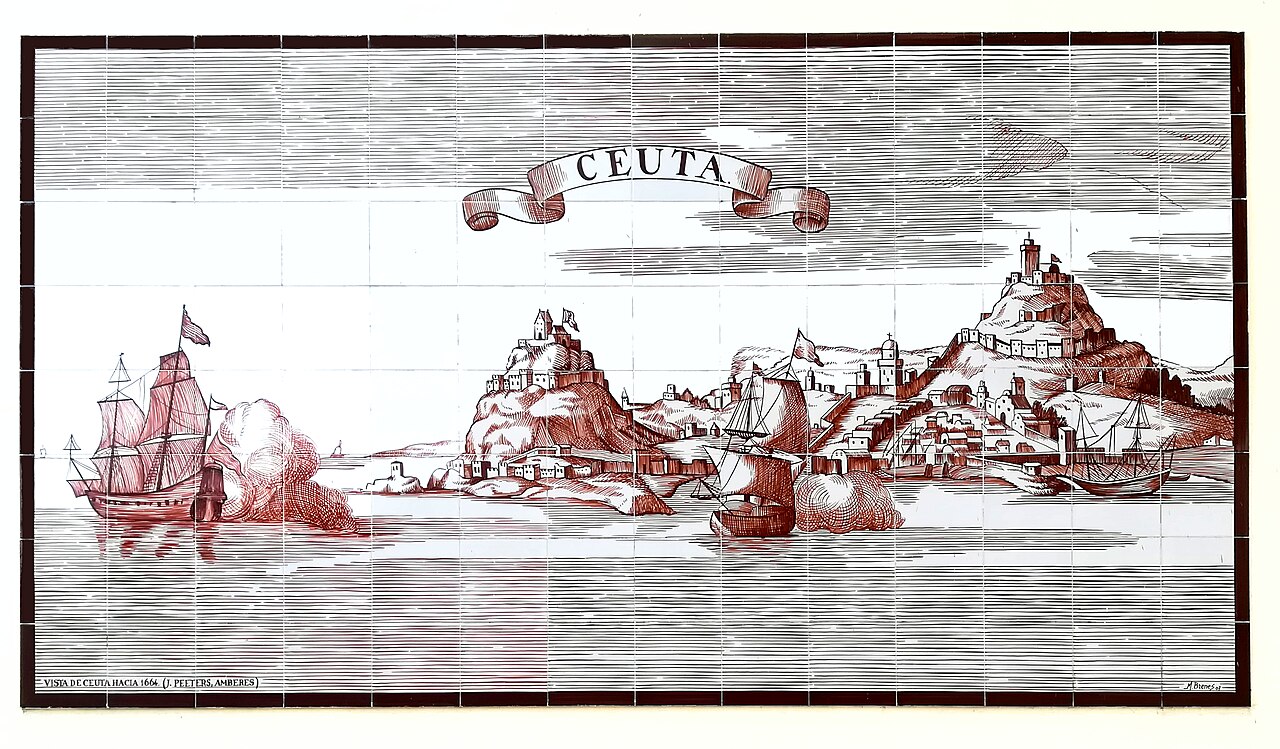
Thousands of irregular migrants entered Ceuta, the Spanish enclave on the North African coast, last month. Prime Minister Pedro Sánchez’s government is under sustained pressure over it, with opposition MEPs accusing it of ignoring warnings from the national police and intelligence services that large numbers of people were preparing to cross.
Running alongside that domestic argument is a second one. The European Commission has said it observed an organised campaign amplifying the Ceuta situation across platforms, beginning around 30 July, with Ukrainian officials describing it as a Russian effort to destabilise European politics through migration.
Advertisement — ad space reserved
Two claims that are often confused
It is worth separating them, because they get run together in both directions.
The first claim is that a large number of people crossed into Ceuta. That is an event, and it either happened at the reported scale or it did not.
The second is that the online conversation about it was artificially amplified. Amplification does not require the underlying event to be fabricated — in fact it works better when the event is real, because real footage and real local anger are more persuasive than anything invented. Documenting a campaign therefore says nothing about whether the migration happened, and confirming the migration says nothing about whether the campaign existed.
The political temptation runs both ways. A government under pressure can use the existence of a disinformation campaign to imply that criticism of its handling is foreign-driven. Its opponents can treat any mention of amplification as an excuse. Neither move is supported by what has actually been established.
Why Ceuta specifically
Ceuta and Melilla are Spanish cities on the North African mainland, bordering Morocco. They are the European Union’s only land borders with Africa, which makes them a permanent pressure point and a recurring instrument of leverage: entries have surged before at moments of diplomatic friction between Madrid and Rabat, most visibly in 2021.
That history is why an event in Ceuta carries political weight out of proportion to its numbers. A few thousand people is a small figure against total irregular arrivals to Europe, but it happens at a fence, on camera, on European soil, in a way that Mediterranean crossings do not.
Advertisement — ad space reserved
What it feeds into
The Ceuta file sits inside a broader European turn towards handling migration outside Europe — the return-hub push, under which people whose asylum claims fail would be sent to third countries rather than held or released within the EU. Supporters argue it is the only mechanism that makes refusals meaningful when returns to countries of origin are impossible. Critics argue it exports the legal and human consequences to states with weaker courts and fewer protections, and that the arrangement’s viability depends on those weaker protections.
It also feeds directly into electoral politics. The far right is polling strongly in eastern Germany, and events like Ceuta are the raw material of that politics across the continent — which is precisely why an amplification campaign, if it is running, would target them.
Sources
- Euronews, Europe Today, on the Ceuta crisis and Spanish political reaction, 4 September 2026
- European Commission midday press briefing, on observed amplification activity from 30 July 2026
- Remarks by Spanish MEP Antonio López-Istúriz on the government’s handling, September 2026
Leave a Reply