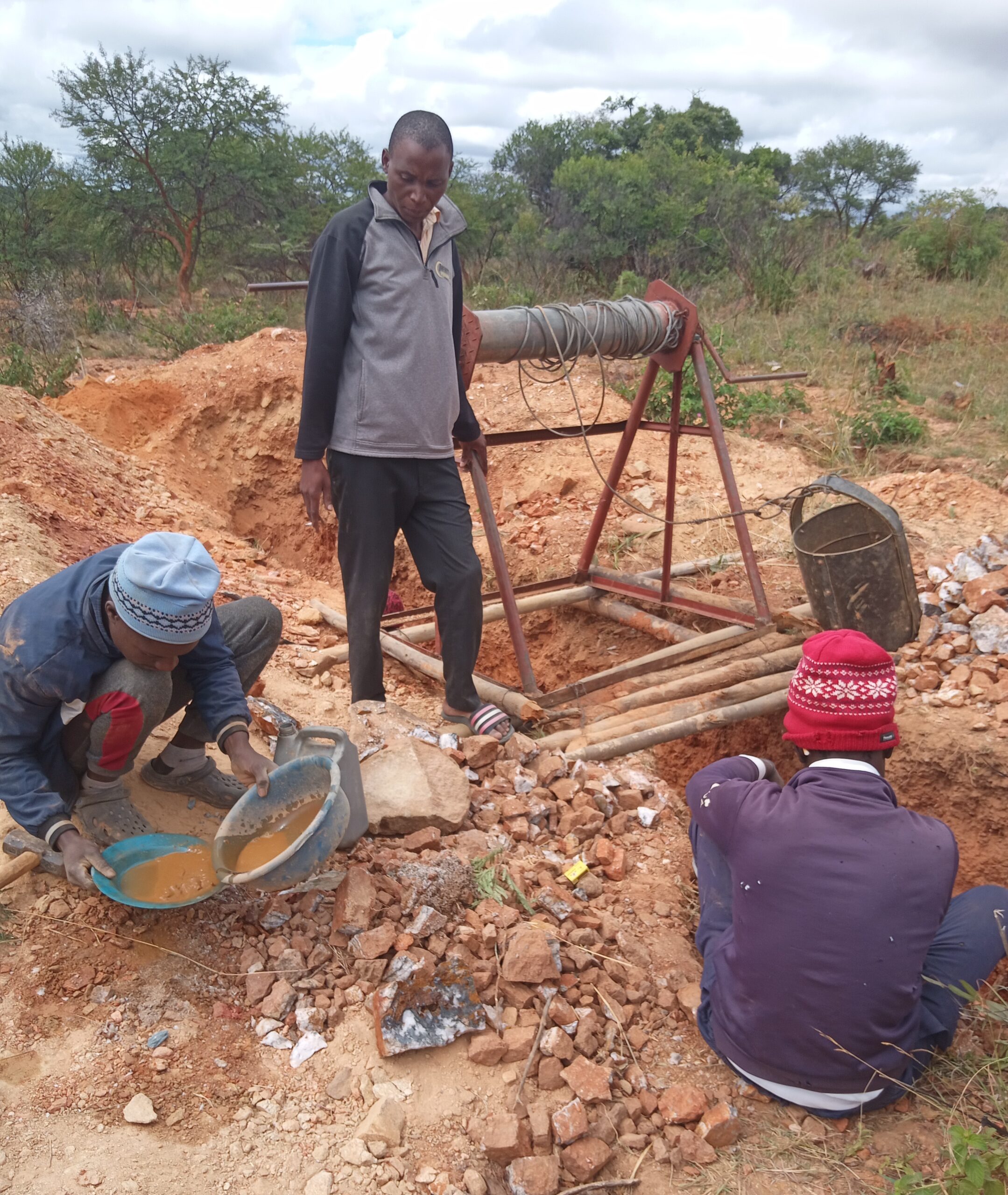
Video filmed on 18 August at the Zamboye mining site in the Central African Republic, released this week, appears to show the moment a landslide swept through an artisanal gold mine, burying miners beneath earth and sand.
Advertisement — ad space reserved
What artisanal mining is
Artisanal and small-scale mining means extraction by hand or with basic tools, largely outside any formal company structure. Globally it employs many millions of people, and it produces a substantial share of the world’s gold.
The work is done in pits and tunnels dug without engineering survey, shoring or ventilation. Pit walls are cut steeply because a steeper wall means less material to move. Spoil is piled at the edge, which loads the ground above. Rain saturates the sand and the wall fails — usually onto people working at the bottom, who have no route out.
Collapses of this kind are among the most common causes of death in the sector, and they happen most often in the rainy season, which in the Central African Republic runs through the middle of the year.
Why people do it anyway
The reflex response is that the work should be banned or formalised. The people doing it generally have a clearer view of the alternatives.
Artisanal mining is often the only source of cash income in areas with no functioning wage economy, and it can be entered with no capital and no qualification. In the Central African Republic — among the world’s poorest countries, with a long history of armed conflict — that matters more than any risk assessment. Bans in comparable settings have generally pushed the work further from oversight rather than ending it.
There is a second layer. Mineral sites in the CAR have repeatedly been linked to armed groups extracting revenue from them, which means the people at the pit face are frequently paying a share to whoever controls the area — and have correspondingly little leverage to demand safer conditions.
Advertisement — ad space reserved
Why the toll may never be established
Casualty figures from artisanal mine collapses are unusually unreliable, for reasons specific to the setting.
Nobody keeps a register of who is working a site on a given day. Miners frequently come from elsewhere, so families may not know where to enquire. Recovery is done by other miners with shovels rather than by equipped rescue services, and where a site is informal or contested, there is an active disincentive to report anything to authorities. Numbers therefore emerge slowly, vary between sources, and often settle at whatever figure was recovered rather than whatever number was buried.
The video changes one thing: it makes the event undeniable, which is not the same as making it counted.
What actually reduces deaths
Organisations working on this are broadly agreed on the direction, if not the funding. Formalising sites so that someone is accountable for the pit. Basic engineering guidance on wall angles and spoil placement, which is cheap and effective. Suspending work during heavy rain. Legal access to markets, so miners are not dependent on whoever controls the trade.
None of that is technically difficult. All of it requires a functioning state presence at the site, which is precisely what is absent in the places where this work is most common.
Sources
Advertisement — ad space reserved
Leave a Reply