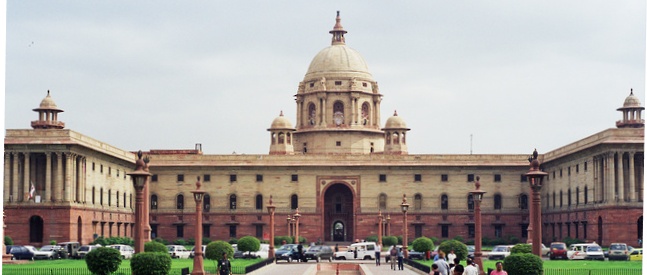
New Delhi is preparing to host a BRICS summit, with roads in the capital illuminated ahead of the gathering. It is a reasonable moment to ask what the grouping actually is, because it is one of the more widely misunderstood organisations in international affairs.
Advertisement — ad space reserved
What BRICS is not
It is not an alliance. There is no mutual defence commitment, no integrated command, nothing resembling NATO.
It is not a trade bloc. There is no common external tariff and no single market, so it is not comparable to the European Union.
It has no treaty establishing it, no secretariat of the scale international organisations normally carry, and no mechanism to bind members to anything. Its principal institution is the New Development Bank.
The acronym itself began life as an investment-bank shorthand for large emerging economies before the countries adopted it and started meeting. That origin explains a good deal: the grouping was named before it had a purpose.
What holds it together
Members disagree about a great deal. Two of them have a disputed border and have fought over it. Several are competitors for the same markets and the same influence. Their political systems have little in common.
What they share is a position on the architecture of international institutions: that voting weights at the IMF and World Bank, the composition of the UN Security Council, and the dominance of the dollar in trade settlement reflect a distribution of power from 1945 rather than now.
That is a real and substantial complaint, and it is shared well beyond the membership. It is also a complaint rather than a programme, which is why summits produce communiqués about reform more readily than mechanisms that deliver it.
Advertisement — ad space reserved
The two readings
One view treats BRICS as a serious challenge to the Western-led order — an expanding bloc representing most of the world’s population, building payment systems and a development bank outside Western control, and demonstrating that sanctions can be routed around.
The other treats it as a photo opportunity: a group whose members cannot agree on membership criteria, whose de-dollarisation talk has produced little measurable change in the currency composition of global reserves, and whose most powerful member has interests that the others are partly organising against.
Both are defensible, and the evidence is genuinely mixed. Trade settled in national currencies has grown. The dollar’s share of reserves has declined slowly over two decades, from a much higher base, for reasons only partly related to any bloc.
The most useful framing may be a third: that BRICS matters less as an organisation than as an option. Its existence gives middle powers something to point at when negotiating with Washington or Brussels — leverage that does not require the grouping to do anything.
India’s position as host
India is the member that fits the confrontational reading least comfortably. It is a member of the Quad alongside the United States, Japan and Australia, buys defence equipment from Russia and the West, and has resisted framing BRICS as an anti-Western project.
A summit hosted in New Delhi is therefore likely to produce different language than one hosted elsewhere. That is worth watching in the communiqué, and it is the sort of detail that reveals more about the grouping than the headline photograph does.
Advertisement — ad space reserved
Sources
- Deccan Herald, News in Pics, 10 September 2026, on preparations in New Delhi ahead of the BRICS summit
- New Development Bank published material on membership and lending
- IMF COFER data on the currency composition of official foreign exchange reserves
- Published analyses of BRICS expansion, de-dollarisation claims and Indian foreign policy alignment
Leave a Reply