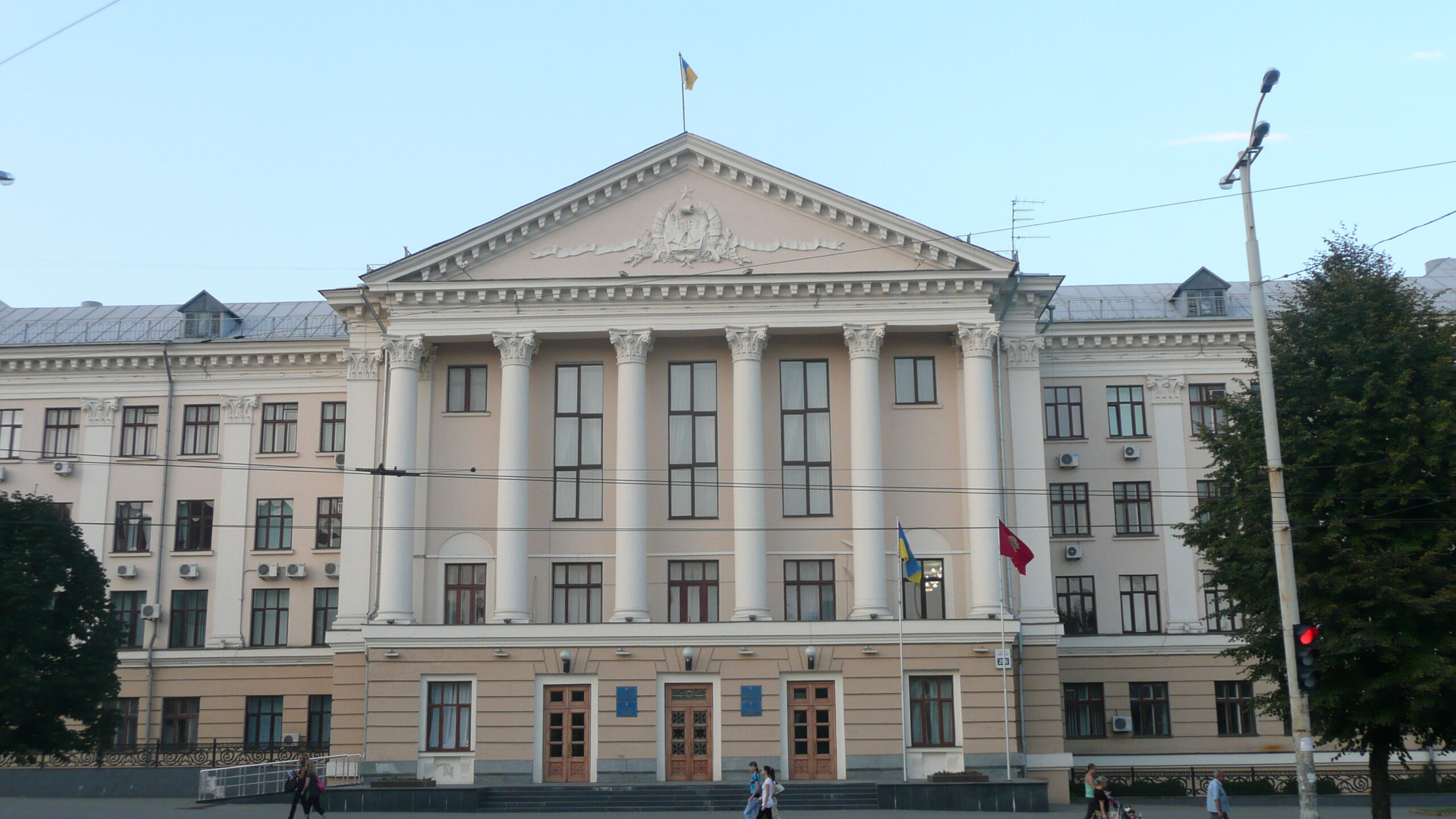
On 6 July, a Russian strike drone flew towards a petrol station in Zaporizhzhia in southern Ukraine. It did not reach it. The drone struck a wall and detonated, killing three people who had already taken shelter nearby: Tetiana Bubynets, a 19-year-old accounting student, Oleksiy Svirin, 41, and Roman Karpiy, 48.
What makes the attack significant, according to reporting published by The New York Times on Monday, is what investigators found in the wreckage. There was no human operator issuing the final strike command. The drone selected its own aim point.
What was recovered
Ukrainian air defence commanders in Zaporizhzhia noticed two things about the drones arriving in the area: they carried Nvidia computing modules, and they had no antennas. A drone without an antenna cannot be flown by a pilot on the ground, because there is nothing to receive a control signal. Further investigation confirmed the initial conclusion — the guidance was on board.
The module in question was an Nvidia Jetson Orin, a small computer designed for robotics and computer vision work of the kind done in university laboratories and industrial automation. It was not encrypted, so investigators could read its contents directly. They found terrain imagery used for visual navigation and object-detection code trained to recognise categories of thing — including propane tanks.
Humans had routed the drone to the petrol station in advance. The software chose where, precisely, to strike once it arrived.
From Plain Sight News
Why analysts call this a threshold
Artificial intelligence has been present in this war for years. Both sides use it for navigation when satellite signals are jammed, for terminal guidance in the last seconds of an approach, and for sorting through surveillance footage. What has generally remained is a person somewhere in the chain who decides that a particular thing should be destroyed.
Kateryna Bondar, a senior fellow at the Wadhwani AI Center at the Center for Strategic and International Studies in Washington, told The New York Times that the July attack would be the first documented case in which civilian deaths were caused by a Russian drone fitted with a self-targeting system of this kind. A Ukrainian commander quoted in the reporting described the development bluntly: “This is a risk for the whole world.”
Plain Sight News has not independently verified the forensic findings, which come from Ukrainian military investigators and were reported by The New York Times. Russia has not commented publicly on the specific incident. Readers should treat the technical account as the conclusion of one side’s investigators, corroborated by an outside analyst who examined it.
The argument for and against machines choosing
The debate over autonomous weapons is not new, and both sides of it are serious.
Those who defend the technology argue that a machine does not panic, does not tire, and can be more precise than a human pilot working from a shaky video feed at the end of a twelve-hour shift. In an environment saturated with jamming, they add, a drone that can finish its mission without a radio link is simply a drone that works.
Those who oppose it argue that the laws of armed conflict require judgements — distinguishing a combatant from a civilian, weighing expected military advantage against expected civilian harm, calling off an attack when circumstances change — and that these are legal and moral assessments, not classification problems. An object-detection model trained to recognise propane tanks does not know what a shelter is, or who is standing behind a wall.
The Zaporizhzhia case illustrates a third problem that sits underneath both arguments: brittleness. The drone reportedly tried to navigate around an apartment building on its way to the target and hit a wall instead. Whatever the system was meant to do, what it did was fail in a physical environment more complicated than its training.
From Plain Sight News
The export control problem
The second uncomfortable finding is about the hardware. Nvidia has confirmed that the recovered module is a genuine Jetson Orin, and says it does not sell into Russia directly. Resellers distribute the board widely, and it is sold legally in most of the world for entirely ordinary purposes.
This is the structural weakness of technology export controls in the AI era. Restricting the largest data-centre chips is difficult but tractable, because there are few of them and they are expensive. Restricting a component that costs a few hundred dollars, has enormous legitimate demand, and can be bought through any number of intermediaries is a different task altogether. A control regime can raise the price and slow the flow. It cannot realistically stop a state that wants a few thousand of them.
Where the rules stand
There is no binding international treaty governing autonomous weapons. Discussions have continued for more than a decade at the United Nations under the Convention on Certain Conventional Weapons, where a group of states has pushed for a prohibition on systems that select and engage targets without meaningful human control, and several major military powers have resisted, preferring non-binding guidelines.
In the absence of a treaty, existing humanitarian law still applies: the obligations to distinguish civilians from combatants, to take feasible precautions and to refrain from indiscriminate attacks bind the state that deploys the weapon, not the software. Whether that is enough to attribute responsibility when nobody chose the aim point is exactly the question the Zaporizhzhia case now poses.
From Plain Sight News
Leave a Reply