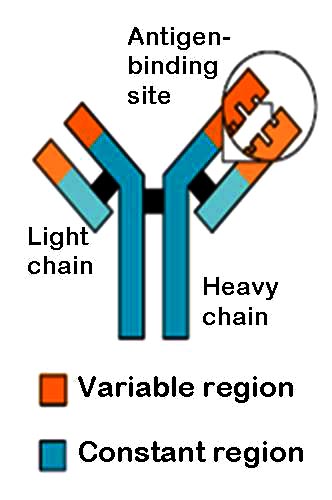
Researchers have reported a method for turning ordinary antibodies into much smaller molecules that can work inside human cells — a place antibodies normally cannot reach. The suggested applications include diseases such as Alzheimer’s, where the problem proteins sit inside the cell rather than outside it.
Advertisement — ad space reserved
The wall antibodies cannot cross
An antibody is a protein the immune system makes to recognise one specific target and stick to it. That precision is why antibody drugs have become one of medicine’s most successful categories, used across cancer, autoimmune disease and infection.
They share a hard limitation. Antibodies are large molecules, and they work in the bloodstream and on cell surfaces. They do not readily get inside cells — and a great many disease-causing proteins are inside, out of reach. That is why entire categories of target have been described as undruggable: not because nothing binds them, but because nothing that binds them can get to them.
Shrinking an antibody to something small enough to enter a cell, while keeping the part that does the recognising, is the problem this work addresses.
Why Alzheimer’s is named
Alzheimer’s disease involves two abnormal proteins. Amyloid forms plaques outside cells, which is why existing antibody treatments target it — it is reachable. Tau forms tangles inside neurons, which is not.
The clinical picture is worth stating plainly. Anti-amyloid antibody drugs have been approved after showing measurable effects, but the size of the clinical benefit has been the subject of serious and continuing debate among neurologists, and they carry known risks including brain swelling and bleeding. Reaching an intracellular target would open a different line of attack. It would not, on its own, resolve the question of whether removing these proteins improves how patients actually function.
Advertisement — ad space reserved
The distance between this and a treatment
Laboratory results of this kind are genuinely interesting and routinely oversold, so it is worth naming the specific obstacles rather than offering a generic caution.
- Getting into the right cells. Entering a cell in a dish is not the same as entering the intended cells in a body while leaving others alone.
- Reaching the brain at all. For any neurological application, a molecule has to cross the blood-brain barrier, which is an entirely separate problem that has defeated many promising compounds.
- Staying intact. Cells contain machinery that degrades foreign proteins. Surviving long enough to act is a real constraint.
- Manufacturing. A molecule that works is not yet a molecule that can be produced consistently at scale.
Each of those is a stage at which work of this kind commonly stops. The base rate for laboratory findings becoming approved medicines is low, and that is not a criticism of the research — it is the ordinary shape of the process.
Why it is still worth reporting
Methods travel further than results. If the technique for converting a conventional antibody into a smaller intracellular binder is general, its significance is not any single disease but the fact that thousands of existing, well-characterised antibodies become candidate starting points for targets that were previously unreachable.
That is a claim about a tool rather than a cure, and it is the more defensible of the two. Whether it holds depends on how broadly the method works — which is the thing to look for in the follow-up papers rather than in the press release.
This describes early-stage laboratory research, not an available treatment. Anyone concerned about dementia should speak to a doctor.
Sources
Advertisement — ad space reserved
Leave a Reply