Advertisement — ad space reserved
Conflict monitors who count protests in the United States recorded a surge in August of demonstrations against automated licence plate readers — more than double the number ever previously logged in a single month.
The target is a specific company. Flock Safety, based in Atlanta, sells camera systems that photograph every passing vehicle, read the plate and log it. The company says more than 5,000 law enforcement agencies use its technology.
What the cameras actually do
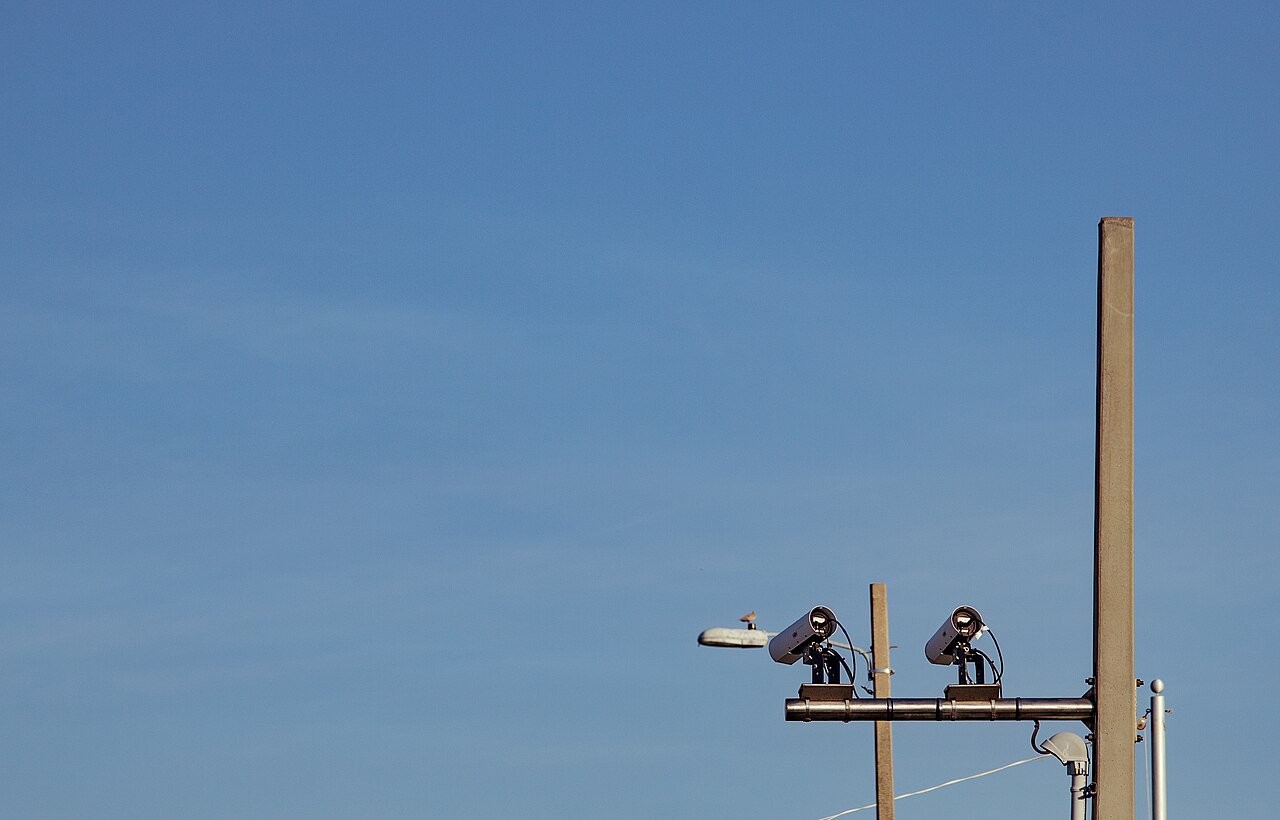
An automated licence plate reader is not a speed camera. It does not look for an offence. It records every vehicle that passes, whether or not anyone is suspected of anything, and writes each sighting into a searchable database.
The consequential design choice is what happens next. Many of those databases are networked, so a record generated in one town can be searched by agencies elsewhere that pay for access. The result is not a local camera system but a national one, assembled from thousands of separate municipal purchasing decisions that were each debated locally, if at all.
That is the structural argument the ACLU has made: a technology sold to city councils as a narrow crime-solving tool has become a nationwide surveillance network with very little independent oversight of who searches it, or why.
Advertisement — ad space reserved
The documented misuse
Opposition of this scale usually has specific cases behind it rather than abstract concern, and here it does.
The Electronic Frontier Foundation obtained datasets representing more than 12 million searches logged by over 3,900 agencies between December 2024 and October 2025. Its analysis and subsequent reporting have documented officers using the system to track former partners, searches conducted for immigration enforcement purposes without the consent of the local government that bought the cameras, and a Texas sheriff’s office using it to track a woman in connection with a suspected abortion.
Those cases explain why the coalition against the cameras does not map onto party lines. Objections to warrantless tracking of drivers arrive from civil liberties organisations, from gun owners, from immigrant communities and from people who simply object to being catalogued, and they have converged on the same municipal contracts.
Where it has gone
Several cities have cancelled or declined to renew contracts, among them Fort Collins, Eugene, Madison, Knoxville, Syracuse, Walla Walla, Santa Cruz and Framingham. Some departments have cut data retention periods or withdrawn from national lookup networks while keeping arrangements with a handful of neighbouring agencies. In Dane County, Wisconsin, supervisors voted to cut funding for cameras the sheriff’s department was leasing.
Organisers with the campaign group DeFlock held a national week of action in late August, reporting more than 25,000 people registered for events. The ACLU has filed an amicus brief in a federal appeals case arguing that these systems give government unprecedented surveillance powers in violation of the Fourth Amendment, and supported a bipartisan amendment to federal highway funding that would have barred the cameras except for tolling.
A separate strand is criminal. Trackers of the backlash have documented dozens of incidents across more than twenty states of cameras being cut down, painted over or destroyed. That is property damage, it is prosecutable, and campaign organisers have generally distinguished it from the council-meeting work that has produced the actual contract cancellations. We report it because it happened, not because it is the effective part.
Advertisement — ad space reserved
The case for the cameras
Police departments that use the systems make a straightforward argument, and it deserves stating properly rather than in caricature.
Plate readers solve crimes that were previously unsolvable — stolen vehicles, hit-and-runs, abductions where the only description available is a car. Officers point out that a licence plate is a state-issued identifier displayed publicly by law, and that recording something visible from a public road has never required a warrant. Departments in smaller jurisdictions add that this is investigative capability they could not otherwise afford.
The counter is not that any individual sighting is private. It is that a continuous record of every journey is a different thing from a single observation, and that American courts have previously accepted that reasoning where prolonged location tracking is concerned. Whether that principle extends to a private company’s camera network contracted to public agencies has not been settled, and is likely to reach the federal appellate courts.
Why it is worth reporting from outside the United States
Because the same equipment is sold everywhere, and because the British experience shows where the argument ends up. The United Kingdom operates a national plate-recognition network of around 11,000 cameras reading roughly 50 million plates a day, collated centrally and retained for a year. That was built with far less public argument than is currently taking place in American city halls.
The American dispute is unusual mainly in being audible. It is being conducted contract by contract, in council meetings, which is slow and unglamorous and produces no single event large enough to report — which is exactly why a movement that has cancelled contracts in a dozen cities has gone largely uncovered.
Sources
- Armed Conflict Location and Event Data Project, United States protest data, August 2026
- NPR reporting on the backlash against Flock cameras, 21 August 2026
- The Washington Post on shifting public opinion toward licence plate readers, 28 August 2026
- Electronic Frontier Foundation investigations into Flock Safety’s ALPR network
- American Civil Liberties Union, “Get the Flock Out” campaign materials and litigation filings
Advertisement — ad space reserved
Leave a Reply