Tomorrow is the twenty-fifth anniversary of the September 11 attacks. It is a reasonable moment to ask what the organisation that carried them out has become, and the answer is not the one most anniversary coverage will give.
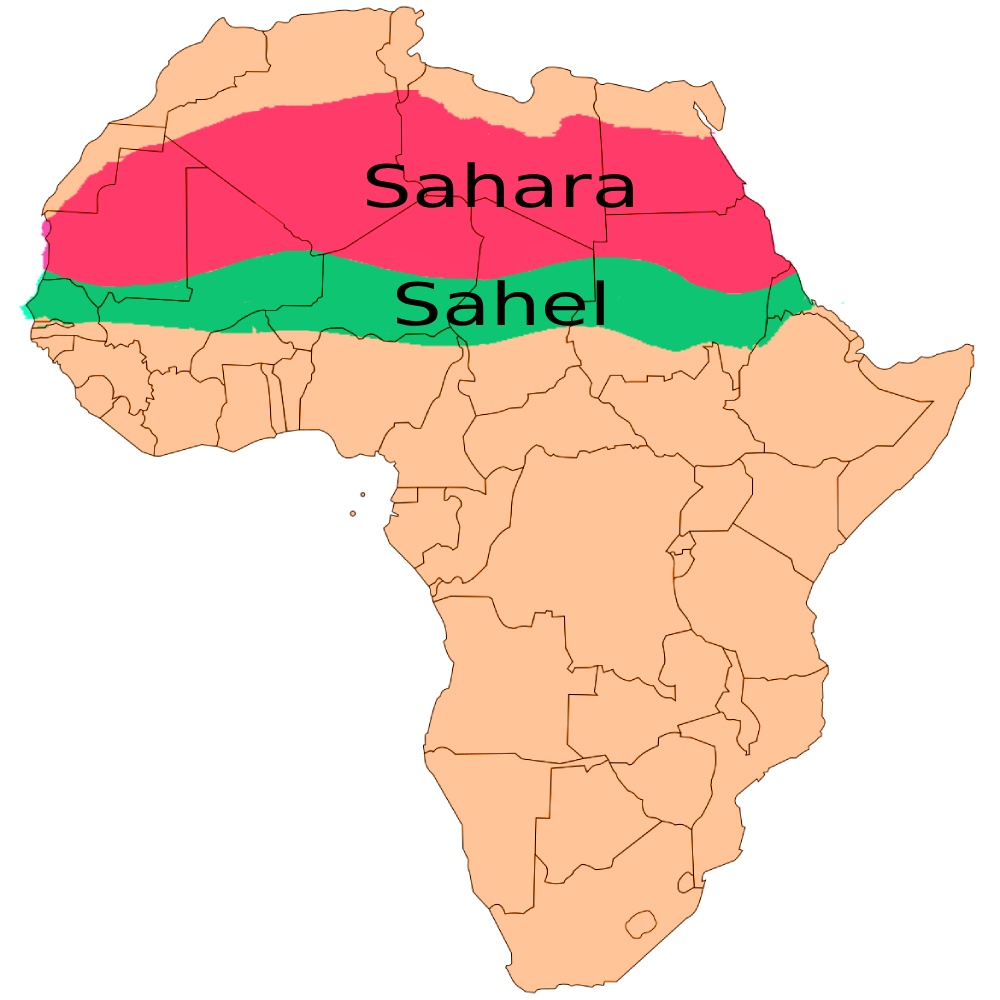
Al-Qaeda no longer has a single geographical centre. ACLED’s analysts describe a movement that has fragmented and evolved — from Afghanistan and the Middle East to affiliates of growing strength in the Sahel, Somalia and Yemen.
Advertisement — ad space reserved
From an organisation to a franchise
The al-Qaeda of 2001 was a relatively centralised body: a leadership, a base, training camps, and the capacity to plan and direct an operation on another continent.
What exists now is better described as a brand adopted by locally rooted armed groups. Affiliates carry the name, share some ideology and occasionally exchange resources, but they set their own objectives, recruit from their own populations and fight over their own territory.
The Sahel is the clearest example. Groups operating under the al-Qaeda umbrella there are engaged in a struggle over the governance of specific West African states, using blockade and taxation as much as attack — as we described in reporting on the year-long fuel blockade of Bamako. That campaign has almost nothing to do with the ambitions of 2001 and everything to do with the political conditions of Mali.
What fragmentation changed
The shift cuts both ways, and honest assessment requires holding both halves.
Capability for large, complex, transnational attacks has clearly declined. Those operations required money, secure communication, training infrastructure and long planning horizons — all of which are harder under sustained pressure. There has been no repetition of 2001.
But local capability has grown. Affiliates hold territory, administer populations, raise revenue and field forces that regular armies struggle to defeat. Measured by ground controlled or people living under their influence, the movement is stronger than it was, not weaker.
Whether that constitutes success or failure depends entirely on what you think the organisation was for — and its own answer to that has changed over twenty-five years.
Advertisement — ad space reserved
The measurement problem
A recurring difficulty for anyone reading about this is that the label is applied inconsistently, and by parties with reasons to apply it.
Governments fighting an insurgency have an incentive to describe their opponents as international terrorists, which attracts foreign support and forecloses negotiation. Groups themselves may adopt or drop affiliation for reasons of prestige, recruitment or local politics. Analysts disagree in good faith about where a genuine organisational link ends and rhetorical alignment begins.
The practical guidance for a reader is to ask what a given group actually does and who it fights, rather than accepting a label as an explanation. A movement described by one name across the Sahel, the Horn and the Arabian Peninsula is doing quite different things in each.
What the anniversary tends to obscure
Anniversary coverage is organised around the attacks and their aftermath in the United States, which is understandable and appropriate.
The consequence is that the movement’s current form is mostly invisible in it. The places where these groups now operate — Mali, Burkina Faso, Somalia, Yemen — are among the least covered conflicts in the world, several of which this paper has reported on this month precisely because almost nobody else is.
The people living under these groups today are overwhelmingly Muslim, poor and West African or East African. That is the twenty-fifth anniversary story, and it is not the one that will be told.
Advertisement — ad space reserved
Sources
- ACLED analysis on al-Qaeda’s fragmentation twenty-five years after 11 September, covering Afghanistan, the Middle East, the Sahel, Somalia and Yemen
- ACLED country profiles and Conflict Index entries for Mali, Burkina Faso, Somalia and Yemen
- Published scholarship on affiliate structures and franchise dynamics in transnational armed movements
- Our reporting on the Mali fuel blockade and on the Sahel, September 2026
Leave a Reply