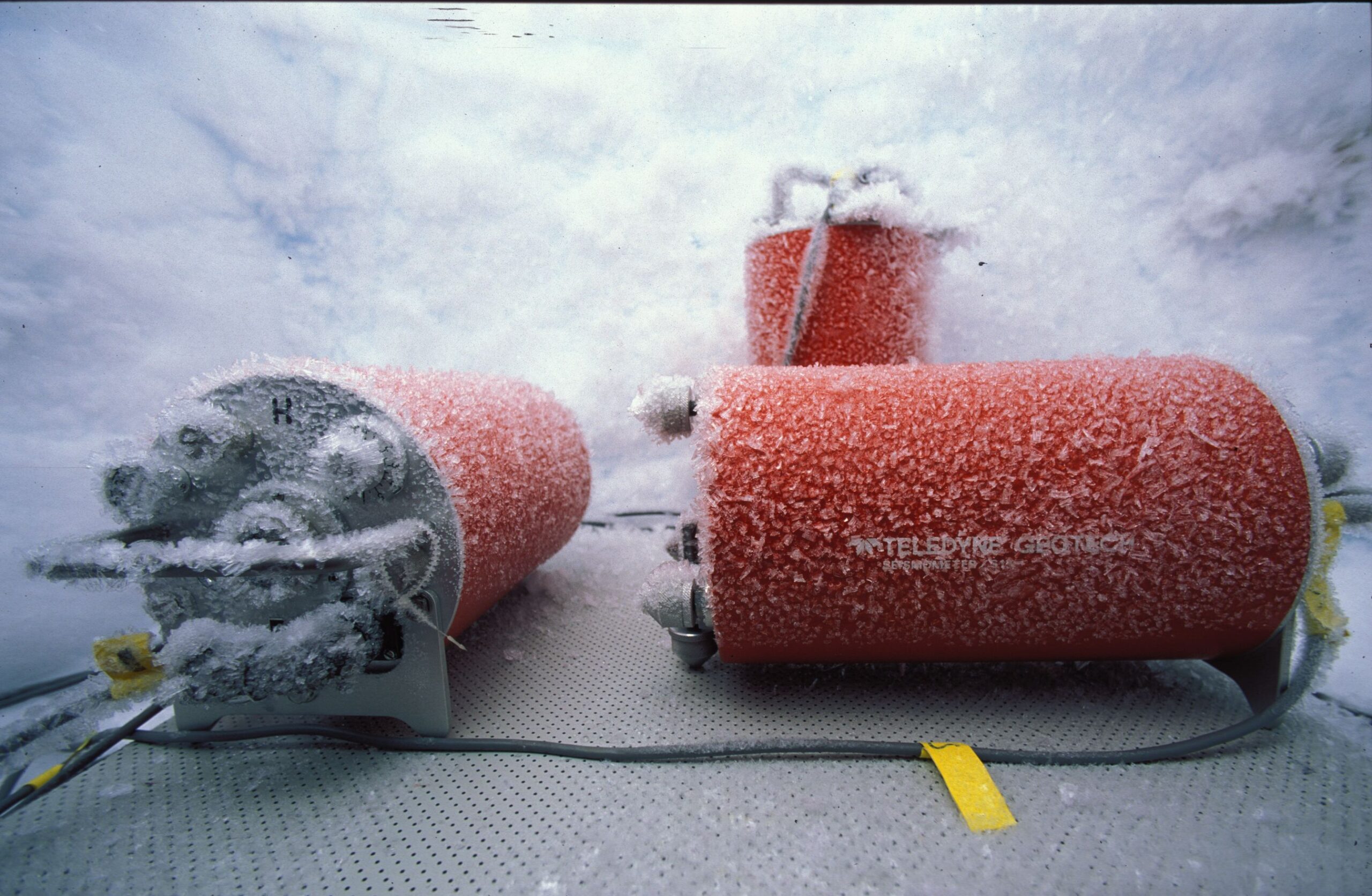
Indonesia’s meteorological agency recorded at least 235 aftershocks in the day and a half after Saturday’s magnitude 7.7 earthquake off Flores. Two of them were themselves substantial — magnitude 6.1 and 5.9.
That number sounds alarming and is entirely ordinary. Here is what aftershocks are, why they matter more for rescue work than for the original damage, and what can and cannot be predicted about them.
Advertisement — ad space reserved
What they are
A large earthquake happens when accumulated strain releases as rock slips along a fault. That slip does not tidily resolve everything. It redistributes stress onto neighbouring sections, some of which are now closer to failure than they were before. Aftershocks are those sections letting go in turn.
They are not a separate event. They are the same rupture finishing, over days to years.
The two rules that hold almost everywhere
Seismology cannot predict earthquakes, but aftershock behaviour follows patterns reliable enough to be named.
They decay with time. The rate falls off roughly in inverse proportion to time elapsed — half as many on day two as day one, and so on. This is why the first 48 hours are frantic and week three is not.
Size follows a fixed ratio. For every aftershock of a given magnitude, expect about ten that are one unit smaller. The largest aftershock typically lands around 1.2 magnitudes below the mainshock — which for a 7.7 predicts something near 6.5. The 6.1 recorded off Flores sits comfortably inside that expectation.
What these rules cannot tell you is when any individual aftershock will occur, or where exactly. Probability, not prediction.
Advertisement — ad space reserved
Why they matter for rescue
A magnitude 6.1 in isolation would rarely destroy a well-built structure. Arriving after a 7.7, it hits buildings whose walls are already cracked, whose columns are already compromised, and which rescuers are currently inside.
Three consequences follow, all visible on Flores this weekend. Damaged buildings must be treated as unsafe, which is why patients in Ruteng are being treated in tents beside a standing hospital rather than inside it. Slopes destabilised by the mainshock slide again, re-blocking roads that were just cleared. And search teams working in rubble must periodically withdraw, costing hours in the window when survival is still likely.
The question everyone asks
Could a bigger one follow? Yes, and it is worth being honest about the size of that possibility rather than dismissing it.
Roughly one shock in twenty is followed by something larger, at which point the first event is reclassified as a foreshock. The probability is highest in the first hours and drops steeply. It is not zero on day three, but it is small — and it cannot be reduced to zero by any measurement currently possible.
Which is why the standard advice is behavioural rather than predictive: stay out of damaged buildings, expect the shaking to continue for weeks, and treat each new tremor as a reason to leave rather than a reason to check whether anything fell.
Sources
Indonesia’s Meteorology, Climatology and Geophysics Agency; the US Geological Survey; standard seismological literature on aftershock sequences.
Advertisement — ad space reserved
Leave a Reply