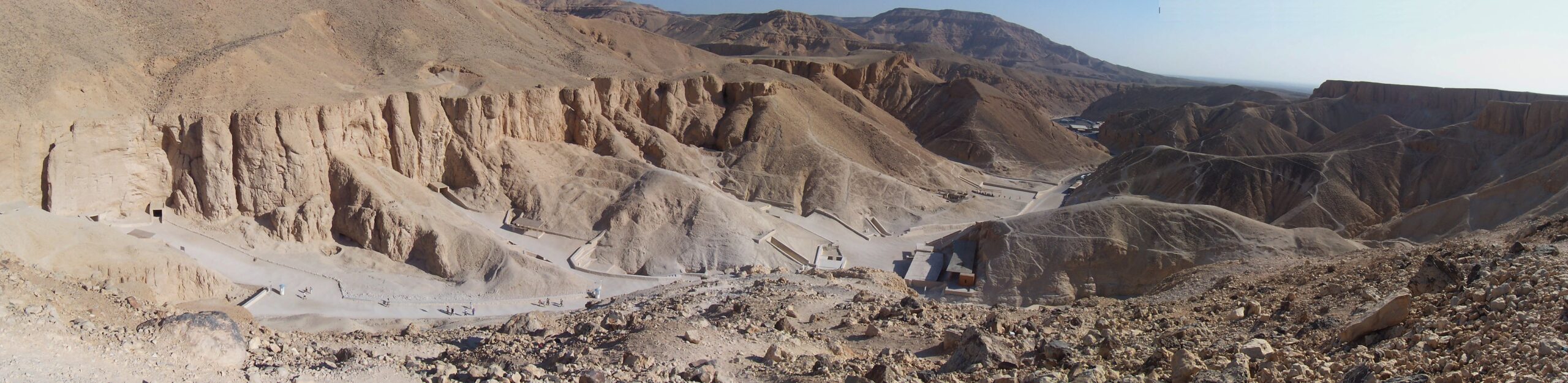
A total solar eclipse lasting more than six minutes will pass over Egypt in 2027, with the path of totality crossing Luxor and the Valley of the Kings. It is being described as the eclipse of the century, and for once the phrase is close to literal.
Advertisement — ad space reserved
Why six minutes is extraordinary
Most total eclipses give you two to three minutes of totality. The one that crossed Europe on 12 August this year was shorter still in most locations. Six minutes is roughly the theoretical maximum for a total solar eclipse, and it requires several conditions to line up at once.
The Moon’s orbit is elliptical, so its apparent size in our sky varies. When it is near perigee — its closest approach — its disc more than covers the Sun. The Earth’s orbit is elliptical too, so the Sun appears smallest around early July. And the Moon’s shadow sweeps across the Earth’s surface at enormous speed, but that speed is lowest near the equator, where the ground beneath is itself rotating fastest in the same direction.
A big Moon, a small Sun, and a slow-moving shadow near the equator. Get all three and totality stretches. Eclipses of this duration over accessible land occur a few times a century.
Why the location compounds it
Duration is only half of what makes an eclipse observable. The other half is whether the sky is clear, and this is where eclipse chasers spend most of their planning.
Upper Egypt in high summer has among the most reliable cloudless skies anywhere on the eclipse track. Compare that with the August eclipse over northern Spain and Iceland, where cloud was a genuine risk for many observers. The combination of near-maximum duration and near-certain clear sky is what has astronomers describing this as a once-in-a-lifetime event rather than merely a long one.
Advertisement — ad space reserved
What long totality is good for
The scientific value is not sentimental. Totality is the only circumstance in which the Sun’s corona — its outer atmosphere, ordinarily drowned out by the disc’s brightness — can be observed from the ground across a wide range of wavelengths at once. Instruments that block the disc artificially cannot fully reproduce what the Moon does, because they scatter light in ways the Moon’s hard edge does not.
Six minutes rather than two is not a marginal gain for that work. It roughly triples the observing window for every instrument on the track, allowing measurements of how coronal structures change over time rather than a single snapshot.
The practical warning, early
It is worth restating now rather than the week before. The Sun must never be looked at directly during the partial phases, which is nearly all of the event, and ordinary sunglasses are not protection. Certified eclipse glasses or projection methods are required. Only during the brief window when the disc is completely covered is it safe to look without a filter — and the moment any part of the Sun reappears, it is not.
Eye injuries after eclipses are consistently reported, and they are almost entirely preventable. A long totality makes this warning more important rather than less, because a longer safe window makes it easier to lose track of when it ends.
Egypt, for its part, has a year to prepare for a very large number of visitors arriving at a site that already handles a great many. That logistical question will probably generate more news than the astronomy.
Sources
Advertisement — ad space reserved
Leave a Reply