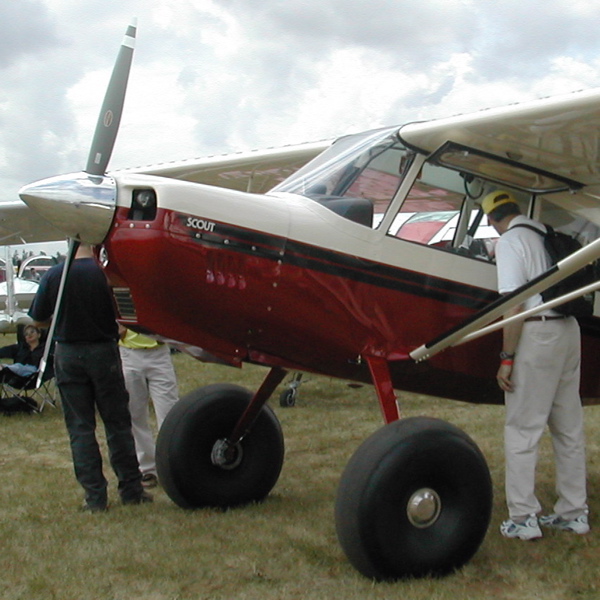
A charter aircraft carrying eight people crashed at a remote radar site in western Alaska on Thursday, killing everyone on board, according to the US military. Both parts of that sentence — charter aircraft, remote radar site — explain more about why it happened than any single failure will.
Advertisement — ad space reserved
Why there are radar sites in the middle of nowhere
Alaska hosts a chain of long-range radar installations dating in concept to the Cold War, when the shortest route between North America and the Soviet Union ran over the Arctic. The sites were built where the geography required, not where people live.
Many are now minimally staffed or unmanned, monitored remotely, and visited periodically by technicians. That visiting is the dangerous part. A site with no road, no rail and no scheduled service is reached by small aircraft, and the people who maintain it fly to it repeatedly in conditions that a commercial airline would not dispatch into.
The aviation environment
Alaska’s fatal accident rate has for decades been substantially higher than the rest of the United States, and the reasons are structural rather than cultural.
- Aviation is not optional. A large share of Alaskan communities have no road connection at all. Flights carry mail, groceries, medical patients and workers, in weather that would simply cancel a leisure flight elsewhere.
- Weather changes faster than forecasts. Coastal and mountainous terrain generates rapid shifts in visibility and icing conditions, and observation stations are sparse.
- Terrain and light. Featureless tundra and snow can remove the visual horizon entirely, a condition in which spatial orientation depends wholly on instruments.
- Thin infrastructure. Many strips are gravel, unlit, and without approach aids or on-site weather reporting.
None of that establishes anything about this particular flight. It describes the environment in which it took place.
Advertisement — ad space reserved
What “charter” means for the rules
This is a distinction most readers never encounter and it matters here. Scheduled airlines operate under the most demanding regulatory regime: crew rest limits, dispatch procedures, weather minimums, maintenance programmes. On-demand charter operations are also regulated, but under a different and generally less prescriptive set of rules — for instance on when a flight may depart and how the decision is made.
Safety investigators in several countries have returned to this gap repeatedly, arguing that passengers frequently cannot tell which regime they are flying under. It has been a recurring theme in Alaskan accident findings, and it is the sort of thing an investigation looks at before it looks at the pilot.
What happens next, and how long
Accident investigation in the United States is conducted by the National Transportation Safety Board, independently of any operator or agency. A preliminary report typically appears within a few weeks and states facts without assigning cause. The final report, with findings and a probable cause, commonly takes one to two years.
That delay frustrates everyone and exists for a reason: early explanations in aviation accidents have a poor record. Weather, terrain, mechanical condition, maintenance history, crew experience and the pressure to complete a trip are usually all present in some combination, and separating them requires the wreckage, the records and the recorded data.
Eight people died, in a place they had gone to keep a piece of infrastructure running that almost nobody thinks about. That is what is established today.
Sources
Advertisement — ad space reserved
Leave a Reply